
You know the scene. You open the tackle tray after a rough boat ride, and it looks like a metal spider convention. Three crankbaits have somehow fused into one useless knot. A jig skirt is wrapped around a treble hook like a bad sweater. You spend ten minutes picking at it with pliers, and by the time you’re done, the fish have stopped biting.
This article walks through the exact physics of why lures tangle and the prevention-first workflow that stops it from happening. You’ll get concrete storage rules for treble hooks and soft plastics, boat habits that cut line slack, and a few DIY fixes that work as well as anything you can buy. No vague advice here—just what works after years on the water.

Flambeau
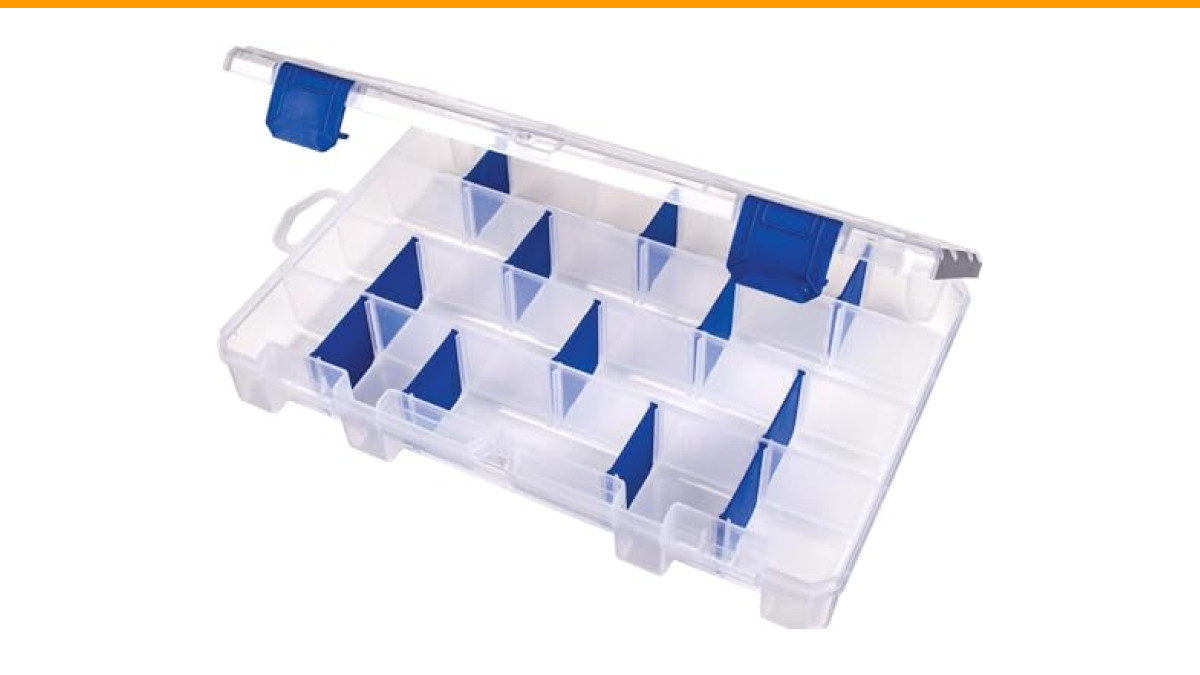
Flambeau Outdoors 4007 Tuff Tainer, 24 Compartments, 12 Zerust Dividers | Divided tackle box with 12 Zerust dividers creating up to 24 compartments. Translucent, 11 x 7.25 x 1.75in
- SMART DIVIDER SYSTEM: This tackle storage box offers customization options with 12 adjustable dividers that can create up to 24 di…
- ZERUST ANTI-CORROSION TECHNOLOGY: Exclusive VCI formula infused into the dividers releases a corrosion inhibiting vapor that forms…
- LASTING RUST DEFENSE: The proprietary Zerust formula inhibits electrochemical reactions that cause rust & corrosion. Provides up t…
For the storage side, a box like the Flambeau Tuff Tainer with Zerust dividers handles the separation problem well. The adjustable dividers let you size compartments to your actual lure collection, and the anti-corrosion tech in the dividers keeps hooks sharp and rust-free. It’s a solid foundation, but the habits below matter just as much as the box.
Why Fishing Lures Tangle (The Three Main Culprits)
Tangling isn’t random bad luck. It comes down to three physical forces, and once you see them, the fixes become obvious.
Line slack is the first culprit. When your line goes limp, the hook can swing freely and catch on anything nearby. This happens during casting if you overrun the spool, during a pause in your retrieve, and especially when you drop a rod on the deck. A taut line keeps the lure’s movement predictable. Slack line lets it orbit wildly.
Hook movement during transport is the second. Every bump in the truck or wave on the lake vibrates through your tackle box. Treble hooks act like little pendulums. They swing, they catch, they wrap. Soft plastics with skirts or curly tails do the same thing—they flop around and find the nearest hook point.
Gear friction is the third, and most people miss it. When you stack lures directly against each other, the hooks don’t just touch—they bite into the paint, the plastic, and the hook eyes of neighboring lures. That friction holds them in place, so the vibration of the boat twists them into a permanent knot. The solution isn’t just separating lures; it’s giving them enough room that they can’t make contact in the first place.
So the real question isn’t how to untangle faster. It’s how to stop the line slack and hook movement before they start.
Storage Solutions: The Right Container for Every Lure Type
You don’t need a different box for every lure you own. You need a system that matches the hook style and the body shape. Here’s how to sort it out.
Crankbaits and Jerkbaits (Treble Hook Management)
Treble hooks are the worst offenders. Each lure has two or three of them, and they all swing freely. The only reliable way to store them is to keep each hook set separated by a physical barrier.
Use a compartment box with dividers that create slots narrower than the lure’s body length. The Flambeau Tuff Tainer mentioned above works well here because the 12 adjustable dividers let you build 24 small cells. A single crankbait goes in each cell, and the hooks rest against the divider walls instead of against another lure.
Here’s the trick most people skip: face all the hooks in the same direction. If you drop a crankbait in with the front hook pointing left and the rear hook pointing right, it’s already halfway to a tangle. Align them consistently, and you’ll see the problem drop by half.
For larger crankbaits that don’t fit in a standard compartment, use individual hook bonnets on the trebles. They cost a few dollars for a pack of fifty, and they turn a dangerous hook into a smooth plastic nub. You can still stack those lures loosely in a tray without them grabbing each other.
Soft Plastics and Jigs (Keeping Skirts and Tails Straight)
Soft plastics tangle differently. The hooks are usually buried in the body, so the real problem is the skirt or the curly tail wrapping around the hook point. A jig with a rubber skirt will find a way to twist itself onto its own hook if you let it sit loose.
Store jigs in a compartment with the hook point facing up and the skirt hanging straight down. If the compartment is too tall, the skirt folds and creases. Too shallow, and the hook pokes through the lid. Measure your tallest jig and buy a box with that exact depth.
For bags of soft plastics, don’t just toss them in a bin. The tails tangle with each other even in a sealed bag. Lay them flat, side by side, with the tails pointing the same direction. If you’re using a utility box, put a divider between each row of baits so the tails can’t interlock.
One honest caveat: no box handles soft plastics perfectly. The tails are too flexible and too grabby. But keeping them organized by size and tail type—not just dumping them in—cuts down on the mess significantly.
On-Boat Habits That Prevent Tangles Before They Start
Storage gets you to the water. The boat is where most tangles actually happen, and it’s almost always a line slack problem.
The “One Rod Out” Rule and Rod Management
You’ve got four rods rigged and ready, and you’re switching between them every few minutes. The rod you’re not using is lying on the deck with the lure swinging. The boat rocks, the rod slides, and suddenly you’ve got a topwater plug wrapped around a rod holder.
The fix is brutally simple: only one rod should be out of its holder at a time. When you’re not actively casting, the rod goes back in the holder or in the rod locker. A pre-rigged rod with a loose lure is a tangle machine waiting for a wave.
If you must keep multiple rods on deck, use rod holders that angle the tips upward. A rod lying flat on the deck lets the lure swing freely. A rod angled at 45 degrees keeps the line taut and the lure hanging straight down. That simple change eliminates most deck tangles.
Also, check your reel drag before you cast. A drag that’s too loose lets line peel off during a hard cast, creating slack and a bird’s nest. Set your drag so it holds firm under a sharp pull but releases under steady pressure. That balance prevents both tangles and broken lines.
DIY Tangle Prevention Hacks (That Actually Work)
Commercial products are nice, but some of the best tangle prevention is stuff you already own. These three hacks have saved me more time than any store-bought gadget.
Rubber bands on treble hooks. Take a small rubber band and loop it around the three points of a treble hook, then pull it tight over the hook eye. It holds the points together, turning the hook into a blunt blob. It’s not as clean as a hook bonnet, but it works in a pinch and costs nothing. For a box of crankbaits, this is the fastest way to make them tangle-proof.
PVC pipe for pre-rigged rods. Cut a 12-inch section of 1-inch PVC pipe, cap one end, and slide it over the tip of a rod that’s already rigged. The lure goes inside the pipe, and the line stays taut from the rod tip to the reel. This is a game-changer for boat rods you want ready to grab. The pipe protects the lure and keeps the line from wrapping around anything else.
Foam inserts for jig heads. A piece of craft foam, about a quarter-inch thick, works as a hook holder. Push the hook point into the foam and it stays put. Cut a piece to fit your tackle tray, and you can store dozens of jig heads with the hooks buried and the skirts hanging free. The foam also keeps hooks sharp because they’re not scraping against anything hard.
These aren’t perfect solutions. The rubber bands degrade after a few weeks, and the PVC pipe adds bulk to your rod. But they’re cheap, they work, and you can replace them in seconds. For budget anglers, that’s a winning trade-off.
How to Quickly Untangle a Mess of Lures (Without Losing Your Cool)
Even with all the prevention, you’ll still end up with a bird’s nest eventually. Here’s the fastest way to fix it without damaging hooks or line.
First, don’t pull. Pulling on a tangled knot only tightens it. Instead, work from the outside in. Find the hook that’s on the outermost loop of the mess and free it first. Work that hook loose, then move to the next one. This sounds slow, but it’s actually faster than trying to untangle the whole mass at once.
Second, use a hook pick or a small flathead screwdriver. Slip the tool under the loops of line and gently pry them apart. The tool gives you leverage without putting pressure on the hook points. A pair of needle-nose pliers works too, but the pick is gentler on the line.
Third, if the line is wrapped around a hook point, don’t try to slide it off the point. That just digs the barb deeper. Push the hook point back through the line loop, then pull the loop free. This reverses the direction of the wrap and releases the line.
Finally, know when to cut. If you’ve spent more than five minutes on a tangle, the line is probably weakened anyway. Cut the line, re-tie, and move on. The fishing time you save is worth more than the few feet of line you lose.
The Ultimate Pre-Trip Checklist for Tangle-Free Fishing
Before you leave the driveway, run through this list. It takes two minutes and saves twenty on the water.
- Check every lure in your tackle box. Are the hooks facing the same direction? Are the trebles protected with rubber bands or bonnets?
- Verify that soft plastics are lying flat with tails pointing the same way, not bunched up in a corner.
- Confirm that pre-rigged rods have their lures secured, either in a rod sleeve or with a PVC pipe cap.
- Set your reel drags to the correct tension for each rod. Test with a firm pull before loading the boat.
- Organize your tackle tray by lure type, not by fishing style. Crankbaits together, jigs together, soft plastics together. This makes it easier to find what you need without digging.
- Stow the tackle box in a spot where it won’t slide around. A foam-lined drawer or a dedicated tackle bag prevents the vibration that causes tangles.
- Double-check that rod holders are angled upward, not flat, so lures hang straight down.
Final Thoughts: Consistency Beats Gadgets
The angler who never tangles isn’t using a magic box. They’re using the same box every trip, with the same organization system, and they’re checking it before they leave. That consistency is what actually prevents tangles.
Spend the money on a decent storage container with adjustable dividers if you need it. But the real investment is the five minutes of habit-building before each trip. Do that, and you’ll spend your time fishing, not picking at knots.
