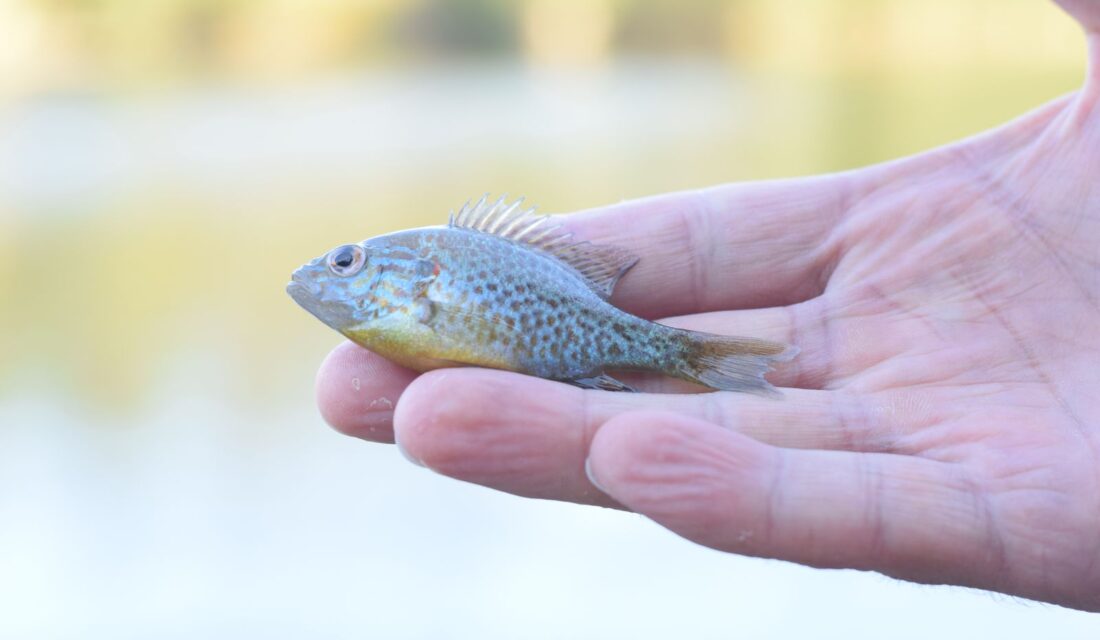
Panfish — crappie, bluegill and perch — are the best first fish. They live near shore, bite easily, and taste great. All you need is a light rod, small hooks and a small jig or live bait. This is the easiest fishing on this site.
| Species | Water | Best bait | Best season |
|---|---|---|---|
| Crappie | Brush piles & docks | Small jig, live minnow | Spring |
| Bluegill | Pond edges & lily pads | Worm, small jig | Summer |
| Perch | Deep holes & lake edges | Small jig, live bait | Winter (ice) |
Crappie vs bluegill vs perch — comparison chart
Use this chart to compare the three panfish — their size, depth, bait and season — before you choose your tackle. Sizes, depths and temperatures are approximate and vary by lake, pond and region.
| Feature | Crappie | Bluegill | Yellow perch |
|---|---|---|---|
| Typical adult size (approximate) | 0.5–1 lb (0.2–0.5 kg); 9–12 in long | 0.25–0.5 lb (0.1–0.2 kg); 6–9 in long | 0.5–1 lb (0.2–0.5 kg); 8–12 in long |
| Large fish (approximate) | 2 lb and over; record over 5 lb | 1 lb and over; record over 4 lb | 1.5 lb and over; record about 4 lb |
| Habitat | Brush piles, docks, fallen trees and weed edges in lakes | Pond edges, lily pads and shallow bays; nests in colonies | Lake edges, weed beds and deep holes; schools near structure |
| Preferred depth | 4–12 ft around cover; deeper in summer and winter | 1–6 ft near shore; deeper in winter | 5–20 ft; deeper in winter |
| Best water temperature (approximate) | 60–70°F (16–21°C) | 65–80°F (18–27°C) | 60–70°F (16–21°C) |
| Best bait | Small jig (1/32–1/16 oz), live minnow | Worm, cricket, small jig, tiny spinner | Small jig, live minnow, worm piece |
| Best season | Spring (spawn) and fall | Summer, especially around spawning beds | Winter (ice) and spring |
| Schooling | Schools around brush and docks; moves in groups | Schools near shore; aggressive around nests | Large schools; where you catch one, catch many |
What is panfish fishing?
Short answer: panfish fishing is light-tackle fishing for small, abundant, great-eating fish — crappie, bluegill and perch — near shore, with small jigs and live bait. It is the simplest fishing there is, and the best way to learn to fish or to teach a child.
The name comes from the pan: these fish are small enough to fit in a frying pan, and they are some of the best-eating freshwater fish you will find. Panfish live close to shore in ponds, lakes and slow rivers, they school in large numbers, and they bite readily — which means a beginner can catch fish on the first outing instead of waiting all day for one bite. That is why panfish are the perfect first fish: a child with a bobber, a worm and a light rod can catch a bluegill within minutes, and an experienced angler can fill a cooler with crappie on a good spring day. Panfish fishing needs almost no special skill and very little gear, it works from the bank, a dock or a small boat, and it works all year — bluegill in summer, crappie in spring and fall, perch through the ice in winter.
The basic setup is the same for all three species: a light or ultralight spinning rod (5–6 feet), a small spinning reel with 4–6 lb monofilament, a small bobber, a size 6–10 hook or a 1/32-ounce jig, and a piece of worm, a cricket or a small minnow. Cast near cover — a dock, a brush pile, a lily pad bed or a weed edge — let the bobber settle, and watch it. When it dips, twitches or moves sideways, lift the rod gently. That is the whole technique, and it catches fish. The key skill is finding the fish: panfish school, so if you catch one, stay put and keep casting to the same spot, because there are usually dozens more. If you do not get a bite in ten minutes, move a few yards along the shore and try again. Panfish also follow the seasons: crappie move shallow to spawn in spring, bluegill build nests in colonies in shallow water in early summer, and perch school in deep holes in winter. Learn those patterns and you will rarely go home empty-handed.
What is the best bait for panfish?
Short answer: a small piece of worm on a tiny hook under a bobber is the best all-round panfish bait. For crappie, a 1/32-ounce jig tipped with a live minnow is even better; for perch, a small jig with a minnow or a worm piece wins.
Live bait is the most reliable panfish bait because panfish eat small, natural food all day. Red worms and mealworms catch bluegill and perch, crickets and grasshoppers are deadly for bluegill in summer, and small live minnows (1–2 inches) are the top crappie bait in spring. Hook the bait lightly so it stays alive and moves naturally: a worm threaded once through the end, a minnow hooked through the lips or the back, a cricket hooked through the body. Fish live bait under a small bobber set 2–4 feet deep near cover, or on a bare hook with a split shot when the fish are deep. The bite is usually a gentle dip of the bobber, so use the smallest bobber you can see and set the hook with a quick lift, not a hard jerk — panfish have soft mouths and a hard hookset tears the hook out.
Small jigs are the best artificial panfish bait, and they catch fish when live bait is hard to get. A 1/32-ounce or 1/16-ounce jighead with a 1–2-inch soft plastic body — a tube, a grub or a shad imitation — in chartreuse, white, pink or black, fished slowly under a bobber or on a tight line, catches crappie, bluegill and perch. For crappie, tip the jig with a live minnow or a small plastic minnow and fish it vertically next to brush piles and docks, or cast and retrieve it very slowly. For bluegill, a tiny spinner (1/16 ounce) or a small popper on the surface works in summer when bluegill are feeding on insects. For perch, a small jigging spoon tipped with a minnow piece, fished on the bottom, is hard to beat. Match the jig size to the fish: a jig that is too big will not fit in a bluegill’s small mouth, and that is the most common beginner mistake in panfish fishing. Carry a few colours, change colour if the bite stops, and keep your bait small — when in doubt, go smaller.
What rod for panfish?
Short answer: a 5–6-foot light or ultralight spinning rod with a 1000-size reel and 4–6 lb line is the best panfish rod. It is light enough to feel a bluegill bite and strong enough for a 2 lb crappie, and it makes every fish feel bigger.
Panfish rods are the lightest rods in freshwater fishing, and that is the point: a bluegill that weighs half a pound will bend an ultralight rod double and fight like a much bigger fish. Choose a 5-foot 6-inch to 6-foot 6-inch light or ultralight, fast-action spinning rod with a 1000- or 2000-size reel spooled with 4 lb monofilament. Monofilament is the best panfish line because it is cheap, it stretches just enough to protect a panfish’s soft mouth, and it is easy to see above the water when you are watching a bobber. Fluorocarbon works too and is less visible, but it is stiffer and more expensive, and it is not needed for panfish in most ponds. Braid is overkill for panfish and its lack of stretch will pull hooks out of soft mouths, so save braid for bass and pike.
For crappie, a slightly longer rod — 6–7 feet, light action — helps you cast small jigs a long way and fish vertically around docks and brush piles without spooking the school. Many crappie anglers use a 10–12-foot jigging pole (a long, light rod with no reel, or with a small reel) to drop a jig straight down beside a brush pile and hold it still — the long pole lets you reach fish that a short cast cannot. For ice fishing perch, use a 24–28-inch ultralight ice rod with 2–4 lb line and a spring bobber on the tip, so you can see the lightest winter bites. For kids, a 5-foot light spinning rod with a push-button spincast reel is the easiest setup to learn: push the button, swing, release, and the bobber flies out. Avoid heavy rods for panfish — a medium bass rod will not feel a bluegill bite, will rip small hooks out, and will take the fun out of the fight. Keep a small tackle box with size 6–10 hooks, 1/32-ounce jigheads, split shot, small bobbers and a few tiny spinners, and you are ready for any panfish water.
Where do I find crappie?
Short answer: find brush piles, docks and fallen trees in 4–12 feet of water, and fish a small jig or a live minnow right beside the cover. Crappie school around structure, so once you find one, you have found many.
Crappie are structure fish. In a lake, they hold tight to brush piles (sunken trees and branches), boat docks, fallen trees, stump fields and weed edges — anywhere a small fish can hide and ambush tiny minnows and insects. The best crappie spots are easy to find from the bank or a boat: a dock with posts going into the water, a fallen tree lying half in the lake, a brush pile a local angler has sunk (look for a marker buoy or a cluster of branches), or the shady side of a bridge. Fish the shady side first and the downwind side second, because crappie follow shade and wind-blown food. In spring, crappie move into shallow water (2–6 feet) to spawn around brush and docks, and they are at their easiest to catch — fish a 1/32-ounce jig under a bobber, or a live minnow on a bare hook, right against the cover. In summer, crappie slide deeper (8–15 feet) and suspend over brush piles and creek channels; use a fish finder to find the school, then fish vertically with a jig or a minnow at the depth the fish are holding. In fall, crappie move back shallow and feed heavily on baitfish, and a small jig cast and retrieved slowly along a weed edge works well. In winter, crappie school in deep holes and around deep brush, and ice anglers catch them on tiny jigs tipped with a minnow.
Step by step, fish a dock for crappie like this. First, approach quietly — crappie spook easily, so keep your shadow off the water and do not bang the dock. Second, cast a 1/32-ounce jig tipped with a minnow past the dock post and let it sink beside the post, counting down to the depth you want. Third, retrieve it very slowly with tiny twitches, or let it hang under a bobber and wait — crappie often bite a bait that is barely moving. Fourth, if you get a bite, remember the exact spot and depth, because the school is there; cast back to the same place again and again. Fifth, if the bite stops, change jig colour (white to chartreuse to pink) or switch to a live minnow, and try the next dock. The biggest mistake beginners make is fishing too fast and too far from cover: crappie want a slow bait right against the wood. Another mistake is using tackle that is too heavy — a big hook and thick line will not catch crappie that are feeding on tiny minnows. Use light line, small jigs and a sensitive rod, and keep a net or a long-handled landing net nearby, because a big crappie on light line is easy to lose at the bank.

Can kids catch panfish?
Short answer: yes — panfish are the best fish for kids, because they bite fast, fight hard for their size, live close to shore and need only the simplest tackle. Most anglers caught their first fish as a bluegill on a worm under a bobber.
Everything about panfish fishing suits a child. The gear is light and easy to hold, the casting is simple (a push-button reel or a short spinning rod), the bait is easy (a worm on a hook under a bobber), and the action is fast — a bluegill usually bites within minutes, which keeps a child interested in a way that waiting hours for a bass never will. The fish are also the right size: a child can hold a bluegill in one hand, unhook it with help, and feel the thrill of a fish pulling on the line without being scared by a big, toothy predator. Panfish live near shore, so there is no boat needed and no deep water to worry about, and they are safe to handle — bluegill and crappie have small mouths and no sharp teeth, though perch have spiky dorsal fins, so show a child how to hold a perch from underneath, away from the spines.
To take a child panfish fishing, keep it simple and keep it fun. Pick a pond or a dock where bluegill are known to bite, go in the morning or evening when the fish are shallow, and bring a small rod, a bobber, size 8 hooks, worms and a bucket. Show the child how to cast, then let them watch the bobber — the moment it dips is the moment they will remember. Help them set the hook with a gentle lift, let them reel the fish in themselves, and praise the catch no matter how small it is. Bring snacks, sunscreen and a spare rod, keep the trip short (an hour is plenty for a first trip), and end on a high note — leave while the fish are still biting so the child wants to come back. Teach them to handle fish gently, wet their hands before touching a fish, and release small fish quickly; if you keep a few for dinner, show them how panfish are cleaned and cooked, because catching dinner is a lesson in where food comes from. The goal of a first fishing trip is not a big fish — it is a child who asks, “When can we go again?” Panfish make that answer easy.

Panfish through the seasons
Spring belongs to crappie: they move shallow to spawn around brush and docks, and a small jig or a live minnow fished slowly beside cover catches them in numbers. Summer belongs to bluegill: they build nests in colonies in shallow water, guard them fiercely, and take worms, crickets and tiny poppers all day long — the easiest fishing of the year. Fall is the mixed bag season, when crappie feed heavily before winter, bluegill stay shallow until the water cools, and perch school up along weed edges; fish small jigs and minnows and follow the baitfish. Winter belongs to perch: they gather in deep holes under the ice, take tiny jigs tipped with minnows or maggots, and fill a bucket faster than any other winter fish. Whatever the season, keep your tackle light, your bait small, and your bobber where the fish are — and you will catch panfish.