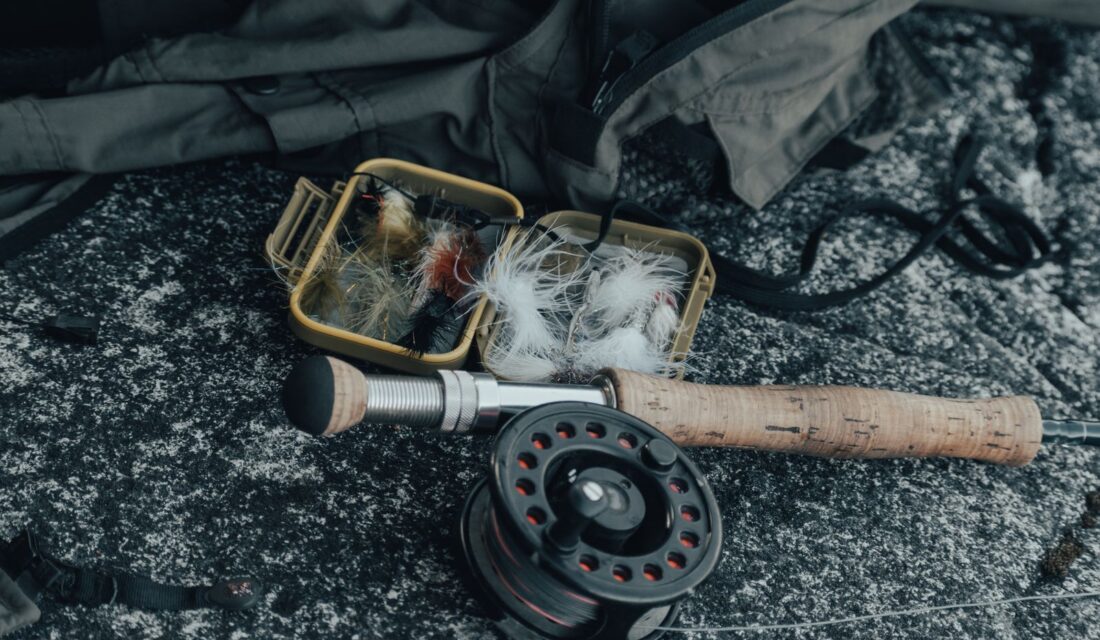
A fly reel holds line, balances the rod, and — when a big fish runs — its drag stops the fish. For trout a simple click reel is enough; for bass and saltwater you need a sealed disc drag. This guide compares the best fly reels by use, with prices checked at publish time.
Best fly reels at a glance
| Pick | Reel | Price | Drag | Arbor | Weight match |
|---|---|---|---|---|---|
| Best overall | Lamson Liquid S | $159.99–$189.99 | Sealed disc drag | Large arbor | 3–8wt |
| Best budget | Orvis Clearwater | $129.00–$149.00 | Disc drag | Large arbor | 4–8wt |
| Best for trout | Orvis Battenkill Click | $179.00–$198.00 | Click-and-pawl | Standard arbor | 3–5wt |
| Best for saltwater | Orvis Hydros Gen2 | $279.00–$319.00 | Sealed disc drag | Large arbor | 7–10wt |
Prices checked November 19, 2026 at Bass Pro Shops. Prices vary by size and change often — check the current price before you buy.
Fly reel comparison chart — drag, arbor, weight match & price
Price ranges below are approximate and are the prices seen at Bass Pro Shops on November 19, 2026. Drag type and arbor are the maker’s specifications; weight match is the range of rod weights the reel is made for.
| Reel | Drag type | Arbor | Weight match | Price range (approx.) |
|---|---|---|---|---|
| White River Classic | Click-and-pawl | Standard arbor | 3–5wt | $69.98 sale (was $99.99) |
| Redington RUN | Disc drag | Large arbor | 3–8wt | $139.99 |
| Redington Behemoth | Disc drag | Large arbor | 5–9wt | $159.99–$179.99 |
| Sage Spectrum C | Sealed disc drag | Large arbor | 3–8wt | $200.00–$225.00 |
| Lamson Liquid Max | Sealed disc drag | Large arbor | 8–12wt | $279.99–$329.99 |
| Redington Grande | Sealed disc drag | Large arbor | 7–12wt | $329.99–$399.99 |
What makes a good fly reel?
Short answer: A good fly reel has a smooth drag that starts without a jerk, weighs the right amount to balance your rod, holds enough backing, and survives the water you fish in. For trout, that can be a simple light reel. For bass and saltwater, it must be a sealed disc drag with a large arbor.
The drag is the first thing to judge, because it is the only part of the reel that fights the fish. A good drag starts smoothly — engineers call this low startup inertia — so a running fish does not snap the tippet when the drag first engages. It stays smooth as the fish runs, without pulsing or sticking, and it holds its setting all day. Test it in the shop: pull line off the reel by hand at a steady speed and feel for jerks. If the drag grabs and releases in pulses, it will do the same thing to a fish, and light tippet will break.
Weight and balance come next, and they matter more than most buyers think. A reel that is too heavy for the rod makes the outfit tip-heavy, and your wrist pays for it by lunchtime. A reel that is too light makes the rod feel butt-heavy and awkward to cast. The right reel balances the rod at the grip when the line is out — hold the outfit with one finger under the grip and it should sit level. As a rough guide, a 5-weight trout reel weighs about 4 to 5 ounces, an 8-weight reel about 6 to 7 ounces, and a 10-weight saltwater reel about 8 to 9 ounces. Check the maker’s stated weight before you buy, and remember that a large arbor reel is usually a little heavier than a standard arbor reel of the same size.
Capacity is the third test: the spool must hold your fly line plus enough backing. Backing is the thin braided line under the fly line, and it is what a long-running fish pulls after the fly line is gone. Trout need about 100 yards of 20 lb backing. Bass and pike need 150 yards. Saltwater fish need 200 yards or more — a bonefish can take 150 yards on its first run. If the reel’s stated capacity is less than that for your line weight, the reel is too small for the fish, whatever the drag says.
Materials and build decide how long the reel lasts. Machined aluminium reels are cut from a solid bar, so they are strong, precise and light — and they cost more. Cast aluminium reels are poured into a mould, so they are heavier and a little less precise, but they cost much less and are fine for most freshwater fishing. For saltwater, the drag must be sealed against sand and salt, and the reel should be anodised so salt does not corrode it. A sealed drag is not a luxury in saltwater — it is the difference between a reel that works on day three and one that seizes up.
The mistakes to avoid start with buying on looks. A pretty reel with a weak drag is worse than a plain reel with a good one. Buying a reel that is too big for the rod is another — it looks fine in the shop and feels terrible on the water. And forgetting backing capacity is the quiet mistake: you land a great fish, it runs, the backing runs out, and the line snaps. Check the drag by hand, check the weight, check the backing capacity, and buy the reel for the fish you will actually catch — not the fish in the advert.
Large arbor vs standard arbor?
Short answer: A large arbor reel picks up line faster and puts less memory into it. A standard arbor reel is lighter, slimmer and more traditional. For saltwater and big fish, large arbor wins. For small-stream trout, either works.
The arbor is the core of the spool that the line winds around. A large arbor spool has a fat core, so the line winds on in big coils; a standard arbor spool has a slim core, so the line winds on in small, tight coils. That one difference changes three things. First, retrieve rate: a large arbor picks up about 9 to 10 inches of line per turn of the handle, against about 6 to 7 inches for a standard arbor. When a bonefish turns and runs straight at you, those extra inches are the difference between a tight line and slack — and slack loses fish. Second, line memory: line stored in big coils comes off straighter than line stored in tight coils, so a large arbor line casts more cleanly after sitting on the reel. Third, drag consistency: as line comes off a standard arbor spool, the effective spool diameter shrinks fast, so the drag feels stronger; a large arbor keeps the diameter more constant, so the drag feels the same from the first yard to the last.
Standard arbor reels still have their place. They are lighter and slimmer, which suits a light trout rod, and they hold more backing for their size — useful when you want a small reel that still carries 100 yards of backing. They are also the classic look: the click-and-pawl trout reels that anglers love are almost all standard arbor. For dry-fly fishing on small rivers, where fish rarely run far and you strip line in by hand, a standard arbor reel is all you need, and its lighter weight makes the rod feel livelier.
Choose large arbor if you fish saltwater, bass, pike or steelhead, if you fish from a boat where fish run at you, or if you hate line memory. Choose standard arbor if you fish small streams for trout, if you want the lightest possible outfit, or if you love a classic click reel. A mid-arbor splits the difference and is a good compromise for all-round trout fishing. The mistake is assuming large arbor is always better — it adds weight and diameter, and on a 3-weight rod a big large-arbor reel looks and feels wrong. Match the arbor to the fish, not to the fashion.
Click-and-pawl vs disc drag?
Short answer: Click-and-pawl is a simple spring-and-gear drag — light, reliable and enough for trout. Disc drag uses friction discs to give smooth, strong, adjustable stopping power — essential for bass, pike and saltwater. Buy click-and-pawl for trout; buy disc drag for anything bigger.
A click-and-pawl drag is the oldest design in fly fishing and still the best for trout. A small spring-loaded pawl clicks against a gear on the spool, and the tension is set by a simple adjustment. It is light, it has almost nothing to go wrong, it makes the classic clicking sound as line goes out, and it gives just enough resistance to stop a trout without breaking light tippet. Its limits are real, though: the drag is weak, it is not very adjustable, and it cannot stop a big fish. A bass in heavy cover or a bonefish on the flats will overrun a click reel in seconds.
A disc drag uses a stack of discs — cork, carbon or stainless steel — pressed together to create friction. The harder you turn the drag knob, the more the discs press and the stronger the drag. A good disc drag is smooth, strong and finely adjustable, and it can be set light enough for a trout and strong enough for a tarpon. The best disc drags are sealed: the discs sit in a sealed unit that keeps out water, sand and salt. An unsealed disc drag works fine in freshwater but will grind and seize in saltwater after a season or two.
For trout, either drag works, and the choice is about feel and budget: a click reel is lighter and cheaper and more fun on a small stream, while a disc drag gives you more control if you hook a big brown in fast water. For bass and pike, disc drag is the right call — those fish pull hard into cover and you need real stopping power. For saltwater, only a sealed disc drag will do: salt, sand and long runs destroy click reels and unsealed drags. Whatever you buy, learn to set the drag properly: it should slip when you pull the line firmly by hand, at about a third of the tippet’s breaking strain. Too tight and the tippet snaps; too loose and the fish runs into the weeds.
The mistakes are easy to make. Using a click reel for saltwater is the most expensive one — the reel will not survive the trip. Setting a disc drag too tight for light tippet is the most common — the fish takes, the drag does not give, and the tippet parts. And never rinsing a reel after saltwater is the slow mistake: salt crystals grind the drag and corrode the frame, and a reel that was fine in September seizes in October. Rinse every reel in fresh water after a saltwater trip, dry it, and back the drag off for storage so the discs do not stick together.
Best fly reel for trout?
Short answer: The Orvis Battenkill Click, at $179.00–$198.00, is the best fly reel for trout: a machined aluminium click-and-pawl reel that is light, simple and made for trout. If you want a disc drag for the same money, the Lamson Liquid S at $159.99–$189.99 is the best all-round alternative.
Trout do not need much drag, and that is the whole point. A trout’s first run is short, the tippet is light, and the reel’s job is mostly to hold line and balance the rod. What matters is weight, feel and reliability. The Battenkill Click weighs about 4 ounces in the 5-weight size, balances a 9-foot 5-weight rod perfectly, and its click drag is exactly strong enough to stop a trout without breaking 5X tippet. It is machined from aluminium, so it is tough enough to survive being knocked on rocks, and it has the classic look and sound that trout anglers love. It holds about 100 yards of 20 lb backing under a weight-forward 5-weight line, which is more than any trout will ever take.
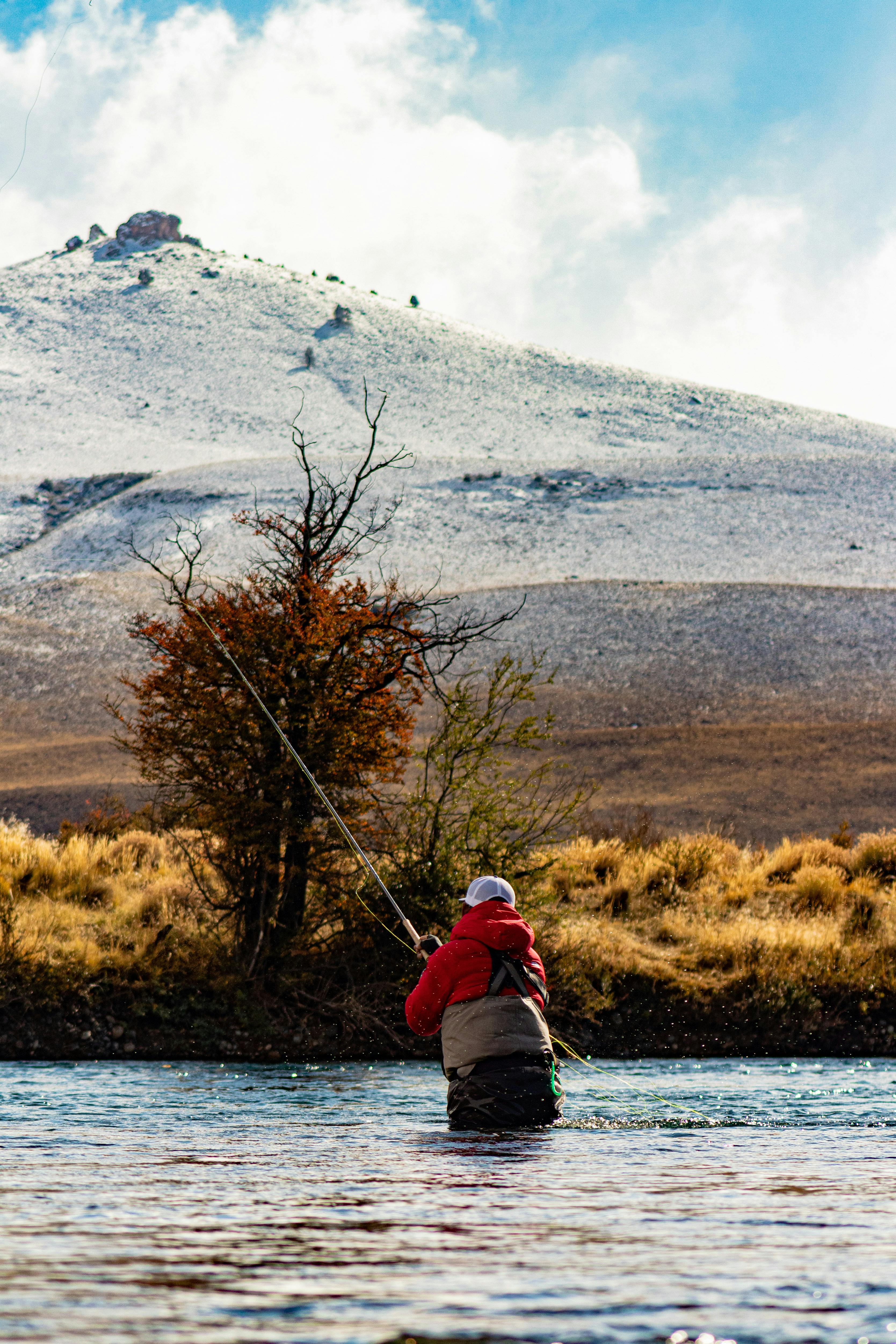
If you want a disc drag on your trout rod — for big browns in fast water, or because you fish the same reel for bass — the Lamson Liquid S is the pick. It is a sealed disc drag reel with a large arbor, made in the USA, and it costs less than the Battenkill Click in most sizes. The sealed drag shrugs off grit and dunkings, the large arbor picks up line fast when a fish runs at you, and it is available in sizes from 3-weight to 8-weight, so one reel can cover trout and light bass. On a budget, the Redington RUN at $139.99 is the best cheap trout reel: a large-arbor disc drag reel that fishes well above its price. And if you want the classic look for the least money, the White River Classic at $69.98 on sale is a simple click reel that will catch trout all season — just do not expect it to stop a big fish in fast water.
For trout, the seasonal notes are simple. In spring and fall, when the water is cold and the fish are strong, a disc drag gives you more control. In summer, when you are fishing dry flies on light tippet, a click reel is gentler and more fun. The mistakes are buying a saltwater reel for a trout rod — it is heavy, overpowered and unbalanced — and buying the cheapest reel in the shop without checking the drag: a gritty, jerky drag breaks more tippet than any fish does. Spend the money on a smooth drag and a light frame, and the reel will last a decade.
Best fly reel for saltwater?
Short answer: The Orvis Hydros Gen2, at $279.00–$319.00, is the best fly reel for saltwater: a sealed disc drag, a large arbor, and a fully anodised frame that shrugs off salt. The Lamson Liquid Max at $279.99–$329.99 is the best alternative for bigger fish.
Saltwater is the hardest test a fly reel ever faces, and it punishes every weakness. Salt corrodes unprotected metal. Sand grinds unsealed drags. And the fish — bonefish, redfish, striped bass, tarpon — run farther and faster than any trout, so the drag must be strong, smooth and consistent for a run of 150 yards or more. The Hydros Gen2 is built for exactly that: its drag is fully sealed against salt and sand, its large arbor picks up line fast when a bonefish turns and runs at the boat, and its frame is machined and anodised so salt does not eat it. In the 8-weight size it holds about 200 yards of 20 lb backing under a weight-forward 8-weight line, which is enough for bonefish and redfish; step up to the 10-weight size for tarpon and striped bass.

The Lamson Liquid Max is the alternative if you chase bigger fish: it is a sealed disc drag reel built for 8-weight to 12-weight rods, with a bigger frame and more backing capacity than the Hydros, and it is the reel to buy if tarpon are on the list. The Redington Grande at $329.99–$399.99 is the premium choice — fully machined, sealed, and made for the biggest saltwater fish. Whatever you buy, the care routine is the same and it is not optional: rinse the reel in fresh water after every saltwater trip, dry it, back the drag off for storage, and check the drag before the next trip. Salt left on a reel for a week will seize a drag that was perfect yesterday.
The mistakes in saltwater are expensive. Buying an unsealed reel because it is cheaper is the classic one — it works for one trip and seizes on the second. Buying a reel with too little backing is the other: a bonefish’s first run can take 150 yards, and if the backing runs out the line snaps and the fish is gone. And forgetting to rinse the reel is the slow mistake that kills a good reel in a season. For saltwater, the rule is simple: sealed drag, large arbor, 200 yards of backing, and a rinse after every trip.
How do I match a reel to my rod?
Short answer: Match the weight number first — a 5-weight reel on a 5-weight rod — then check the balance: the outfit should balance at the grip with the line out. Then check the backing capacity for the fish you will catch.
Matching a reel to a rod takes five minutes and three checks. First, read the rod: the weight is printed just above the grip, for example 5 wt or 8 wt. Second, buy a reel rated for that weight — every reel lists the line weights it takes, usually a range like 4–6wt or 7–9wt. If your rod is a 5-weight, any reel rated for 5-weight will work; pick the middle of the range, not the edge, so the spool holds the line comfortably. Third, spool it up: put on the backing, then the fly line, then the leader, and check the balance. Hold the rod with one finger under the cork grip, with the line out of the tip. If the outfit balances level, the match is right. If the tip drops, the reel is too light; if the butt drops, the reel is too heavy.
Backing is the part people forget. As a guide, a trout reel needs about 100 yards of 20 lb backing, a bass or pike reel about 150 yards, and a saltwater reel 200 yards or more. If the spool is full of backing and the fly line still sits proud of the spool rim, the reel is too small — step up a size. If there is a big gap between the line and the rim, the reel is too big — step down. The line should sit just below the spool rim when everything is loaded.
Seasonal notes: in spring, check the match before the first trip — a reel that sat all winter may have a sticky drag or a corroded frame. In summer, a lighter reel is worth more, because you cast all day. In saltwater season, re-check the backing: old backing weakens, and a fish that runs 150 yards will find the weak spot. And if you own several rods, you do not need a reel for each — a 5-weight reel will fish a 4-weight and a 6-weight rod acceptably, and an 8-weight reel will cover 7-weight and 9-weight rods. One good reel per weight range is enough.
The mistakes are all about buying before checking. Buying a reel for a rod you do not own yet is the first — the reel may not match the rod you eventually buy. Buying the lightest reel in the shop without checking capacity is the second — it will not hold enough backing. And buying two cheap reels instead of one good one is the third: one good reel that balances your rod and stops fish is worth more than two that do not. Match the weight, balance the outfit, check the backing, and the reel will disappear into the fishing — which is exactly what a good reel should do.