
Bass eat frogs, crawfish, shad and bluegill — and the best lure is the one that looks like what bass are eating today. This guide picks the best bass lures by season and water, with prices checked at publish time.
Best bass lures at a glance
| Pick | Lure | Price | Lure type | Colour | Depth |
|---|---|---|---|---|---|
| Best overall | Yamamoto 5″ Senko | $7.69 | Soft plastic stick bait | Green Pumpkin | 0–6 ft |
| Best for spring | Z-Man The Original ChatterBait | $3.99–$5.99 | Bladed jig | White / Chartreuse | 2–6 ft |
| Best for summer | BOOYAH Pad Crasher | $8.49–$8.99 | Hollow-body frog | Cricket Frog | Topwater |
| Best for fall | Bass Pro Shops Tourney Special Crankbait | $3.99 | Crankbait | Golden Tiger | 3–6 ft |
| Best budget | Bass Pro Shops Tourney Special Double Willow Spinnerbait | $3.99 | Spinnerbait | White / Chartreuse | 2–5 ft |
Prices checked November 19, 2026 at Bass Pro Shops. Prices vary and change often — check the current price before you buy.
Bass lure comparison chart — lure, season, depth & target
Depths below are approximate — the right depth depends on the water, the season and how you fish the lure. Target is the bass species each lure catches best; most of these lures catch both largemouth and smallmouth.
| Lure | Season | Water depth (approx.) | Target |
|---|---|---|---|
| Senko (weightless) | Spring, summer, fall | 0–6 ft | Largemouth, smallmouth |
| ChatterBait (bladed jig) | Spring | 2–6 ft | Largemouth |
| Pad Crasher (frog) | Summer | Topwater | Largemouth |
| Crankbait | Fall | 3–6 ft | Largemouth, smallmouth |
| Spinnerbait | Spring, fall | 2–5 ft | Largemouth, smallmouth |
| Football jig | Winter, deep | 8–20 ft | Largemouth, smallmouth |
What is the best lure for bass?
Short answer: The Yamamoto 5-inch Senko in Green Pumpkin is the best lure for bass — it catches largemouth and smallmouth in every season, in every kind of water, and it is the easiest lure to fish. Rig it weightless on a wide-gap hook and you will catch bass.
The Senko is a soft plastic stick bait, and it works for a reason that has nothing to do with fancy design: it falls slowly, with a subtle shimmy, and bass cannot resist it. A bass sees a Senko sinking past a dock piling and eats it on the fall, before you ever move the rod. Rig it weightless on a 3/0 or 4/0 wide-gap hook, cast it out, let it sink on a slack line, and watch the line for a twitch. That is the whole technique, and it catches fish from the first cast. A pack of Senkos costs $7.69 at Bass Pro Shops, and one pack lasts a dozen fish if you rig them carefully.
There are other ways to fish a Senko, and they all work. Texas-rigged with a light bullet weight, it fishes through grass and wood. Wacky-rigged — hooked through the middle so both ends wiggle — it is the deadliest finesse bait in fishing, and it catches bass that refuse everything else. On a drop shot, a 4-inch Senko fishes deep water in winter. The colour to start with is Green Pumpkin, which looks like a crawfish or a baitfish in almost any water; add Watermelon Red Flake for clear water and Black with Blue Flake for stained water, and you have the three colours that catch 90% of Senko bass.
The Senko is not the only great bass lure, and the best anglers carry five. A ChatterBait covers water fast in spring. A frog catches the biggest bass of the summer. A crankbait finds fish in fall. A spinnerbait is the search bait that works everywhere. But if you could only own one lure, it would be the Senko — it catches fish when nothing else does, it is easy to fish, and it costs less than eight dollars. The mistakes: fishing a Senko too fast (let it fall), using a hook that is too small (the fish pulls off), and using a heavy weight when weightless would catch more.
Best bass lures by season?
Short answer: Spring: ChatterBait and spinnerbait in shallow water. Summer: frogs on top and Senkos under docks. Fall: crankbaits and spinnerbaits as baitfish school up. Winter: football jigs and drop shots in deep water. Match the lure to what bass are eating, and the season tells you what that is.
Spring is the best bass season, and it is the ChatterBait’s season. Bass move shallow to spawn, the water is warming, and a bladed jig — the Z-Man ChatterBait at $3.99 to $5.99 — covers water fast and catches aggressive pre-spawn fish. Fish it around grass, docks and shallow flats, in White or Chartreuse, at 2 to 6 feet. A spinnerbait is the second spring lure: it finds fish in stained water and around cover, and it is the lure to throw when you do not know where the fish are. And a Senko weightless around spawning beds catches the bass that refuse everything else.
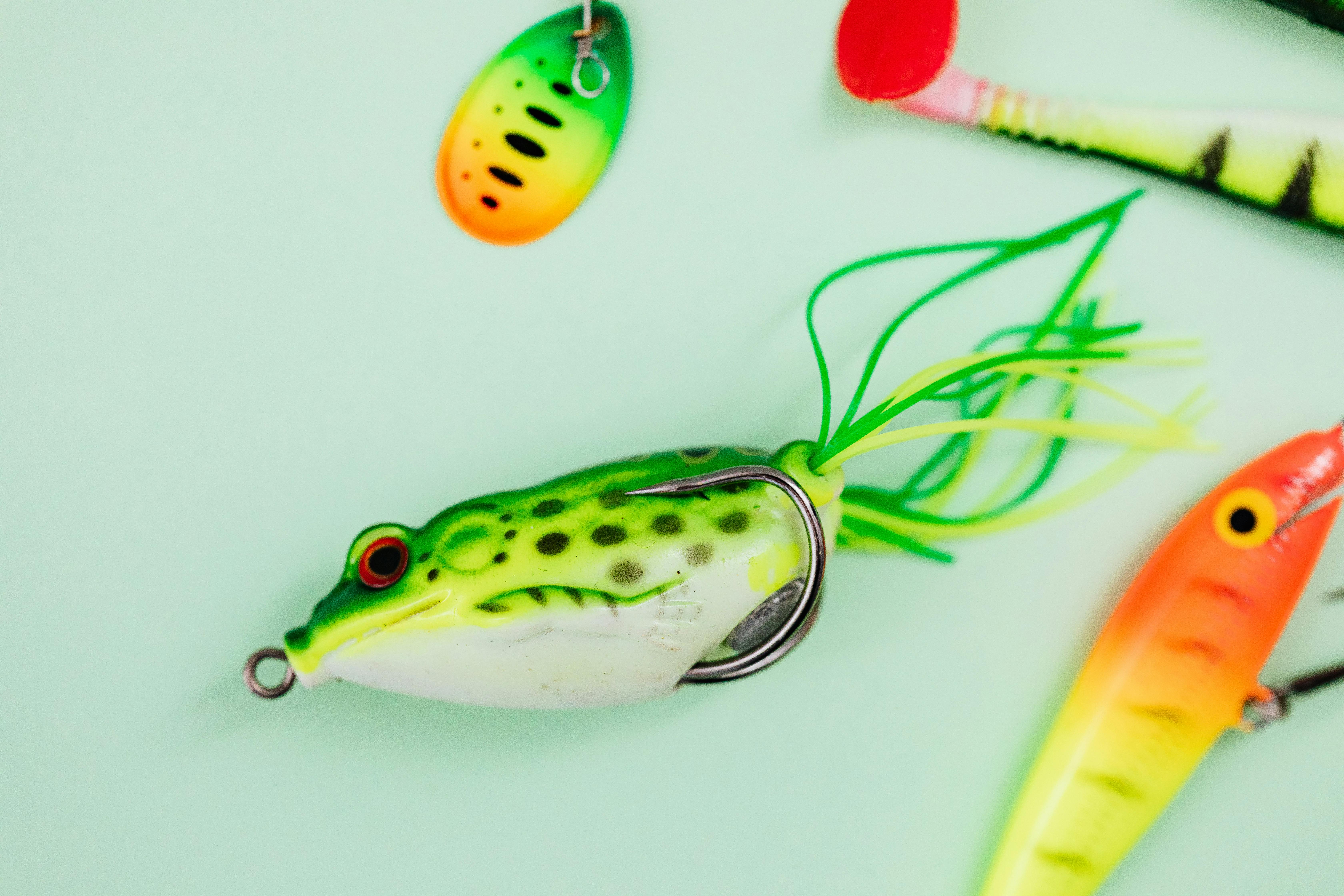
Summer is topwater season. When the water is warm and the bass are under lily pads and grass mats, a hollow-body frog — the BOOYAH Pad Crasher at $8.49 to $8.99 — walks across the mat and gets explosions that no other lure matches. Fish it early in the morning and late in the evening, when the bass are up shallow, and wait a full second after the blow-up before you set the hook — setting too fast is the mistake that loses the most frog fish. Under docks and overhangs, a weightless Senko is the summer finesse bait, and at night, a big spinnerbait or a buzzbait catches the biggest bass of the year.
Fall is crankbait season. As the water cools, baitfish school up and bass chase them, and a crankbait — the Bass Pro Tourney Special at $3.99 — is the lure that imitates a school of shad. Fish it around points, creek mouths and flats in 3 to 6 feet, in shad and crawfish colours, and reel it fast enough to make it deflect off cover — the deflection is what triggers the strike. A spinnerbait is the second fall lure, for the same reason: it covers water and finds the schools. In winter, the fish go deep and slow: a football jig dragged along the bottom in 8 to 20 feet, and a drop shot with a small Senko, are the winter baits. Fish them slowly, feel for the bite, and remember that a winter bass bites softly — the line twitch is the bite.
Frog vs jig vs crankbait — when to use each?
Short answer: Frog for heavy surface cover in summer. Jig for deep water, wood and winter. Crankbait for covering water and finding fish in fall. The three lures do three different jobs — the water and the season tell you which one to throw.
A frog is a hollow-body topwater lure that looks like a frog and, more importantly, fishes where nothing else can: across lily pads, grass mats and slop. Its double hooks point up and are protected by the soft body, so it slides over vegetation without snagging, and a bass explodes on it from below. Fish a frog on heavy braid — 50 lb to 65 lb — with a heavy rod, walk it with short twitches, and pause it in open pockets in the pads. The strike is violent and visual, which is why frog fishing is the most exciting bass fishing there is. The catch is the hook set: wait a full second after the blow-up before you set the hook, because the bass often misses the frog on the first strike and comes back for it. Setting too fast pulls the frog away from a fish that would have eaten it.
A jig is the opposite of a frog: it fishes the bottom, in deep water, around wood and rock, and in winter when the fish are slow. A football jig dragged along a rocky bottom in 8 to 20 feet catches the biggest bass in the lake, because big bass live deep and eat crawfish. Fish a jig slowly: drag it, hop it, let it sit. The bite is often just a heavy feeling or a line twitch — set the hook on anything that feels different. A jig with a craw trailer in Green Pumpkin or Black and Blue is the classic combination, and it catches fish in every season, but it is at its best in winter and in deep summer, when the fish are on the bottom.
A crankbait is a search bait: it covers water fast, finds fish, and triggers reaction strikes. A square-bill crankbait in 3 to 6 feet deflects off wood and rock, and the deflection is what makes a bass bite — a crankbait that runs clean through open water catches far fewer fish than one that bangs into cover. A deep-diving crankbait fishes 10 to 20 feet for summer and winter bass on ledges. The rule for crankbaits is to match the lure’s running depth to the water: a 3-foot crankbait in 10 feet of water catches nothing, and a 15-foot crankbait in 4 feet of water snags the bottom. Check the depth on the box, and carry three: shallow, medium and deep.
Here is the decision guide. Heavy surface cover and summer: frog. Deep water, wood, rock or winter: jig. Open water, points, flats and fall: crankbait. Stained water and wind: spinnerbait or ChatterBait. Clear water and pressured fish: Senko. The mistakes: throwing a frog in open water (it needs cover to work), throwing a jig too fast (it needs to sit on the bottom), and throwing a crankbait at the wrong depth. Each lure has a job — match the lure to the water, not to what you feel like throwing.
What colour lure for bass?
Short answer: In clear water, use natural colours — Green Pumpkin, Watermelon, shad patterns. In stained water, use bright colours — Chartreuse, White, Fire Tiger. At night or in muddy water, use black. Match the lure to the water colour, not to your favourite colour.
Colour matters, but it matters less than most anglers think — and it matters most in clear water. In clear water, a bass sees the lure well, and a natural colour that looks like a crawfish, a shad or a bluegill gets more bites than a bright colour that looks like nothing in the lake. Green Pumpkin is the standard soft-plastic colour for a reason: it looks like a crawfish in any water. Watermelon Red Flake is the clear-water finesse colour. Shad patterns — silver, white and grey — are the crankbait and spinnerbait colours for open water, because they look like the baitfish bass are eating.
In stained water, the rules change. Visibility is low, so the lure needs to stand out: Chartreuse, White, and Fire Tiger are the colours that show up in stained water. A spinnerbait with a chartreuse blade and a white skirt catches bass in water where a natural colour would be invisible. In muddy water, black is the best colour — not because bass see black, but because black makes the strongest silhouette against a bright sky, and a bass looking up sees the lure clearly. At night, black is also the best colour for the same reason.
Season changes the colours too. In spring, crawfish colours — red, orange and brown — are best, because bass eat crawfish in spring and crawfish turn red when they moult. In summer, natural greens and shad patterns are best. In fall, shad patterns dominate, because bass are chasing schools of shad. And the water colour is the first thing to check before you pick a colour: hold your hand in the water and look at it. If you can see your hand clearly at 2 feet, the water is clear — use natural colours. If you cannot see it at 1 foot, the water is stained — use bright colours. If you cannot see it at 6 inches, the water is muddy — use black.
The mistakes are about carrying too many colours and changing too often. Three colours cover almost all bass fishing: Green Pumpkin for soft plastics, White or Chartreuse for moving baits, and a shad pattern for crankbaits. Change colour only when you have fished a spot well with the right lure and the right retrieve and still have no bites — then change colour, not lure. And do not buy a lure because of its colour in the shop: a lure’s action and depth matter far more than its paint, and a good lure in the wrong colour still catches fish.
Best budget bass lures?
Short answer: The Bass Pro Shops Tourney Special lures are the best budget bass lures — the Double Willow Spinnerbait and the Crankbait both cost $3.99, and they catch fish as well as lures costing three times as much. A $20 tackle box with five of them will catch bass all season.
Bass lures do not have to be expensive, and the budget lures from Bass Pro Shops prove it. The Tourney Special Double Willow Spinnerbait at $3.99 is a proper spinnerbait — two willow blades, a painted head, a silicone skirt — and it catches bass in spring and fall, in clear and stained water, around grass and wood. The Tourney Special Crankbait at $3.99 runs 3 to 6 feet, deflects off cover, and catches fish in fall when the bass are chasing shad. Neither lure is fancy, and neither needs to be: a spinnerbait’s job is to flash and vibrate, and a crankbait’s job is to wobble and deflect, and both do it well.
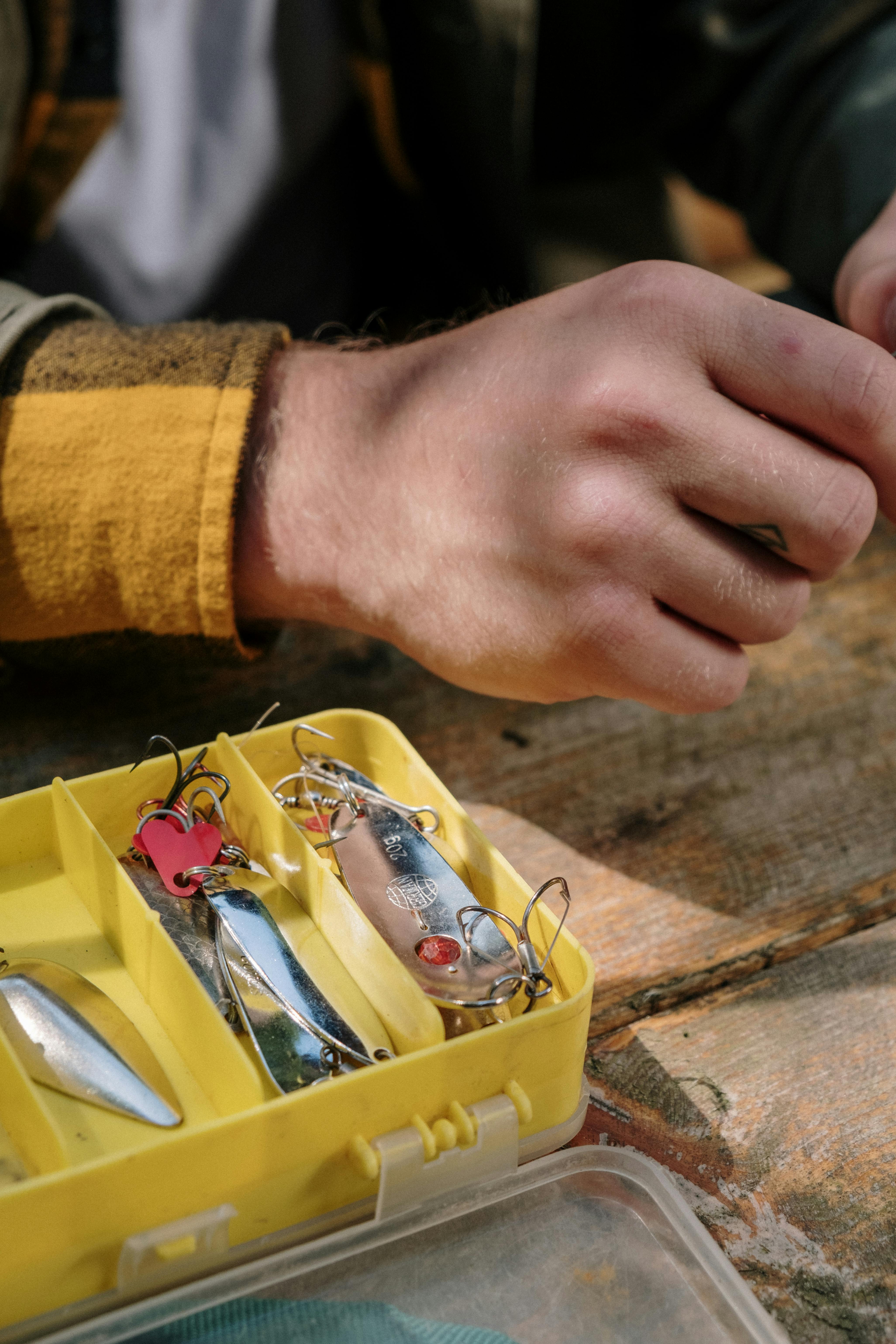
Here is a $20 budget bass box that catches fish. Two Tourney Special Spinnerbaits in White and Chartreuse ($7.98). One Tourney Special Crankbait in Golden Tiger ($3.99). One pack of Bass Pro Shops Ribbontail Worms in Green Pumpkin ($4.99). That is $16.96, and it covers spring, summer and fall, shallow and deep, clear and stained water. Add a pack of Senkos when you can afford it ($7.69), and you have the five lures that catch 90% of bass. Buy the budget lures first, learn to fish them well, and only then spend money on premium lures — a $15 lure in the hands of an angler who cannot fish it catches fewer fish than a $4 lure in the hands of an angler who can.
The mistakes with budget lures are about hooks and care, not about the lure itself. A cheap lure with a dull hook catches nothing — check the hooks on every budget lure, and replace them with sharp trebles if they are dull. A budget lure with a bent wire or a cracked body should be thrown away, not fished — it will not run straight and it will not catch fish. And do not buy 20 budget lures in 20 colours: buy five lures in three colours and learn them. In spring, the spinnerbait is the budget star; in summer, the worm; in fall, the crankbait. One lure fished well beats ten lures fished badly, at any price.
Start with the five lures in the tables above — a Senko, a ChatterBait, a frog, a crankbait and a spinnerbait — and fish them through a full season before you buy anything else. The lure that catches bass is the one that matches the season, the water and the depth, and the angler who knows those three things will out-fish the angler with a tackle box full of lures they never learned to use.