
Every angler has a drawer full of plastic baits that look great in the package but produce nothing on the water. Feather lures are different. They breathe, pulse, and collapse on the pause, mimicking a dying baitfish in a way that injection-molded plastic simply cannot. The first time you watch a bass crush a marabou jig on a slow fall, you will understand the difference.
This guide walks you through the entire process of building feather lures from scratch. You will learn which feathers work for which species, how to prep them so they don’t rot, and how to tie a lure that survives repeated strikes. I have included the physics behind each step so you can adjust your patterns for depth, current, and water clarity. You will finish with a durable, custom lure that out-fishes most store-bought options.
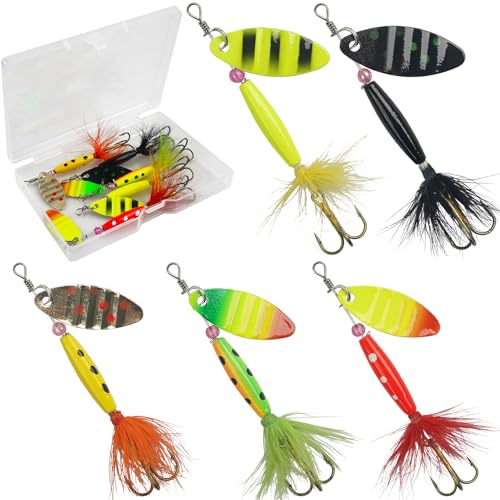
JSHANMEI
5pcs Spinner Baits Bass Lures, Rooster Feather Tail Fishing Lures Kit | Hard Metal Inline Spinner Bait Trout Lures, for Bass Walleye Salmon Freshwater Saltwater Fishing
- 5PCS FISHING LURES KIT: These spinner baits length about 3in, weight about 0.27oz, can fishing a wide variety of fishes. The packi…
- EXCELLENT COMPONENTS: Each spinner bait comes with a strong sharp treble hook, brass spinner blade and body, ensures outstanding p…
- OPTIMAL FLASH & VIBRATION: Precisely u-shaped brass clevis allow the spinner blades to freely spin under water, generate continuou…
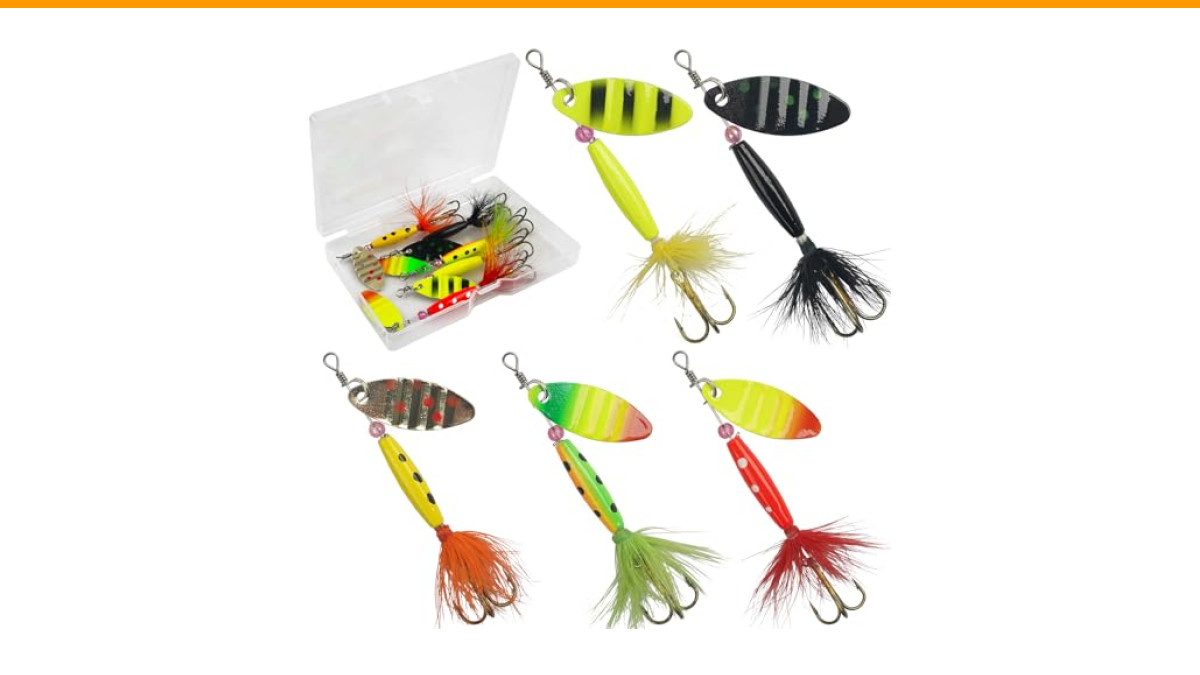
If you want a proven starting point before you tie your own, the JSHANMEI 5pcs Spinner Baits Kit gives you a set of rooster feather tails with sharp treble hooks and brass blades. It is a solid baseline for understanding how flash and feather movement work together.
Why Feather Lures Outperform Standard Baits
Feathers have a unique property: they trap water between the barbs. When you strip a feather lure through the water, the fibers flare out and then collapse when you pause. This creates a lifelike breathing action that triggers predatory instinct. Soft plastic baits have a uniform flex, but feathers have an irregular, organic pulse.
The material also moves at a different speed than the hook. A marabou tail will lag behind the jig head on a fast retrieve, then catch up and flutter on the pause. That variable speed is what makes fish commit. They see a fleeing bait that suddenly slows, and they attack.
There is also a durability myth worth busting here. Many anglers think feathers are fragile and fall apart after a few casts. That is only true if you skip the preparation steps. Properly cured and sealed, a feather lure lasts dozens of trips. The key is treating the feather fibers and the thread base correctly, which we cover in the steps below.
Essential Materials and Tools (And Why Quality Matters)
You do not need a $200 fly-tying vice to start. A basic rotary vice helps, but a simple stationary clamp works fine. The tools that matter most are your bobbin, scissors, and whip finish tool. Cheap scissors will crush the feather fibers instead of cutting them cleanly. Spend $15 on a pair of fine-tipped scissors with sharp blades.
Your thread choice matters more than most beginners realize. Use 210-denier flat waxed nylon thread for most freshwater lures. It grips the hook shank well and flattens out for a smooth head. For saltwater, switch to gel-spun thread or a heavier 210-denier thread with a UV-resistant coating.
Choosing the Right Feathers (Marabou vs. Hackle vs. Schlappen)
Marabou is the go-to for jigs and spinnerbaits. It comes from the marabou stork and has long, fluffy barbs that pulse dramatically in water. It is ideal for bass, walleye, and crappie. The downside is that marabou mats down when wet, so you need to fluff it with your fingers before each cast.
Hackle feathers come from rooster necks. They have stiff, webby barbs that hold their shape and create a more precise, streamlined profile. Hackle works well for trout streamers and saltwater patterns where you need a clean silhouette. It does not have the same breathing action as marabou, but it casts better in wind.
Schlappen is a middle ground. It is softer than hackle but stiffer than marabou. It has long fibers that undulate at slow speeds, making it a great choice for jerkbaits and swim jigs. If you want a lure that works at a slow, steady retrieve, schlappen is your best bet.
Selecting the Correct Hook Size and Weight
Match the hook size to the baitfish in your lake. For panfish and trout, a size 8 to 10 hook with a 1/32-ounce head works well. For bass, use a size 2 to 4 hook with a 1/8 to 1/4-ounce head. The weight determines your casting distance and the fall rate. A 1/8-ounce jig falls about one foot per second, while a 1/4-ounce head falls roughly twice that fast.
Heavier heads also change the action. A heavy head makes the marabou trail straight behind on the fall. A lighter head lets the feather flutter and spiral. If you are fishing deep water or heavy current, go heavier. If you need a slow, tempting fall, stay light.
Step 1: Preparing Your Feathers for Maximum Durability
Raw feathers carry oils and bacteria that cause rot. Skip this step and your lure will smell foul and lose fibers within a week. Start by washing the feathers in warm water with a few drops of dish soap. Gently swirl them for 30 seconds, then rinse thoroughly. Do not wring them out; squeeze the water from the quill gently.
Lay the feathers flat on a paper towel and pat them dry. Then, place them in a well-ventilated area for 24 hours. Once dry, apply a thin coat of fly-tying head cement to the base of the quill where it will touch the thread. This prevents the hollow quill from cracking and separating from the hook shank.
For saltwater, you need an extra step. Soak the dried feathers in a solution of one part isopropyl alcohol to three parts water for five minutes. This removes any remaining oils and sterilizes the fibers. Let them dry completely before tying. This simple process extends the life of your lure by months.
Step 2: Securing the Hook and Adding the Weight Base
Clamp the hook in your vice with the point facing up and the hook bend parallel to the vice jaws. Start your thread on the hook shank about 1/8 inch behind the eye. Wrap backward toward the bend, creating a smooth, even base. This base gives the feathers something to grip and prevents them from sliding down the shank.
If you are using a pre-weighted jig head, skip this paragraph. If you are using a plain hook, add lead wire wraps. Wrap the lead wire around the shank from the middle toward the eye, leaving a small gap at the eye. Push the wraps together tightly, then cover them with thread. This creates a smooth, bullet-shaped head that cuts through the water.
Test the balance by placing the hook on your index finger. The hook point should hang slightly downward. If the hook rides sideways, adjust the lead wraps. A balanced lure falls horizontally, which is exactly what you want for a natural presentation.
Step 3: Tying the Tail and Collar (The Core Technique)
Select a clump of marabou fibers about the diameter of a pencil. Hold it against the hook shank just behind the bend, with the tips pointing toward the hook point. The clump should extend about one and a half times the hook shank length. Make two loose wraps of thread over the quill, then pull tight. The fibers should flare slightly.
Now build the collar. Take a second clump of marabou, this time about half the size of the tail. Place it on top of the shank, just behind the eye, with the tips pointing back toward the tail. Wrap the thread over the quill three times, pulling tight on each wrap. This collar flares out and creates the bulky profile that fish target.
Here is the common mistake: tying the collar too tight. If you cinch down hard, you crush the feather fibers at the base, and they lose their ability to flare. You want the thread to hold the quill firmly but not compress the fluffy barbs. Pull until the quill stops sliding, then stop.
Mastering the Thread Whip Finish
A whip finish locks your thread in place without leaving a knot that unravels. It takes practice, but it is essential. Hold the thread taut in your non-dominant hand. With your dominant hand, make a loop over the hook eye. Wrap the thread around the shank and through the loop four times. Pull the loop tight, and the wraps cinch down over the thread base.
If you struggle with the hand whip finish, buy a whip finish tool. It does the same job with less frustration. Practice on a bare hook ten times before you use it on a finished lure. The tool costs about $10 and saves you hours of re-tying.
After the whip finish, apply a drop of head cement to the thread wraps. This seals the knot and prevents the thread from unraveling after a few casts. Let it dry for at least 15 minutes before moving to the next step.
Step 4: Adding Flash and Movement (Flashabou and Beads)
Flashabou is a mylar fiber that adds a metallic glint to your lure. Cut four to six strands, each about the same length as your marabou tail. Place them on top of the tail clump before you tie it down. The flashabou will catch light and create a subtle shimmer that mimics baitfish scales.
Do not overdo the flash. In clear water, two strands are enough. In stained water, use six. Too much flash makes the lure look unnatural and can spook wary fish. The goal is to add a hint of reflection, not a disco ball.
Adding a glass or brass bead in front of the collar creates a knocking sound as the lure moves. This is particularly effective for walleye and smallmouth bass. Slide the bead onto the hook before you tie the collar. Position it between the collar and the jig head. The bead clicks against the head on each retrieve, sending out low-frequency vibrations.
Step 5: Sealing and Protecting Your Lure (Coatings vs. UV Resin)
Head cement works for the thread wraps, but it is not enough for the feather bases. You need a flexible sealant that bonds the quill to the thread. Sally Hansen Hard as Nails nail polish is a cheap, effective option. Apply a thin coat over the thread wraps and the base of the feathers. It dries clear and flexes with the hook, so it won’t crack.
UV resin is the premium option. It cures in seconds under a UV light and creates a rock-hard, waterproof seal. Use it only on the thread head, not on the feather fibers. Resin on the fibers makes them stiff and ruins the action. Apply a small amount to the thread wraps, then cure it for 30 seconds.
There is a trade-off. Nail polish takes 20 minutes to dry but is cheaper and easier to touch up on the water. UV resin is instant but requires a light and is more expensive. Most anglers keep both on the bench. Use nail polish for the initial tie, and carry a small UV kit for field repairs.
Step 6: Field Testing and Adjusting Action
You cannot judge a lure in the vice. You have to get it on the water. Cast the lure out and watch the fall. A good marabou jig should flutter horizontally, with the tail undulating and the head pointing slightly down. If the lure dives nose-first, you have too much weight. If it falls flat and spins, the tail is too long.
Test the retrieve speed. A slow, steady retrieve should produce a tight, vibrating pulse. A fast strip should make the tail stream out and then collapse when you pause. If the lure doesn’t change action between speeds, the feathers are too stiff or too long.
Make adjustments on the spot. Trim the tail length with scissors by a quarter inch at a time. Shorten the tail to increase the fall rate. Lengthen it to slow the fall and increase the flutter. Keep a small notebook in your tackle bag to record what works for each condition.
Troubleshooting Common Lure Failures
Feathers twisting around the hook shank is the most common issue. This happens when the tail is tied off-center. Re-tie the tail, making sure the quill sits directly on top of the shank, not to the side. Also check your retrieve speed; an erratic, jerky retrieve causes the lure to spin.
Thread slipping off the hook happens when you do not build a proper base. The thread needs to bite into the hook shank, not slide over a polished surface. Roughen the shank with fine sandpaper before you start. This gives the thread something to grip.
Hook bending on a fish is a sign of a low-quality hook. You cannot fix this with technique. Replace the hook with a high-carbon steel model. A bent hook loses fish, and a broken hook loses a trophy. Do not trust cheap hooks for big fish.
Matching Feather Lures to Specific Fish Species
Bass prefer bulky, slow-falling lures with lots of movement. Use marabou with a 1/8 to 3/16-ounce head. Add a rattle bead to trigger reaction strikes in murky water. The key is a slow presentation; let the lure fall on a slack line and watch the line for the tick.
Trout need a more precise, streamlined profile. Use hackle feathers tied as a collar, with a slim marabou tail. Keep the total length under two inches. Trout are visual feeders, and they inspect the lure closely. A bulky lure gets rejected; a slim one gets eaten.
Walleye respond to flash and vibration. Use a marabou tail with several strands of flashabou and a brass blade. The blade creates a thumping vibration that walleye detect with their lateral line. Fish it slow along the bottom with a lift-and-drop retrieve.
Saltwater species like stripers and redfish need larger, heavier lures. Use a 1/2 to 1-ounce head with a long schlappen tail. The heavy head gets down deep in current, and the schlappen undulates at slow speeds. These lures cast far and handle wind well.
Frequently Asked Questions
How long do feather lures last?
A well-made feather lure lasts 20 to 30 fishing trips with proper care. The key is rinsing the lure in fresh water after each trip and letting it dry completely. Do not store it wet. The feathers will mat down and the hook will rust. If the feathers get crushed, fluff them with a toothbrush and apply a drop of conditioner.
Can I use chicken feathers from the craft store?
Yes, but they are not ideal. Craft store feathers are often dyed and treated with chemicals that make them stiff. They work for bulk, but they lack the natural movement of marabou or hackle. If you use them, wash them thoroughly and soak them in fabric softener for an hour to soften the fibers.
What is the best thread for tying feather lures?
210-denier flat waxed nylon is the standard for freshwater lures. It grips well and flattens for a smooth head. For saltwater, use a gel-spun thread like GSP, which is stronger and resists UV damage. Avoid standard cotton thread; it absorbs water and rots.
Do feather lures work in saltwater?
They work extremely well, but you need to take extra precautions. Use stainless steel hooks or at least a corrosion-resistant finish. Seal the thread head with UV resin. Rinse the lure in fresh water immediately after each saltwater trip. Salt crystals will destroy the feathers and corrode the hook if left to dry.
How do I prevent feathers from twisting around the hook?
Twisting is caused by an off-center tie or a retrieve that is too fast. Make sure the tail clump is centered on the hook shank. Use a slow, steady retrieve. If the problem persists, shorten the tail by a quarter inch. A shorter tail has less surface area to catch the water and spin.
Final Cast: Maintenance and Storage Tips
- Rinse every feather lure in fresh water after each trip, especially if you fished in saltwater or a lake with heavy algae.
- Dry lures completely before storing. Hang them on a pegboard or lay them flat in a tackle box with ventilation. Do not seal them in a plastic bag while wet.
- Fluff matted feathers with an old toothbrush. Work from the base to the tip to restore the natural fiber separation.
- Reapply head cement to the thread wraps every few trips. The cement wears off with casting and can expose the knot to water.
- Sharpen your hooks after every five trips. A dull hook loses fish. Use a hook file and take three or four passes along the point.
- Store lures away from direct sunlight. UV rays fade the feather color and weaken the thread. A dark, cool tackle box is ideal.
- Carry a small repair kit with extra thread, a bobbin, and a bottle of head cement. A quick field repair can save a trip.
