You bought the old round reel at a garage sale, or maybe you dug your grandfather’s Abu Garcia out of the attic. The chrome is pitting, the handle wobbles a bit, and you know it holds line. But the first time you tried to cast it, the spool spun faster than the lure flew. The line exploded into a mess that took twenty minutes to untangle. You almost threw the reel in the trash.
Here’s the thing: that reel isn’t broken. Vintage baitcasters demand a different skill set than modern magnetic reels. They have no internal magnets to slow the spool down for you. You are the braking system. This guide teaches you the exact physics of why backlashes happen and the mechanical fixes for each failure. You’ll walk away knowing how to set the tension knob, when to use your thumb, and how to cast into a headwind without crying.
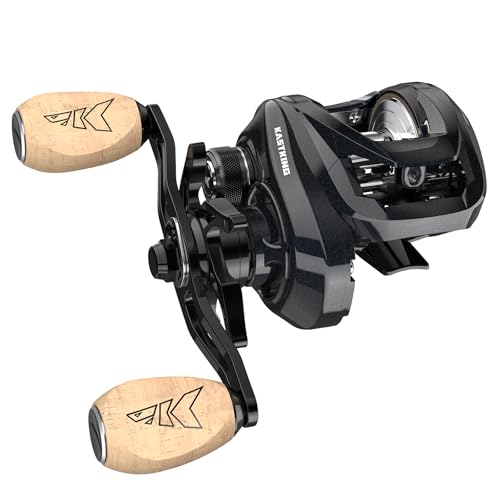
KastKing
KastKing Megatron 100 Baitcasting Reels, 7.2:1 Gear Ratio, Right
- Lightweight Low-Profile Baitcasting Reel: Weighing only 6.9 oz, the MegaTron 100 baitcasting reel features a lightweight graphite…
- High-Speed 7.2:1 Gear Ratio with Brass Gears: The 7.2:1 high-speed gear ratio is perfect for fast lure retrieval, pitching, flippi…
- Smooth Casting Performance: Equipped with 7+1 MaxiDur double-shielded stainless steel ball bearings, this reel provides smooth, re…
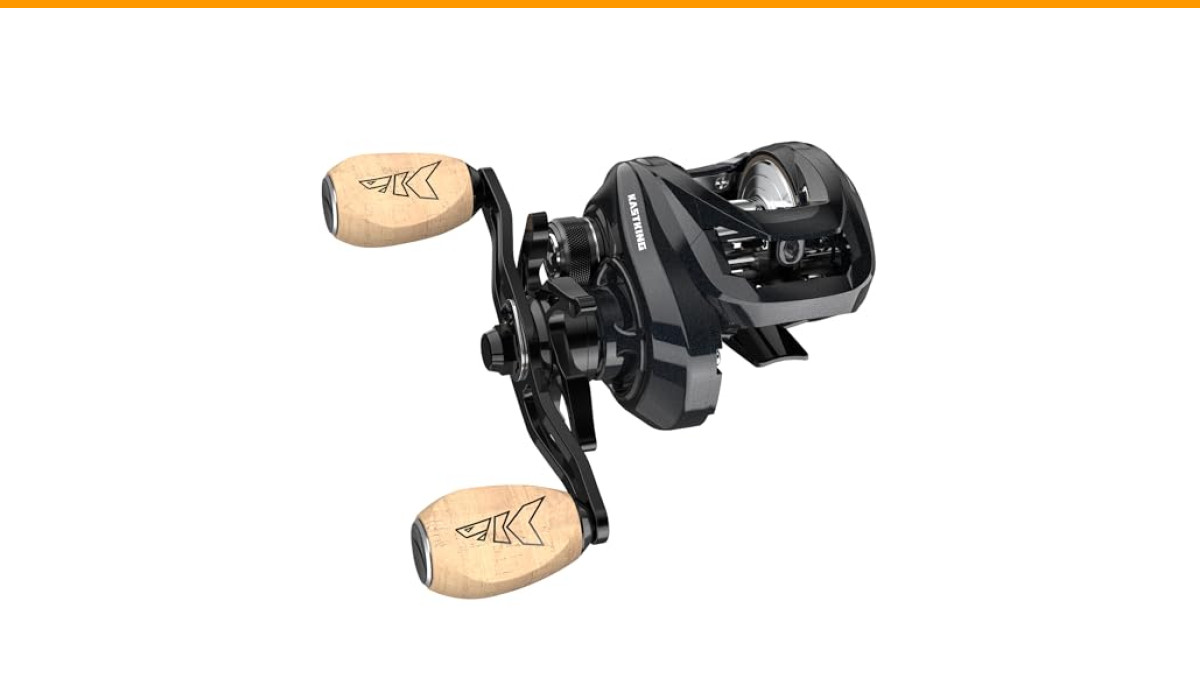
If you want a modern frame of reference while you practice, the KastKing MegaTron 100 offers an 8-button magnetic braking system that takes some of the guesswork out of spool control. It’s a good tool to compare against your vintage reel as you build muscle memory.
The Anatomy of a Baitcaster: Why It Backlashes (and How to Beat It)
A baitcaster spool is a heavy cylinder that wants to keep spinning. When you cast, your thumb releases the spool, and the lure pulls line off it. The problem starts when the lure slows down (because of air resistance or hitting the water), but the spool keeps spinning at high speed. The slack line piles up on the spool, and the next loop of line wraps over it. That’s your backlash, also called a bird’s nest.
Think of it like a car’s wheels spinning on ice. The car (your lure) is moving forward, but the wheels (spool) are moving faster than the car. When the car stops, the wheels keep spinning. You need a way to apply the brakes.
Vintage reels give you two manual brakes: the spool tension knob and your thumb. There is no third option. If you rely on the reel to fix your mistakes, you’ll be picking line out of the reel all day.
The 3 Adjustments You Must Make Before Every Cast
You cannot skip this step. Casting a baitcaster without setting it up is like driving a car with no air in the tires. It will work, but it will handle terribly.
Spool Tension Knob
This is the knurled knob on the side of the reel, opposite the handle. It presses a brake pad against the spool axle. Here is the standard test: hold the rod tip up at a 45-degree angle. Press the free-spool button (the thumb bar) and let the lure drop. The lure should fall to the ground, and the spool should stop spinning the instant the lure hits the deck. If the spool keeps spinning after the lure lands, tighten the knob a quarter turn. If the lure falls too slowly, like it’s in honey, loosen the knob.
This adjustment controls the baseline spool speed. For a vintage reel, start with a heavier lure (3/8 oz or more) and a tighter tension. You’ll sacrifice distance for control, but you’ll avoid the backlash.
Braking System (Magnetic vs. Centrifugal)
Your vintage reel might have one of two systems. Magnetic brakes use a dial on the side that moves magnets closer to the spool. Centrifugal brakes use small pins that fly outward against a brake ring. If your reel has a magnetic dial, start with it set to 75% of maximum. If it has centrifugal pins, push all the pins out to the outer position. These systems slow the spool at the start of the cast, when the spool is moving fastest.
The trade-off: magnetic brakes are easier to adjust mid-cast. Centrifugal brakes are set-and-forget until you change lure weight. Most vintage reels, especially from the 70s and 80s, use centrifugal pins. You’ll need to open the side plate to adjust them. Take your time; those pins are small and easy to lose.
The Step-by-Step Casting Motion (Overhead & Sidearm)
Now that the reel is set, let’s talk about your body. The most common mistake beginners make is using only their wrist. You need your whole arm to accelerate the rod smoothly.
Start with the overhead cast. Hold the rod with your thumb on the spool. Your thumb should be pressing down firmly, locking the spool. Bring the rod back to about the 1 o’clock position, then snap it forward to the 10 o’clock position. As the rod moves forward, release your thumb at the 11 o’clock position. The lure will fly out. As the lure reaches its target, press your thumb down on the spool to stop it.
The sidearm cast is gentler and more accurate. Keep the rod parallel to the water. Use the same smooth acceleration, but release your thumb slightly later. This cast is better for skipping lures under overhanging branches because the lure travels on a flatter trajectory.
Thumb Pressure: The Master Control
Your thumb is not an on/off switch. It is a variable brake. During the cast, your thumb should hover just above the spool, barely touching the line. As the lure slows down, you press harder. This is called thumbing the spool. It is the single most important skill in baitcasting.
Here is a drill to practice: cast with no lure, just a practice plug. Watch the spool. When you see the line start to loosen, press your thumb down. You’ll feel a slight burn on your thumb. That’s normal. After a dozen casts, your thumb will learn the rhythm automatically.
Advanced Techniques: The Pitch and the Flip
Once you can cast overhead without a backlash, learn to pitch. Pitching is a short, underhand lob that uses the rod’s flex, not a big swing. Let out about 6 feet of line. Hold the lure in your free hand, pull the rod tip down, then release the lure and swing the rod up smoothly. The lure should land softly with almost no splash. This technique is deadly for skipping baits under docks.
The flip is even shorter. You use the rod’s tip to swing the lure to a target within 15 feet. No casting motion at all. You just lift the rod tip and let the lure swing. These techniques are essential for fishing heavy cover, and they are far easier on a vintage reel because you never let the spool spin up to high speed.
One honest caveat: a vintage reel with a narrow spool will pitch light lures (under 1/4 oz) poorly. The spool is too heavy to start moving with light line. You’ll need a modern reel with a lighter spool for that job. But for 3/8 oz and heavier, the old gear works fine.
How to Fix a Bird’s Nest (Without Cutting Your Line)
You will backlash. Everyone does. Do not cut the line unless it is physically impossible to untangle.
First, stop pulling line off the reel. That only tightens the knot. Instead, press the spool release button and gently pull the line off the spool with your fingers. You’ll feel the loose loops. Keep pulling until you hit the tight knot at the center. Now, use a pick or a stout needle to gently lift the overlapping loops. Do not pull hard. Work from the outside of the knot toward the center. If you meet resistance, lift the top loop and try to pull it free. It takes patience, but it works.
If the line is badly kinked or frayed after you untangle it, cut off the damaged section and retie your lure. Old monofilament that has been sitting on a spool for years is brittle and will backlash more easily. Consider replacing it with fresh line.
Casting in the Wind: Pro Adjustments for Accuracy
Wind is the enemy of the baitcaster. A headwind catches the lure and slows it down, while the spool keeps spinning. That is a guaranteed backlash. Here is how to handle it.
Into the wind: tighten your spool tension knob one full turn. This slows the spool’s maximum speed. Also, use a heavier lure than you normally would. The extra weight cuts through the air. Cast with a lower trajectory, almost a sidearm bullet pass, to keep the lure under the wind.
Across the wind: aim slightly into the wind, and let the wind push the lure back to the target. Do not fight it. Your thumb must be more active here, feathering the spool constantly to keep pace with the lure’s speed.
With the wind at your back: loosen the tension knob a half turn. The wind will carry the lure further than normal. You can use a lighter lure. Keep your thumb light on the spool, but be ready to brake when the lure drops.
Maintenance Check: Keep Your Spool Rolling Smooth
A dirty spool bearing is a hidden cause of backlashes. If the bearing is gunked up, the spool starts slowly, then catches and spins erratically. That inconsistency makes thumbing impossible.
Take the spool out of the reel. Look at the bearings on each end. If they are black or gritty, clean them with a solvent like lighter fluid. Let them dry completely, then add one tiny drop of light oil. Do not over-oil. Excess oil attracts dust and turns into paste.
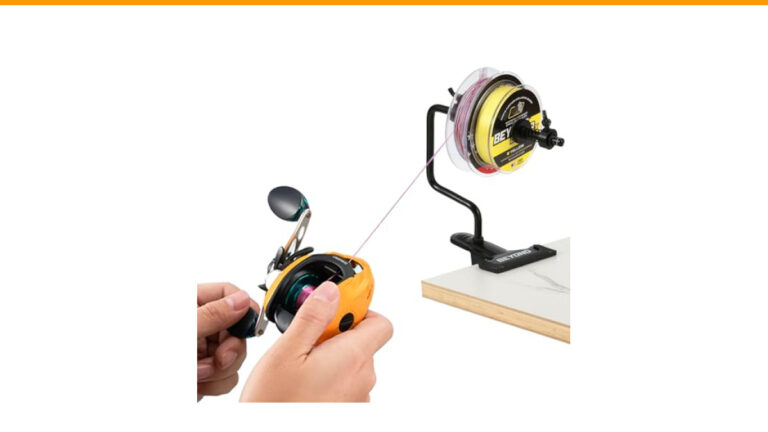
Also, check the line on the spool. If you spooled braided line without tension, the line will dig into itself on the first cast. That creates a rough, bumpy surface that causes the line to catch. Always spool line under tension. Use a line-winder or a pencil through the spool’s center hole with a friend holding pressure on the line as you reel it in. This is especially important with braided line, which has no stretch to absorb the pressure.
FAQ: Quick Fixes for Common Casting Problems
Why does my reel backlash at the very end of the cast?
That is a thumb timing issue. The lure is slowing down, but you are not adding thumb pressure. Watch the spool, not the lure. When the spool’s speed visibly drops, press your thumb down gradually.
My reel casts fine with a 1/2 oz lure, but backlashes with a 1/4 oz lure. Why?
The spool tension is set for the heavier weight. The lighter lure cannot accelerate the heavy spool smoothly, so it stutters. You need to tighten the tension knob and increase the brake setting for lighter lures. Or, stick to lures in the 3/8 oz to 1/2 oz range for that reel.
Should I use monofilament or fluorocarbon on a vintage reel?
Monofilament is easier to manage. It has more stretch and a bit of give, which helps reduce line memory. Fluorocarbon is stiffer and has more memory, meaning it holds the coil shape from the spool. That stiffness causes more backlashes on a reel with no magnetic brakes. Start with monofilament until you have your thumb dialed in.
How do I stop the line from looping over the top of the spool?
That is usually a sign of too much line on the spool, or the spool tension is too loose. The line should be filled to about 1/8 inch below the spool’s outer rim. If it is overfilled, the line catches the frame. If it is underfilled, the line comes off in uneven clumps. Adjust the tension knob first, then check the line level.
My vintage reel’s thumb bar won’t stay depressed. What do I do?
This is a common mechanical failure. The thumb bar latch is worn or dirty. Open the side plate and look at the latch mechanism. Clean it with a solvent and apply a tiny bit of grease. If the latch spring is broken, you need a replacement part. That is a simple fix for most vintage reels, and parts are usually available online.
Final Verdict: Practice Drills to Build Muscle Memory
You cannot learn this from reading. You have to feel it. But you can practice smarter.
- Set up a target (a bucket or a hula hoop) in your backyard. Cast at it from 20 feet, then 30, then 40. Do not worry about distance. Worry about hitting the target without a backlash.
- Spend 10 minutes a day just casting into open water with no target. Focus on the sound of the spool. You want a smooth, high-pitched whine that gradually slows down. If you hear a stutter, your thumb is not applying enough pressure.
- Practice the pitch and flip in your living room with a practice plug. It will improve your accuracy more than any long cast.
- Keep a notebook of your reel settings. Write down the tension knob position and brake setting for each lure weight. You’ll build a reference chart that saves you time on the water.
- Do not use braided line until you can cast monofilament without a backlash for a full hour. Braid has zero stretch and will punish every mistake.
- Clean and oil your reel after every fishing trip. A smooth spool is a predictable spool.
- Be patient. It took me a full weekend of practice to stop backlashing on every cast. By the end of the second week, it was second nature. Your thumb will learn.