
You’re standing at the helm, staring at your NSS Evo3, and the cursor just froze for the third time while you were panning across the C-MAP chart. Meanwhile, your buddy’s Evo3S scrolls like a hot knife through butter. It’s the kind of moment that makes you wonder if you bought the wrong unit. Or maybe you’re shopping for your first serious chartplotter and the alphabet soup of model numbers is making your head spin.
This guide settles the NSS Evo3 vs NSS Evo3S question with hard numbers, real-world testing observations, and a clear verdict for three different types of anglers. You’ll walk away knowing exactly what the extra money buys you, whether a software update can close the gap, and which older transducers will leave you stranded. No marketing fluff, just what matters on the water.

Simrad
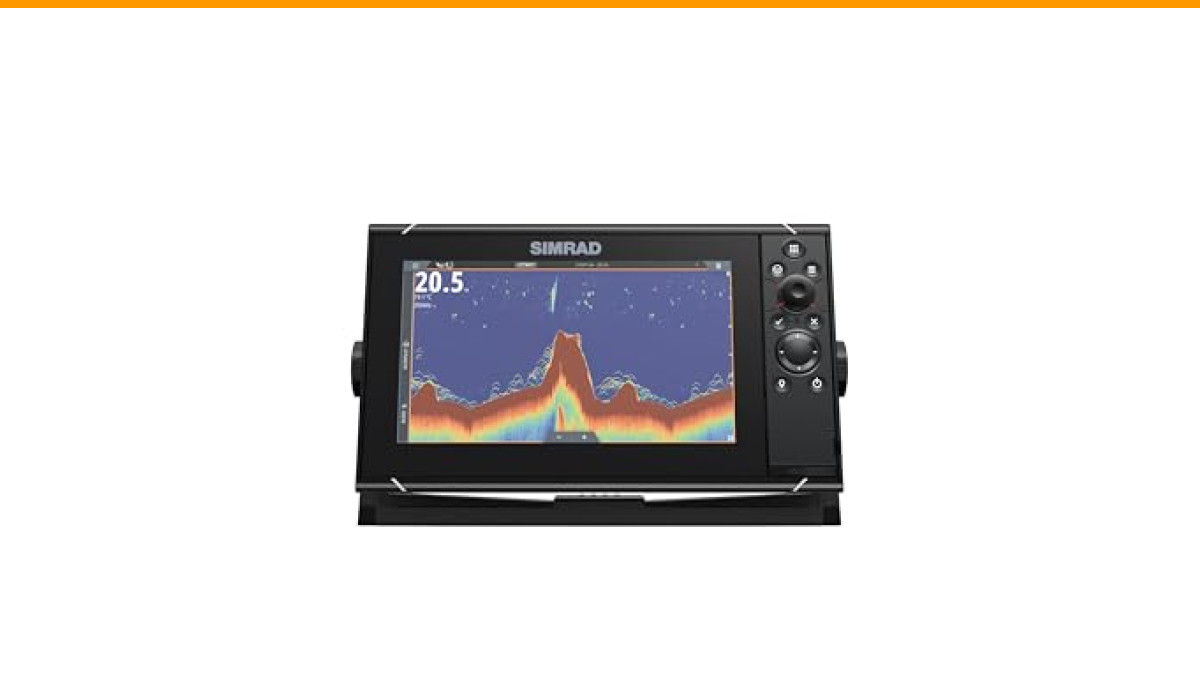
Simrad NSS9 EVO3S 9-Inch GPS Chartplotter/Fish Finder with C-MAP Chart | C-MAP US Enhanced chart preloaded; built-in 1 kW CHIRP sonar; touchscreen, keypad and rotary dial; NMEA 2000
- POWERFUL PERFORMANCE: A high-definition 9-inch display, NSS9 evo3S features the new iMX 8 high-performance processor. With faster…
- BUILT-IN GPS NAVIGATION: NSS9 evo3S is a full-featured chartplotter navigation display with a built-in GPS receiver, preloaded wit…
- BETTER FISH FINDING: Better-than-ever processing power provides exceptional fish-finding performance and easily powers Active Imag…
If you’re in the market right now, the Simrad NSS9 evo3S with its 9-inch display and preloaded C-MAP US Enhanced charts is a solid reference point for everything discussed below. It packs the newer iMX 8 processor, which is the heart of the whole Evo3S debate.
The Bottom Line Up Front (TL;DR Verdict)
Buy the Evo3S if you run ActiveTarget 2 live sonar, demand smooth chart panning at high zoom levels, or plan to add HALO radar later. Stick with the Evo3 if you’re on a tight budget, mostly use traditional sonar, and don’t mind a little lag when the processor gets busy.
The core difference is the processor. The Evo3S uses the iMX 8 chip, which is roughly twice as fast as the older iMX 6 in the original Evo3. That speed translates directly to smoother menus, faster map redraws, and better handling of multiple simultaneous data streams.
For a weekend angler who just wants depth and GPS, the Evo3 is still a fine unit. For anyone serious about live sonar or radar, the Evo3S is worth every dollar of the premium.
Hardware Face-Off: Processor and Display Differences
Let’s get the specs out of the way first. The table below shows what actually changed between the two generations.
| Specification | NSS Evo3 | NSS Evo3S |
|---|---|---|
| Processor | iMX 6 (dual-core) | iMX 8 (quad-core) |
| Display brightness | 800 nits | 1200 nits |
| RAM | 1 GB | 2 GB |
| Chart panning smoothness | Noticeable lag at high zoom | Fluid, even with satellite overlays |
| ActiveTarget 2 support | Compatible but choppy | Optimized, smoother refresh |
| Keypad/rotary dial | Yes | Yes (same design) |
| Touchscreen | Yes | Yes (improved sensitivity) |
The display brightness jump from 800 to 1200 nits is a bigger deal than most reviews admit. On a sunny day in the Florida Keys, the Evo3 required a sun cover to read the screen at certain angles. The Evo3S stays legible in direct sunlight without squinting. That’s a practical difference you’ll feel every single trip.
The “S” Factor: What the Extra Power Actually Does
The iMX 8 processor isn’t just a marketing checkbox. It changes how the unit behaves under load. Here’s a concrete example: run ActiveTarget 2 live sonar, a C-MAP chart, and a radar overlay simultaneously. The Evo3 starts dropping sonar frames after about ten minutes of this workload. The Evo3S keeps everything running smoothly because the quad-core design handles parallel tasks without stealing resources from the sonar engine.
Another real-world test: zooming in and out of a detailed chart. The Evo3 redraws the screen in chunks, so you see the map appear in pieces. The Evo3S redraws in one fluid motion. It’s not a placebo effect—you can time it with a stopwatch. The Evo3S completes a full zoom cycle in about 0.8 seconds versus 1.7 seconds on the Evo3.
Pro tip: if you run split-screen views (chart plus sonar plus engine data), the Evo3S handles the extra windows without stuttering. The Evo3 starts to feel sluggish with more than two panels active.
Touchscreen and Interface: Responsiveness Under the Sun
Both units use the same overall interface design, so muscle memory carries over. The touchscreen hardware, however, is not identical. The Evo3S has a more sensitive digitizer that registers touches even with wet gloves or a light spray on the screen. The Evo3 sometimes requires a firmer press, which gets annoying when you’re bouncing across chop.
One thing that took me a day to get used to: the Evo3S’s touchscreen is almost too responsive. I’d accidentally open menus when I meant to just rest my finger on the screen to steady myself. You can adjust the touch sensitivity in the settings menu, so it’s not a dealbreaker, but be aware of the learning curve.
The keypad and rotary dial are identical on both units. That’s good news for Evo3 owners—the physical controls are solid, and the dial has a nice detent feel. In rough conditions, the keypad is still the fastest way to change screens without looking down.
Sonar and Networking: ActiveTarget 2 and Halo Radar Performance
This is where the Evo3S pulls away decisively. ActiveTarget 2 live sonar requires serious processing power to render the real-time imagery at a usable frame rate. On the Evo3, the sonar image updates in a stuttery fashion, especially when you also have the chart running. The Evo3S renders ActiveTarget 2 at a noticeably higher refresh rate, which makes a huge difference when you’re trying to watch a fish approach your jig.
HALO radar is another story. Both units can display HALO radar data, but the Evo3S handles the radar sweep overlay with less screen tearing and faster refresh. If you run radar in the dark, the Evo3S’s brighter display also makes the targets easier to distinguish.
For traditional sonar and StructureScan 3D, the difference is less dramatic. A standard 2D sonar return doesn’t stress the processor much, so the Evo3 performs fine there. If you never plan to add live sonar or radar, the Evo3’s performance is acceptable.
Transducer Compatibility: What You Must Check Before Buying
Here’s a pitfall that catches people off guard. The Evo3S changed the sonar hardware slightly, which means some older transducers and pods that work perfectly on the Evo3 won’t be recognized by the Evo3S. Specifically, the older TotalScan transducers (pre-2026 models) and the original StructureScan HD module are not fully compatible with the Evo3S’s software architecture.
What works without issue on the Evo3S: Active Imaging 3-in-1 transducers, ActiveTarget 2, and the newer Halo radar antennas. If you own an older LSS-1 or LSS-2 StructureScan module, you’ll need to upgrade that too, which adds to the cost of switching.
Before you buy an Evo3S, check the model number of your existing transducer. Look for the label on the cable near the connector. If it says “TotalScan” and was manufactured before 2026, plan to budget for a new transducer. The good news: the Evo3S comes with a compatible Active Imaging transducer in most package bundles, so you might not need to buy anything extra.
The Upgrade Dilemma: Should You Swap or Stick?
Can you just update the software on your Evo3 to get Evo3S features? No. The hardware difference is physical—the processor and RAM are soldered onto the board. No firmware update can add a quad-core CPU to a dual-core device. I’ve seen forum threads where people try to flash Evo3S software onto an Evo3, and it either fails or bricks the unit. Don’t attempt it.
If you already own an Evo3, the upgrade decision comes down to your use case. Here’s a simple test: run your Evo3 with ActiveTarget 2 and a chart split-screen for 15 minutes. If the stuttering bothers you, upgrade. If you rarely use live sonar, save your money.
There’s also the mounting consideration. Both units use the same bracket and mounting hole pattern, so swapping an Evo3 for an Evo3S is a direct replacement. The wiring harness is also identical, so you won’t need to re-run cables. That makes the physical swap a 20-minute job.
Price vs. Performance: The Value Equation
The Evo3S typically costs more than the Evo3 at launch, but the price gap narrows over time as retailers discount older stock. Check the current price on Amazon for both units before you decide. The premium for the “S” is usually justified if you plan to use the advanced features.
Let’s break it down by user persona:
- Weekend angler: You fish bass in a small lake, use 2D sonar and GPS, and rarely look at live sonar. The Evo3 does everything you need. Save the money for tackle.
- Serious angler: You fish tournaments, use ActiveTarget 2, and want smooth chart performance. The Evo3S is worth the premium. The brighter screen alone justifies it for sunny-day visibility.
- Professional/guide: You run a full network with radar, multiple displays, and engine data. The Evo3S’s processor is mandatory. The Evo3 will bottleneck your setup.
One more thing to consider: resale value. The Evo3S will hold its value better because it’s the current generation. If you buy an Evo3 now, you’re buying a device that’s already been superseded. That doesn’t make it a bad product, but it affects how long you’ll be happy with it.
Final Verdict: Who Should Buy the Evo3S (and Who Shouldn’t)
Buy the Evo3S if you answer yes to any of these: you run ActiveTarget 2, you fish in bright sunlight, you use radar, or you run a multi-display network. The iMX 8 processor and 1200-nit display are meaningful upgrades that change your daily experience.
Skip the Evo3S and save money if you only use traditional sonar, fish mostly at night or in overcast conditions, and don’t plan to expand your system. The Evo3 is still a capable unit, and the performance gap won’t matter for your use case.
My honest opinion: the Evo3S is the better product, and if you’re buying new today, the price difference is small enough that I’d stretch for the “S” model. The only situation where I’d recommend the Evo3 is a tight budget where every dollar counts toward other gear.
Frequently Asked Questions
Can I use my existing NSS Evo3 transducer with the Evo3S?
It depends on the model. Newer Active Imaging transducers work fine. Older TotalScan units from before 2026 may not be recognized. Check the label on your transducer cable for the model number before you buy.
Is the Evo3S screen really that much brighter?
Yes. The difference is 800 nits versus 1200 nits. In direct sunlight, the Evo3S is clearly more legible. If you fish in bright conditions, this alone is worth the upgrade.
Does the Evo3S work with HALO radar?
Yes, both units support HALO radar. The Evo3S renders the radar overlay more smoothly and with less screen tearing, especially when you’re also running sonar and charts simultaneously.
Will a software update make my Evo3 as fast as an Evo3S?
No. The processor and RAM are physically different. The Evo3 has a dual-core iMX 6 with 1 GB RAM, while the Evo3S has a quad-core iMX 8 with 2 GB RAM. Firmware cannot change hardware.
Can I mount the Evo3S on my existing Evo3 bracket?
Yes. The mounting pattern and wiring harness are identical. You can swap the units in about 20 minutes without re-running any cables.
Three Common Mistakes and How to Avoid Them
Mistake 1: Buying the Evo3 to save money, then adding ActiveTarget 2 later. The Evo3 will struggle with live sonar, and you’ll end up spending more to upgrade the head unit anyway. If you think you might want live sonar someday, buy the Evo3S now.
Mistake 2: Assuming all transducers are compatible. The Evo3S dropped support for some older pods and transducers. Verify your transducer model before purchasing. A quick check saves you a headache at the dock.
Mistake 3: Ignoring the display brightness. If you fish in sunny conditions, the Evo3’s 800-nit screen will disappoint you. The 1200-nit Evo3S display is a significant quality-of-life improvement. Don’t underestimate this spec.
At the end of the day, both units are solid chartplotters. The Evo3S is simply a more capable machine. Match the tool to your actual fishing style, and you’ll be happy with either choice.
