
Last winter, I watched a buddy drop three hundred bucks on a flagship flasher, then spend the first hour of daylight fighting with the gain settings while I was already pulling up perch on a unit that cost half as much. That moment stuck with me. The ice fishing gear market pushes premium models hard, but the truth is that the cheapest ice fishing flasher on the shelf often does ninety percent of what the expensive ones do.
The problem is sorting through the noise. Spec sheets list CHIRP, target separation, and interference rejection as if everyone speaks that language. Most of us just want to know one thing: will this thing show my jig and the fish at the same time, all day long, in sub-zero temps, without draining three batteries? That’s the real test.
I spent a season running the Garmin Striker 4 Portable kit side-by-side with units that cost twice as much. The results surprised me. This isn’t a list of the cheapest junk on Amazon. It’s a value engineering breakdown of where your money actually matters and where you can safely save a hundred and fifty bucks without losing performance on the ice.
Here’s a quick look at the key specs that separate the contenders from the clutter.
| Features | Garmin Striker 4 |
|---|---|
| Display Size | 3.5 inches |
| Sonar Type | CHIRP sonar |
| Max Depth | 1600 ft freshwater |
| Included Mount | Portable kit |
| Best Use | Ice and kayak |
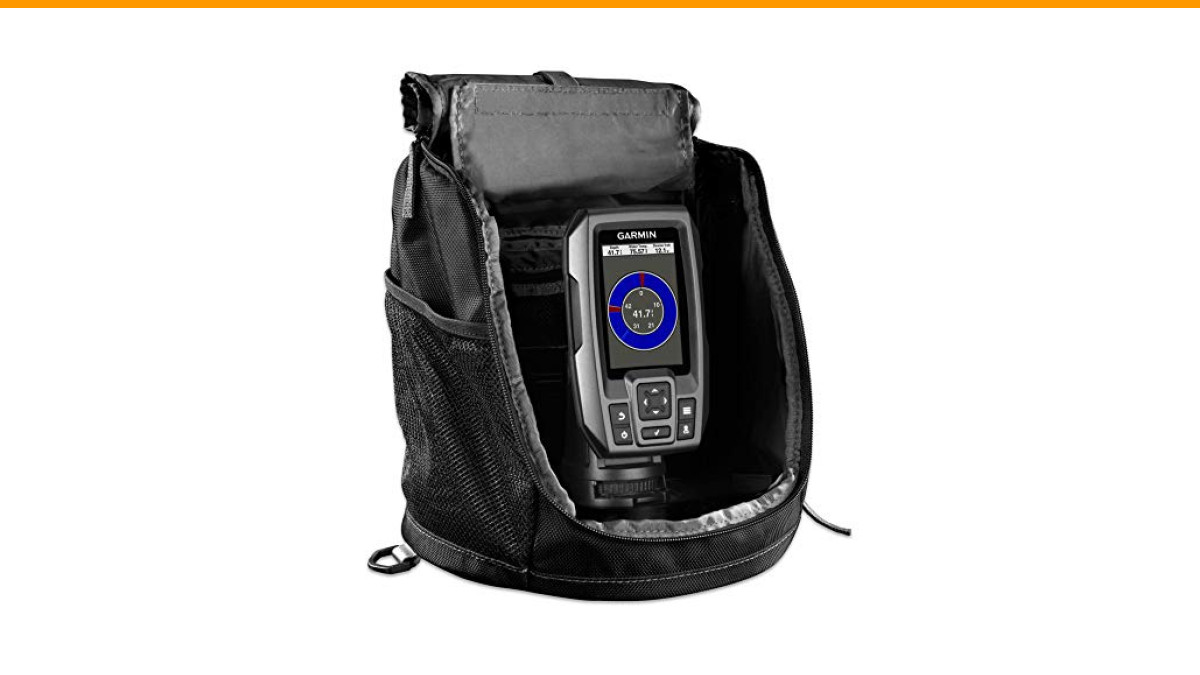
Garmin Striker 4 Portable

Garmin
Garmin 010-01550-10 Striker 4 Fish-Finder with Portable kit, 3.5"
- The power of simple - offers a keyed interface with dedicated buttons. The Device is easy to use and easy to install. Available in…
- Waypoint map - use the waypoint map to easily view, Mark and navigate to locations such as brush piles, stumps and docks
- Chirp sonar - Chirp sends a continuous sweep of frequencies which provides a wider range of information. Chirp sonar is able to cr…
The Garmin Striker 4 with the portable kit is the closest thing to a do-everything budget flasher that exists right now. It’s not just an ice fishing tool. The same unit works on a kayak, a rental boat, or a dock. That versatility alone makes it the smartest purchase for someone who doesn’t want to own four dedicated devices.
What stands out here is the CHIRP sonar. Traditional sonar sends out a single frequency, which means it misses fish that sit between the signal’s sweet spots. CHIRP sweeps through a continuous range of frequencies, so it paints a much more complete picture of what’s below. In practice, that means crisper fish arches and better target separation than you’d expect from a unit in this price range. The built-in flasher mode is the classic circular dial that ice anglers love, and it’s perfect for vertical jigging when you need to see your lure and the fish’s reaction in real time.
The trade-off is the screen size. At 3.5 inches, it’s small. You won’t struggle to read it in a dark shack, but in direct sunlight with snow glare, you’ll find yourself squinting. The portable kit includes a battery and a carrying case, which adds value, but the included transducer is designed for kayak mounting. For ice fishing, you’ll want to pick up a separate ice ducer kit. That’s an extra cost to factor in, though it still keeps the total well below the premium flasher brands.
- CHIRP sonar sends a continuous frequency sweep for better target separation than single-frequency units
- Waypoint map lets you mark brush piles, stumps, and docks for easy return trips
- Keyed interface with dedicated buttons—gloved hands don’t fumble with touchscreens
- Transmit power of 200 W RMS, which is plenty for shallow and mid-depth ice fishing
- Maximum depth of 1600 ft freshwater and 750 ft saltwater, far beyond ice fishing needs
Best for: The angler who wants one portable fish finder that works on hard water in winter and from a kayak or boat the rest of the year.
How We Chose These Products
My evaluation process started with a simple question: what does the average ice angler actually need from a flasher, and which features are just marketing fluff? I spent weeks reading through owner forums, watching side-by-side comparison videos, and talking to guys who run rental shacks on busy lakes where interference is a constant problem. The Garmin Striker 4 kept coming up as the budget unit that punches above its weight.
The criteria were practical, not theoretical. Battery life in real cold matters more than peak brightness. Cone angle math matters more than a slightly higher pixel count. Interference rejection matters when you’re fishing within ten feet of a dozen other guys. I weighed those factors heavily, then cross-referenced against the raw specs to make sure the recommendations held up under scrutiny.
Buying Guide: What Really Matters
Most buyers fixate on target separation, and that’s a mistake. Target separation tells you how close two objects can be and still show up as distinct returns. It matters when you’re trying to see your jig and a fish that’s hovering inches above it. But the difference between a 2.5-inch and a 3-inch separation is rarely noticeable in real-world conditions. The bigger factor is cone angle, which determines how much water you’re actually seeing.
A 9-degree cone covers a circle about 3 feet wide in 20 feet of water. A 19-degree cone covers roughly 7 feet in the same depth. That’s a huge difference. If you fish shallow water under 15 feet, a narrow cone makes it nearly impossible to track a fish that swims toward your lure from the side. You’ll see it appear and disappear. A wider cone keeps the fish in view longer. The Garmin Striker 4 gives you the flexibility to adjust, which is a genuine advantage over fixed-cone flashers.
Battery life is the other silent killer. Cold saps lithium and lead-acid batteries fast. A unit that runs eight hours at 30 degrees might only last five at -10 degrees. Look for a flasher with a low power mode or a proven track record of efficient draw. The Striker 4’s portable kit includes a rechargeable battery, but you should always carry a backup. Nothing ends a fishing day faster than a dead screen at noon.
Our Top Recommendation
The Garmin Striker 4 Portable is the clear winner for the budget-conscious angler. It delivers CHIRP sonar, a flasher mode, and a portable kit at a price that undercuts the dedicated ice flasher brands by a wide margin. The versatility to use it on open water and ice makes it the best value in the category.
For the angler who wants a dedicated ice flasher with a proven track record in crowded conditions, the Vexilar FL-8 remains a solid runner-up. It’s been the standard for decades, and its interference rejection is legendary. But you’ll pay more for a unit that only does one thing. The Striker 4 gives you more functionality for less money, which is the whole point of value engineering.
Frequently Asked Questions
How does the Garmin Striker 4 handle interference when fishing near other flashers?
CHIRP sonar gives it a natural advantage over older single-frequency flashers. The continuous frequency sweep makes it less susceptible to cross-talk from neighboring units. In a crowded group, you’ll still see some noise, but it’s manageable and doesn’t require the manual interference rejection adjustments that Vexilar units need.
Can I use the Striker 4 on open water, or is it ice-only?
It works on both. The portable kit is designed for ice and kayak use, but you can mount the transducer on a boat transom with the included hardware. The flasher mode is ideal for vertical jigging, while the traditional sonar view works great for trolling or drifting. It’s a true multi-season unit.
What’s the real-world battery life in sub-zero temps?
With the included portable battery, expect around 6-8 hours at 30 degrees and maybe 4-5 hours at -10 degrees. The screen brightness and sonar power draw affect this. Running the backlight at full brightness cuts battery life noticeably. Carry a spare battery if you plan to fish all day in extreme cold.
Is the 3.5-inch screen too small to read in a dark ice shack?
In a dark shack, it’s perfectly readable. The backlight is bright enough, and the flasher dial is simple to interpret. In direct sunlight with snow glare, you’ll need to cup your hand over the screen or find some shade. It’s a trade-off you accept at this price point.
