You’ve seen the photos: a quiet river, a bent rod, a trout in the air. Then you walk into a fly shop and freeze. Dozens of rods hang on the wall, each one labeled with numbers like 5wt 9ft or 8wt 8’6". Which one do you actually need?
This guide sorts through the noise. You’ll learn how rod weight, length, and action change the way a rod casts and fights fish. You’ll also see how materials like graphite, fiberglass, and bamboo affect feel and durability. By the end, you’ll be able to filter through any rod rack and pick the one that fits your fishing style, your target species, and your budget.

SF
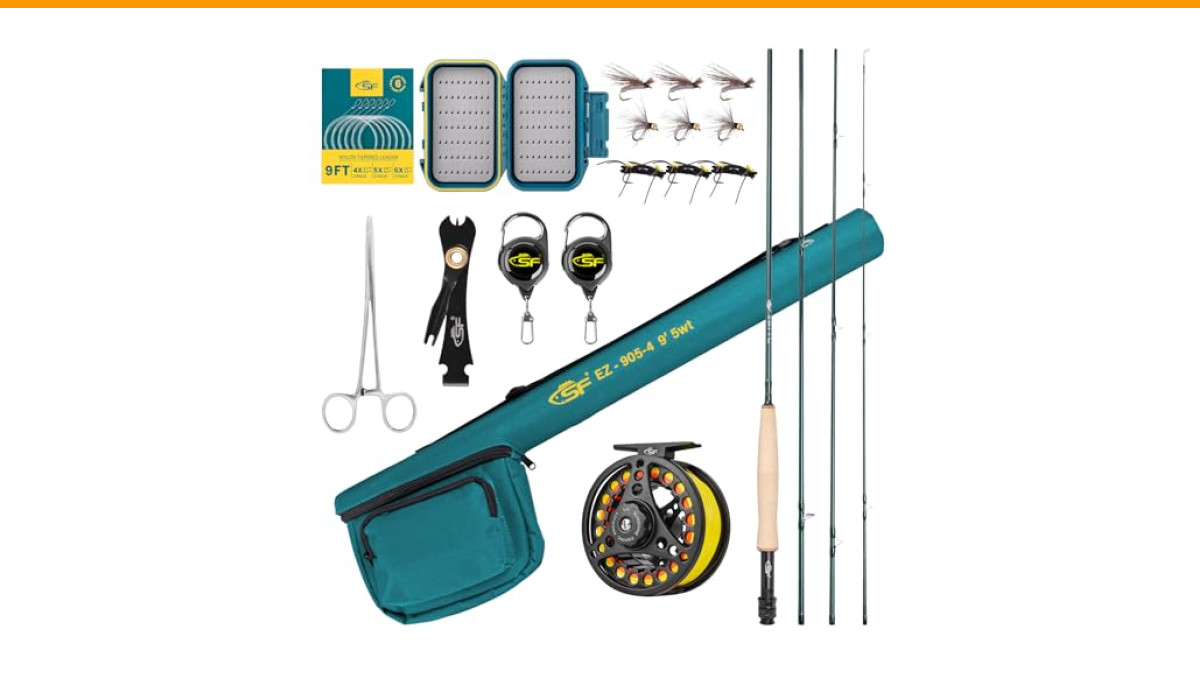
SF 5WT 9FT Fly Fishing Rod Combo Starter Kit 4 Piece Semi Gloss Green Jade Finish 24T Carbon Fiber Trout Travel Fly Rod with Reel,Travel Fly Rod Case,Fly Box , Flies,Tapered Leader,Knot Tying Tools
- Fly Rod Combo Components: SF fly fishing rod combo includes a 5wt 9FT fly fishing rod, carrying case for easy protection, 5/6wt al…
- Fly Rod Features: SF 5 Weight 9 Foot medium-fast action fly rod body is made of pure IM7 24T plus 30T emerald green carbon fiber f…
- Pre-loaded fly reel: Matt black 5/6wt, the die-cast aluminum-alloy reel adopts surface anti-corrosion treatment. And the large arb…
If you’re just starting out and want a ready-to-fish setup, the SF 5WT 9FT Fly Fishing Rod Combo is a solid choice. It includes a 5-weight rod, a pre-loaded reel, a waterproof fly box with flies, and all the basic tools you need to hit the water on day one. That combo removes the guesswork for beginners, so you can focus on learning to cast instead of assembling gear.
The 3 Core Rod Specs You Must Understand
Every fly rod is defined by three numbers: weight, length, and action. These specs tell you how heavy a line the rod throws, how far it can cast, and how much flex it has. Get these three right, and you’re 90% of the way to a great rod.
Weight, Length, and Action Defined
Fly rod weight refers to the line weight the rod is designed to cast, not the physical weight of the rod itself. A 5-weight rod pairs with a 5-weight fly line. This number tells you the rod’s power range. Lower numbers (1-3) are for small trout and delicate presentations. Higher numbers (8-12) are for bass, saltwater species, and heavy wind.
Length is measured in feet, usually from 7′ to 10′. Shorter rods are easier to cast in tight spots under overhanging branches. Longer rods give you more reach and better line control on open water.
Action describes where the rod flexes. Fast action bends mostly in the top third, medium action bends in the top half, and slow action bends all the way down to the handle. Fast rods load quickly and cast far, but they’re less forgiving. Slow rods load deeply and feel more delicate, but they require a smoother casting stroke.
These three specs work together. A 9′ 5wt fast action rod is the most common all-round setup. It handles trout streams, stillwater, and even light bass fishing. That’s why most beginners start there.
Fly Rod Weight: Matching the Fly to the Fish
Think of rod weight as the engine size. A heavier rod casts a heavier line, which carries larger flies and fights bigger fish. But heavier lines also land with more splash, which can spook wary trout.
Quick Reference Chart for Species
| Rod Weight | Target Species | Typical Fly Sizes | Best For |
|---|---|---|---|
| 1-3wt | Small trout, panfish | #16 – #22 | Tiny streams, delicate dry fly presentations |
| 4-5wt | Trout, bass (small), panfish | #10 – #18 | All-round freshwater, most beginners |
| 6-7wt | Steelhead, bass, pike | #4 – #10 | Streamers, windy conditions, larger rivers |
| 8-9wt | Salmon, striped bass, bonefish | #2 – #6 | Saltwater flats, heavy wind, large flies |
| 10-12wt | Tarpon, permit, big saltwater | #1/0 – #4/0 | Large gamefish, heavy sink lines |
If you fish for trout in small creeks, a 3wt is a joy. It makes a 10-inch trout feel like a monster. But if you fish big rivers with heavy nymph rigs, a 5wt or 6wt is more practical. The rod needs enough backbone to cast the weight of the flies and indicators.
Fly Rod Length: Casting Distance vs. Line Control
Most fly rods fall between 8′ and 9’6". The length affects two things: how far you can cast and how well you can mend line.
Longer rods (9′ and up) generate more line speed, so they cast farther with less effort. They also give you more reach when you’re wading and need to drop a fly near a far bank. The trade-off is they’re heavier and harder to maneuver in brushy streams.
Shorter rods (7′ to 8′) are perfect for small streams where a 20-foot cast is a long one. They’re lighter in hand and easier to flick under overhanging branches. But they lack the reach for mending line on wide rivers.
Mending is the act of lifting the line off the water and repositioning it to avoid drag on the fly. A longer rod makes mending easier because you have more line to lift and reposition. If you fish nymphs or streamers in current, a 9′ rod is a safer bet than an 8′ one.
One more thing: rod length also affects your casting stroke. A longer rod requires a wider arc, which can feel awkward if you’re used to shorter rods. But you’ll adapt within a few sessions.
Fly Rod Action: Fast, Medium, or Slow
Action is the personality of the rod. It dictates how the rod loads and unloads during a cast. Fast action rods are stiff and require a quick, crisp stroke. Slow action rods are soft and bend deep, rewarding a patient, rhythmic stroke.
Recovery Speed vs. Flex Profile
People often confuse action with recovery speed. Action describes where the rod bends. Recovery speed describes how quickly the rod returns to straight after the cast. A rod can bend deep (slow action) but snap back fast (fast recovery). That combination is rare and expensive.
Fast action rods have a stiff tip and a strong backbone. They cast far with minimal effort, punch through wind, and handle heavy flies. But they punish sloppy casting. If your timing is off, the rod won’t load properly and you’ll get tailing loops.
Medium action rods are the Goldilocks choice. They bend into the mid-section, giving you a good mix of distance and forgiveness. They’re ideal for learning because they hide small timing mistakes. Most beginners should start with a medium or medium-fast action rod.
Slow action rods bend deep into the lower third. They load easily with a slow, smooth stroke and present flies delicately. They’re fantastic for dry flies on calm water but struggle in wind or with heavy nymphs. They also require more effort to cast long distances.
If you’re buying your first rod, don’t get a fast action 9wt. You’ll hate it. Get a medium action 5wt and learn the stroke. Once you can cast consistently, you can decide if you want more speed or more delicacy.
Rod Materials: Graphite, Fiberglass, and Bamboo
Most modern fly rods are made of graphite. It’s light, stiff, and affordable. Graphite rods come in different moduli (like 24T, 30T, 40T), which refer to the stiffness of the carbon fibers. Higher modulus graphite is stiffer and lighter, but it also feels more brittle. Lower modulus graphite is softer and more forgiving.
Fiberglass rods are making a comeback. They’re heavier than graphite but have a smooth, slow action that many anglers love for small streams and dry fly fishing. They’re also nearly indestructible. If you’re a klutz like me, fiberglass is a smart pick.
Bamboo rods are the classic choice. They’re handcrafted, expensive, and have a unique feel that’s difficult to describe. They’re slow, delicate, and beautiful. But they require careful maintenance and aren’t suited for heavy saltwater or big flies. A good bamboo rod costs several hundred dollars, and a great one costs thousands.
For most anglers, graphite is the right material. It offers the best strength-to-weight ratio and comes in every action imaginable. Fiberglass is a fun second rod for small water. Bamboo is a luxury for those who appreciate tradition.
Single-Hand vs. Switch vs. Tenkara: Which Style is Right?
Most fly rods are single-hand rods. You hold the rod with one hand and cast the line with the other. That covers everything from a 7′ 3wt to a 9′ 10wt. If you’re new to fly fishing, this is what you want.
Switch rods are longer (10′ to 11′) and designed to be cast with either one hand or two. They allow you to make longer casts and control heavy sink tips. They’re popular for steelhead and salmon fishing, where you need to cover lots of water.
Tenkara rods are a different beast. They’re telescoping rods with no reel, just a fixed length of line attached to the tip. They’re incredibly light and perfect for small mountain streams. You can pack one in your backpack and fish any creek you find. But they limit you to short casts and small fish.
If you fish big rivers or saltwater, a switch rod might be worth considering. If you hike to tiny brook trout streams, tenkara is a blast. For everything else, stick with a single-hand rod.
How to Choose Your First Fly Rod (A Simple 4-Step Process)
Here’s a practical way to narrow down your options. Answer these four questions in order, and you’ll land on the right rod.
- What fish are you after? Trout? Bass? Panfish? Saltwater? Match the rod weight to the average fish size. Trout and panfish: 4-6wt. Bass and pike: 6-8wt. Saltwater: 8-10wt.
- What water will you fish? Small streams with tight cover? A 7’6" to 8′ rod. Big rivers or lakes? A 9′ rod. Windy conditions? Go one weight heavier.
- What’s your casting skill level? Beginner? Choose a medium or medium-fast action. Experienced? Fast action gives you more control and distance.
- What’s your budget? A $100 rod can be fine, but it won’t feel as smooth as a $300 rod. Set a range and look for the best action and warranty you can afford.
For most beginners, that means a 9′ 5wt medium-fast action rod. It handles trout, bass, panfish, and even light saltwater. It casts well in wind and is forgiving enough to learn on. That’s why the SF 5WT 9FT combo makes sense as a starter kit—it hits that sweet spot.
Fly Rod Care and Maintenance: Extending Your Investment
Fly rods are durable, but they’re not indestructible. A few simple habits will keep your rod casting well for years.
- Rinse after saltwater use: Salt corrodes guides and reel seats. Rinse the rod with fresh water and let it dry before storing.
- Don’t lean on the rod: A rod can support the weight of a fish, but it’s not a walking stick. Leaning on it can cause a stress fracture that’s invisible until the rod snaps.
- Store it in a tube: When traveling or storing, keep the rod in its case. Rods get stepped on, slammed in car doors, and crushed by gear.
- Check the guides: A cracked guide insert can fray your fly line. Run your fingers along the guides periodically to feel for chips.
- Loosen the reel seat: If you store the rod with the reel attached, loosen the locking rings slightly to prevent warping.
One thing I learned the hard way: never leave a rod assembled in a hot car. The heat can weaken the resin in graphite, causing the rod to lose its action or even delaminate. Break it down and put it in the tube.
Fly Rod Price Points: What Are You Really Paying For?
Fly rods range from $50 to over $1,000. The price difference comes down to materials, design, and warranty.
At the $100 level, you’re getting a basic graphite rod with lower modulus carbon. It’ll cast fine, but the action might feel a bit dead. The guides might not be the smoothest, and the cork might have visible fillers. It’s a great starting point, but you’ll likely outgrow it within a year or two.
At the $300 level, you get better carbon, smoother actions, and better components. The rod feels lighter in hand and casts more accurately. This is the sweet spot for most anglers. A $300 rod will last a decade if you take care of it.
At $600 and above, you’re paying for premium materials, handcrafted details, and often a lifetime warranty. The difference is subtle—a faster recovery, a slightly lighter swing weight, a more refined taper. If you’re a serious angler, these rods feel special. But they won’t make you a better caster.
Here’s my honest take: spend what you’re comfortable with. A beginner can have a great time with a $100 combo. But if you’ve been fishing a few years and want an upgrade, a $300 rod is the best value. The jump from $300 to $600 is real but small.
Frequently Asked Questions About Fly Rods
What does ‘wt’ mean on a fly rod?
‘wt’ stands for weight, which refers to the line weight the rod is designed to cast. A 5wt rod pairs with a 5-weight line. This number determines the rod’s power and the size of flies it can handle.
Is a 5wt fly rod good for beginners?
Yes, a 5wt is the most common beginner choice. It’s versatile enough for trout, panfish, and small bass, and it’s forgiving to cast. Pair it with a 9-foot length and a medium-fast action for the best all-round experience.
What’s the difference between fast and slow action fly rods?
Fast action rods bend mostly in the tip, making them stiff and powerful. They cast far but require precise timing. Slow action rods bend deep into the blank, making them soft and delicate. They’re easier to cast slowly but lack power for wind or heavy flies.
Can I use a 5wt fly rod for bass fishing?
You can catch small bass on a 5wt, but it’s not ideal for larger fish or heavy cover. For bass, a 6wt or 7wt gives you more backbone to cast bigger flies and fight fish in vegetation. If you’re targeting trophy bass, go with an 8wt.
How many pieces should a fly rod have?
Most rods come in 4 or 5 pieces for travel convenience. A 4-piece rod breaks down to about 2.5 feet, which fits in a suitcase. A 2-piece rod feels slightly more connected but is harder to transport. For most anglers, a 4-piece is the best compromise.
Final Verdict: Your Perfect Rod Awaits
Choosing a fly rod doesn’t need to be overwhelming. Start with the fish you want to catch, then match the weight, length, and action to your water and skill level.
- For trout and panfish, a 4wt to 6wt rod between 8′ and 9′ is ideal.
- For bass and pike, step up to a 6wt or 7wt.
- For saltwater, you’ll want an 8wt or heavier.
- Medium action is the safest bet for beginners.
- Graphite is the best all-round material; fiberglass is fun for small streams.
- Spend more on a rod you’ll use often—it’s worth it.
- Always store your rod in a tube and rinse it after saltwater trips.
Remember, the perfect rod is the one that feels good in your hand and matches the fishing you actually do. Don’t get caught up in gear envy. Get a rod that works, learn to cast it well, and you’ll catch fish. If you’re starting from scratch, the SF 5WT 9FT combo gives you everything you need to get on the water today.