
You pull open a dusty tackle box at a garage sale, and there it is—a wooden plug with chipped paint and glass eyes that stare back at you. The seller wants five bucks. You have no idea if it’s a worthless old relic or a $300 collector’s piece. That moment separates casual buyers from people who actually know what they’re doing.
This guide walks you through a practical, step-by-step identification workflow. You’ll learn what to look for first, how to date a lure using patents and hardware, and how to spot a modern reproduction before you waste money. No fluff, just the stuff that matters when you’re standing over a bin of old tackle.
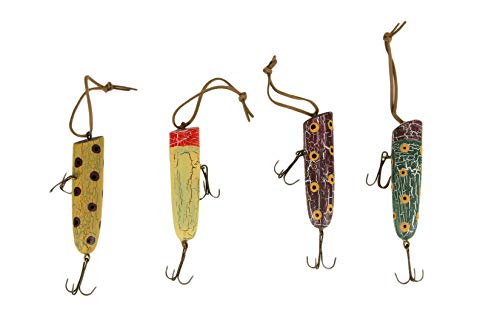
Mayrich
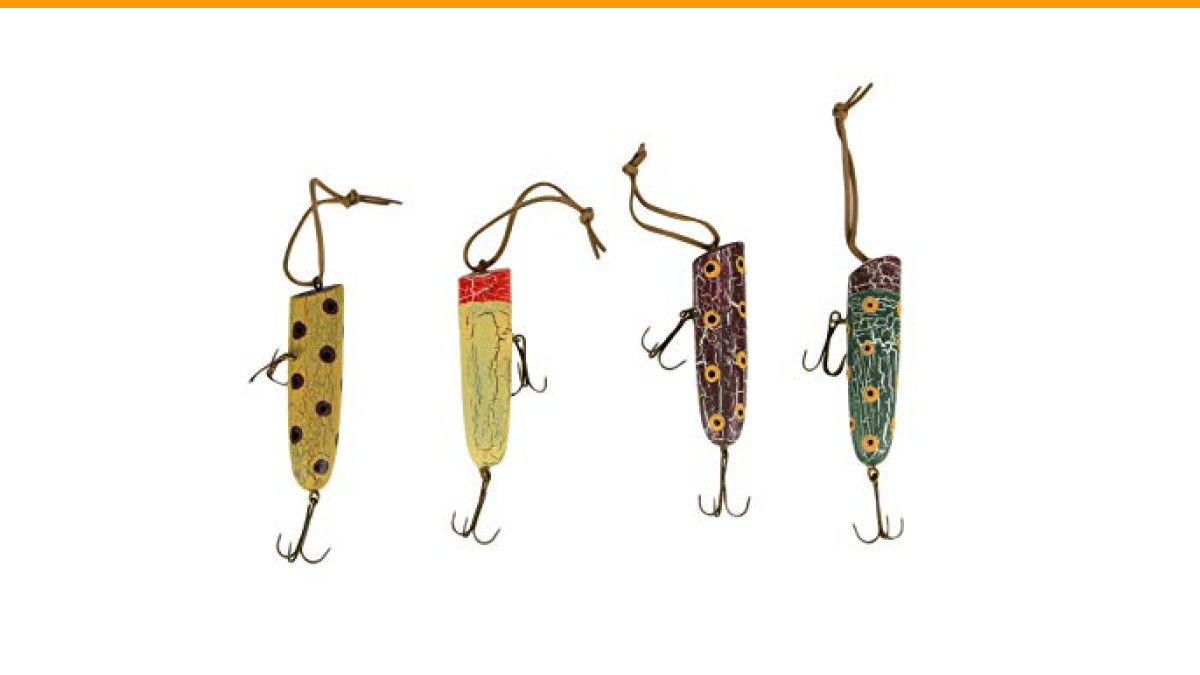
Decorative Wooden Fishing Lure Vintage Hanging Ornaments Set of 4 | 4.75 in High, Metal Wire Hooks, 2.75 in Leather Loop Hangers, Crackled Weathered Patina, Tree Gift or Key Decor
- 4.75 inch High, 1.75 inch Diameter
- Made of a Wood Body and Metal Wire Hooks with a 2.75 inch Long Leather Loop Hanger
- Hand Painted in Yellow, Dark Purple, Aged White and Green with a Crackled and Weathered Patina
If you’re just starting out and want something to decorate a man cave or gift to a fishing buddy, a set like the Colorful Wooden Vintage Fishing Lure Hangings from MayRich Company gives you that nostalgic look without the risk of buying a fake. They’re hand-painted wooden replicas with crackled patina, perfect for display. But if you want the real thing, keep reading.
Start Here: The 5-Minute Visual Checklist for Any Old Lure
Before you dig into details, run this quick checklist. It takes five minutes and tells you whether a lure is worth a closer look.
- Hold it. Feel the weight. Wood lures feel light and warm. Plastic feels slick and uniform. Metal is cold and heavy.
- Look at the belly. Most vintage lures have a stamped name, patent number, or model number on the flat underside. No stamp doesn’t mean fake, but it narrows things down.
- Check the eyes. Glass eyes with metal or wire sockets scream pre-1950. Painted eyes are common but harder to date. Tacks or pins mean older construction.
- Inspect the hardware. Rusty, corroded hooks are normal. Perfect, shiny hardware on a lure with chipped paint is a red flag—someone likely replaced it, or it’s a reproduction.
- Smell it. Old wood lures often smell faintly of varnish or cedar. Plastic smells like nothing. A strong chemical smell might mean recent restoration.
That’s the whole checklist. If a lure passes these basics, move to the deeper steps below.
Step 1: Examine the Body Material (Wood, Plastic, or Metal?)
Material is the single biggest clue for dating. Wooden lures dominated from the late 1800s through the 1940s. Heddon, Creek Chub, and Pflueger all started with wood. Most were made from cedar or balsa, though some early ones used pine or maple.
Plastic lures appeared in the late 1930s but really took over after World War II. By the 1950s, most production lures were plastic. That’s a hard line: if you find a lure with a plastic body and it claims to be pre-war, it’s almost certainly a reproduction.
Metal lures are a different category. Spoons and spinners have been around since the mid-1800s. A metal spoon with a single hook and no paint is likely old. But metal-bodied plugs are rare—most were made by tiny regional companies and didn’t survive in large numbers.
One trick: tap the lure gently on a table. Wood makes a dull thud. Plastic makes a sharp click. Metal rings. It’s not scientific, but it works in the field.
Step 2: Decode the Belly Stamp and Maker’s Marks
The belly stamp is your best friend. Companies stamped their name and often a patent date right into the wood or plastic. Heddon used a distinctive oval stamp with “Heddon” in script. Creek Chub used a simple block letter stamp. Pflueger stamped “Pflueger” with a patent number below.
Patent numbers are gold. They tell you the year the design was registered, not necessarily when your specific lure was made, but it’s a solid starting point. For example, a Heddon Dowagiac with patent number 1,234,567 dates to around 1915-1920. You can look up patent numbers online through the US Patent Office database.
Regional makers like Paw Paw, South Bend, and Shakespeare also stamped their lures, but often less consistently. Paw Paw used a simple “Paw Paw” stamp. South Bend used “South Bend” with a model number. If you see a stamp you don’t recognize, photograph it and search online. Collector forums are full of people who know obscure makers.
No stamp at all? That’s common for very old hand-carved lures from the 1890s-1910s. These were often made by individual fishermen, not companies. They’re harder to identify but can be very valuable if the craftsmanship is good.
Step 3: Inspect the Hardware (Hooks, Screw Eyes, and Split Rings)
Hardware tells you more than you’d think. Early lures used screw eyes made of iron or brass. These rust and corrode over time, leaving a brown residue around the holes. That’s normal and actually a good sign—it means the hardware hasn’t been replaced.
Hooks are another clue. Vintage lures came with single hooks, treble hooks, or sometimes no hooks at all (for display). The hook style changed over the decades. Early hooks were often unbranded and crudely forged. By the 1920s, companies like Mustad stamped their hooks with a name. If you see a hook stamped “Mustad” with a model number, you can often date it to a specific era.
Split rings are small but important. Modern split rings are perfectly round and uniform. Vintage ones are often slightly irregular—hand-formed or early machine-made. If a lure has perfectly uniform split rings paired with cracked, ancient paint, someone swapped the rings out. That hurts value, but not as much as you’d think.
One thing to check: the screw eyes. Original screw eyes are driven straight into the wood. Reproductions often use threaded screw eyes that look too clean. Run your finger over the eye. If it’s smooth and uniform, it might be a reproduction. If it’s slightly rough or uneven, it’s likely original.
Step 4: Analyze the Eyes (Glass, Tacks, or Painted?)
Eyes are the most diagnostic feature after the belly stamp. Glass eyes were standard from the 1890s through the 1940s. They’re made of blown glass with a metal loop on the back that gets embedded in the wood. Over time, the glass can crack or cloud, but it never melts or warps.
Tack eyes are small metal pins with a painted head. They were used on cheaper lures and some early Creek Chubs. If you see tack eyes, you’re looking at a pre-1930 lure.
Painted eyes are the most common and the least diagnostic. Almost every company used painted eyes at some point. The key is the paint style. Hand-painted eyes with slight asymmetry suggest an older lure. Machine-stamped, perfectly uniform eyes suggest post-1950.
Here’s a trick: look at the eye socket. On wooden lures, the eye is set into a recessed hole. On plastic lures, the eye is often flush with the surface. If the eye is raised or has a visible metal loop, it’s glass. If it’s flat and painted, it’s not.
Step 5: Date the Lure Using Patents and Packaging
Patents are the most reliable way to date a lure. The patent number is often stamped on the belly or the hardware. Look it up online—it takes thirty seconds. The patent date gives you the earliest possible manufacturing year. Most companies used a patent for several years after it was granted, so your lure could be newer than the patent date, but not older.
Packaging is another clue, but only if you have the original box. Lure boxes changed dramatically over the decades. Early boxes were simple cardboard with minimal printing. By the 1950s, boxes were colorful and had plastic windows. If you find a lure with its original box, the box alone can double or triple the value.
One caveat: patent dates don’t always match production runs. Heddon, for example, used the same patent for decades. A patent from 1910 could appear on a lure made in 1935. So treat patents as a starting point, not a definitive answer.
The Big Three Makers: Heddon, Creek Chub, and Pflueger
If you’re serious about lure identification, you need to know the big three. These companies produced the most collectible lures in American history.
Heddon started in 1902 in Dowagiac, Michigan. Their most famous lures are the Dowagiac minnows and the Vampire series. Heddon lures with glass eyes and original paint routinely sell for $100-$500. Rare color patterns can push past $1,000.
Creek Chub began in 1906 in Garrett, Indiana. Their iconic lures include the Pikie Minnow and the Injured Minnow. Creek Chub lures are known for their distinctive jointed bodies and detailed paint jobs. A mint-condition Creek Chub Pikie in a rare color can fetch $200-$600.
Pflueger started in 1881 in Akron, Ohio. They made the famous Globe and the Pal-O-Mine. Pflueger lures are often more affordable than Heddon or Creek Chub, but rare models still command premium prices. A Pflueger Globe in good condition might sell for $50-$150.
The big three are well-documented, which means fakes are common. Always cross-reference the belly stamp, hardware, and paint style before paying top dollar.
Hidden Gems: Spotting Valuable Lures from Regional Brands
Don’t overlook regional makers. Companies like Paw Paw, South Bend, and Shakespeare made great lures that are often underpriced compared to the big three.
Paw Paw Bait Company operated in Paw Paw, Michigan, from 1919 to the 1960s. Their lures are well-made but less famous, so they’re a great entry point for collectors. A Paw Paw Flaptail in good condition might sell for $20-$50, but rare models can hit $200.
South Bend Tackle Company made lures from the 1920s through the 1970s. Their most collectible pieces are the Bass-Oreno and the Surf-Oreno. These are often undervalued because collectors focus on Heddon and Creek Chub. A South Bend Bass-Oreno in original paint can sell for $30-$80.
Shakespeare started in 1897 and made a wide range of lures. Their wooden minnows from the 1910s-1930s are particularly nice. Look for the Shakespeare name stamped on the belly—it’s usually small and easy to miss.
Other regional makers worth knowing: Pikie Minnow (yes, that’s a maker), Fred Arbogast, and Bomber. Each has a dedicated collector base, but prices are generally lower than the big three.
Red Flags: How to Spot a Reproduction or Fake
Reproductions are everywhere, especially online. Here’s how to spot them.
Mold lines. Plastic reproductions have visible mold lines—thin raised ridges where the two halves of the mold met. Original wooden lures have no mold lines. Run your finger along the sides. If you feel a ridge, it’s plastic, not wood.
Paint type. Vintage lures used lead-based or oil-based paints that crack and chip in a distinctive way. Modern reproductions use acrylic or enamel paints that look too smooth and uniform. If the paint looks “too perfect,” it probably is.
Hardware quality. Reproduction hooks are often shiny and sharp. Original hooks are dull and slightly corroded. Also check the screw eyes—reproductions use machine-made eyes that are perfectly uniform.
Belly stamp depth. Original stamps were pressed into soft wood or plastic, leaving a clear, deep impression. Reproductions often have shallow, fuzzy stamps that look like they were printed on. If the stamp is hard to read, be suspicious.
Weight. Wood lures have a natural, slightly irregular weight. Plastic reproductions feel uniform and often lighter. Pick up a known vintage lure and a suspected reproduction side by side—the difference is obvious.
Condition Grading: From “Mint” to “Basket Case” and What It Means for Value
Condition is everything in lure collecting. A rare lure in poor condition is worth a fraction of the same lure in mint condition.
Here’s a simple grading scale collectors use:
- Mint (10/10): Original paint, original hardware, no chips, no corrosion. Box included if possible. Value: 100% of market price.
- Excellent (8-9/10): Minor paint wear, maybe a small chip. All original parts. Value: 70-80% of mint.
- Good (6-7/10): Significant paint loss, some rust on hooks, possibly a replaced hook. Value: 40-60% of mint.
- Fair (4-5/10): Heavy wear, missing paint in large areas, replaced hardware. Value: 20-30% of mint.
- Poor (1-3/10): Structural damage, missing parts, heavy corrosion. Value: 5-10% of mint.
The key is originality. A lure with original paint and hardware, even if worn, is worth more than a restored one. Collectors want authenticity, not perfection.
Cleaning and Restoration: What to Do (and What to Never Do)
Most old lures need nothing more than a gentle dusting. Resist the urge to scrub them clean. Here’s what to do and what to avoid.
Do: Use a soft, dry brush (a clean makeup brush works great) to remove dust and dirt. For stubborn grime, use a slightly damp cotton swab. Dry immediately with a soft cloth.
Do: Stabilize loose hardware. If a screw eye is wiggling, add a tiny drop of wood glue. This prevents further damage without altering the original parts.
Never: Soak a lure in water or cleaning solution. Water can lift the paint and warp the wood.
Never: Use metal polish on hooks. It removes the natural patina that collectors value.
Never: Repaint a lure. A repainted lure loses nearly all its collector value. A lure with original paint, even if chipped, is worth far more.
If you absolutely must remove rust from hooks, use a fine steel wool pad very gently. But know that any aggressive cleaning will reduce value.
Quick Reference: 10 Lures That Consistently Sell for Over $100
These aren’t the rarest lures in existence, but they’re the ones you’ll actually encounter at flea markets and estate sales. If you find any of these in decent condition, you’re holding something valuable.
| Lure Model | Maker | Approximate Era | Typical Price Range |
|---|---|---|---|
| Dowagiac Minnow | Heddon | 1902-1920 | $150-$500 |
| Pikie Minnow | Creek Chub | 1920-1940 | $100-$400 |
| Vampire | Heddon | 1930-1950 | $100-$300 |
| Injured Minnow | Creek Chub | 1920-1950 | $80-$250 |
| Globe | Pflueger | 1900-1920 | $75-$200 |
| Bass-Oreno | South Bend | 1930-1950 | $50-$150 |
| Flaptail | Paw Paw | 1920-1940 | $40-$120 |
| Surf-Oreno | South Bend | 1940-1960 | $30-$100 |
| Pal-O-Mine | Pflueger | 1910-1930 | $50-$150 |
| Arbogast Jitterbug (wood) | Fred Arbogast | 1930-1950 | $40-$120 |
These are rough ranges. A mint-condition Dowagiac in a rare color can sell for $1,000+. Condition and rarity always trump model name.
Final Checklist: Your Step-by-Step Identification Workflow
You’ve read the details. Here’s the condensed workflow you can use at any table, bin, or shelf.
- Weigh it. Wood feels light and warm. Plastic feels slick. Metal is heavy.
- Check the belly. Look for a stamp. Note the name and any patent number.
- Look at the eyes. Glass eyes with metal loops = pre-1950. Painted eyes = any era.
- Inspect the hardware. Rust is good. Perfect shiny hardware on an old-looking lure is suspicious.
- Run your finger along the body. Mold lines mean plastic reproduction.
- Smell it. Varnish or cedar = old wood. Nothing = plastic or well-cleaned.
- Google the stamp. Thirty seconds of research can confirm or kill a deal.
- Grade the condition. Mint, excellent, good, fair, or poor. Adjust your offer accordingly.
- Trust your gut. If the price seems too good to be true, it probably is.
This workflow takes less than two minutes once you practice. After a few dozen lures, you’ll do it automatically.
Frequently Asked Questions
How can I tell if a fishing lure is actually old or just a reproduction?
Look for mold lines on plastic bodies—originals are wood and have none. Check the belly stamp depth: original stamps are deep and crisp, reproduction stamps are shallow and fuzzy. Examine the hardware: original hooks are dull and slightly corroded, while reproduction hooks are shiny and sharp. Weigh the lure: wood feels lighter and warmer than plastic. If everything looks too perfect, it probably is.
What’s the most important feature to identify a vintage lure?
The belly stamp is the single most reliable feature. It tells you the maker and often includes a patent number that helps with dating. No stamp doesn’t mean the lure is worthless, but it makes identification harder. Glass eyes are the second most important feature—they almost always indicate a pre-1950 lure.
Do I need a lure value guide book to identify old lures?
Not necessarily. Free online resources work well for most identification. The Antique Identifier’s fishing lures guide covers the basics. For deeper research, collector forums like Joe’s Old Lures are invaluable. A printed value guide is helpful for pricing, but you can find most pricing info online with a bit of searching.
How do I clean an old fishing lure without damaging its value?
Use a soft dry brush to remove dust. For stubborn grime, use a slightly damp cotton swab, then dry immediately. Never soak the lure in water or cleaning solution. Never use metal polish on the hooks—it removes the patina that collectors value. Never repaint. The goal is to stabilize the lure, not make it look new.
What should I do if I find a lure with no markings at all?
Photograph it from every angle, including the belly, sides, and hardware. Note the size, weight, and material. Search online using descriptive terms like “unmarked wooden fishing lure glass eyes 1920s.” Post your photos to a collector forum—experienced collectors love identifying mystery lures. Unmarked lures can be hand-carved originals from before 1900, which are often quite valuable.
What to Do Next With Your New Skills
You now have a solid foundation, but real expertise comes from handling lots of lures. Visit flea markets, estate sales, and antique shops. Handle every lure you see, even the junk ones. Compare them. Build a mental catalog of what feels right.
Start with affordable lures—the $5-$20 range. Learn to identify them before you spend big money. Keep a notebook or photo folder of every lure you examine, with notes on what you found. Over time, you’ll develop an eye that no guidebook can teach.
One last piece of advice: buy the lure, not the story. Sellers love to tell you a lure is “from the 1910s” or “rare.” Trust your own inspection, not their enthusiasm. The workflow you’ve learned here is your best defense against overpaying
