
You saw the video online. Someone in a kayak, calm water at sunrise, rod bending hard, and a grin you could see from space. It looks serene. Then you actually sit in a kayak for the first time, paddle three strokes, and realize your legs are shaking from the effort of just staying upright. The gap between the fantasy and the first real session is wide.
The honest answer to the question is yes, fishing from a kayak is hard. It is physically demanding, mentally taxing, and it will humble you on the water. But the difficulty is not a wall. It is a series of specific, learnable skills. This article walks through exactly where the challenges live — the stability physics, the muscle fatigue, the gear mistakes, and the fight itself — so you know what to expect and how to build competence fast.
PLUSINNO
In this article
- PLUSINNO 2 in 1 Kayak Fishing Rod Holder, Fishing Rod Holders for Boat | Kayak Accessories, Fishing Pole Holders for Track Mount / Deck Mount, for Spinning Baitcasting Rod, with Rod Protective Strap
- The Honest Answer: Yes, It’s Hard (But Here’s Why You’ll Love It)
- The Physics of “Tippy”: Understanding Kayak Stability
- The Physical Challenge: Paddling, Fatigue, and Your Core
- The Gear Gap: What You Actually Need vs. What You Think You Need
- Mastering the Launch and Landing (Without Embarrassing Yourself)
- The Art of the One-Handed Cast and Paddle Control
- Fighting Fish from a Kayak: You Are the Drag System
- Weather, Wind, and Current: Reading the Water from a Low Angle
- Safety Check: The Non-Negotiables (PFD, Leash, and a Knife)
- The Post-Trip Ritual: Cleaning and Maintenance
- FAQ: Your Biggest Worries, Answered
- Final Verdict: Is It Worth the Effort?
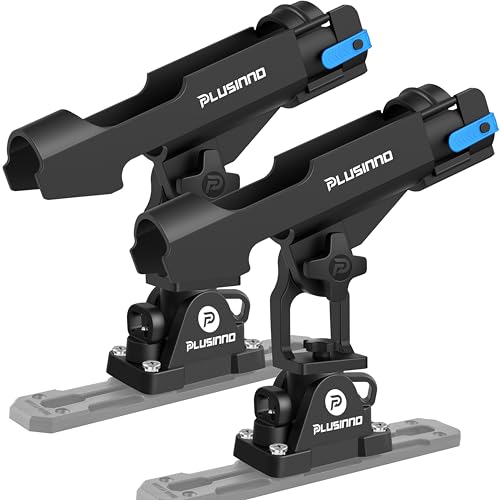
PLUSINNO 2 in 1 Kayak Fishing Rod Holder, Fishing Rod Holders for Boat | Kayak Accessories, Fishing Pole Holders for Track Mount / Deck Mount, for Spinning Baitcasting Rod, with Rod Protective Strap
- Innovative Stable Fishing Rod Holders: The rod holders for fishing boat features silicone gaskets that designed for optimal stabil…
- Protective Strap to Secure your Rod: Anglers often worry about accidentally dropping their fishing rods while fishing on kayak or…
- Adjustable Kayak Rod Holders: The rod holder for boat offers 360°vertical and horizontal rotation with precise 10°fine adjustments…
The Honest Answer: Yes, It’s Hard (But Here’s Why You’ll Love It)
Let’s not sugarcoat it. Kayak fishing combines the worst parts of paddling and fishing at the same time. You have no rail to lean on, no deck to stand on, and your seat is roughly six inches above the water. Every cast, every hookset, every time you reach for a drink, your core is working overtime to keep you balanced.
The learning curve is real, but it is also short if you approach it correctly. Most people who quit kayak fishing do so in the first three trips. They go out, get frustrated by tangled lines and wobbly moments, and decide it is not for them. The ones who stick with it figure out that the kayak is not a boat. It is a fishing platform that rewards patience and punishes rushing.
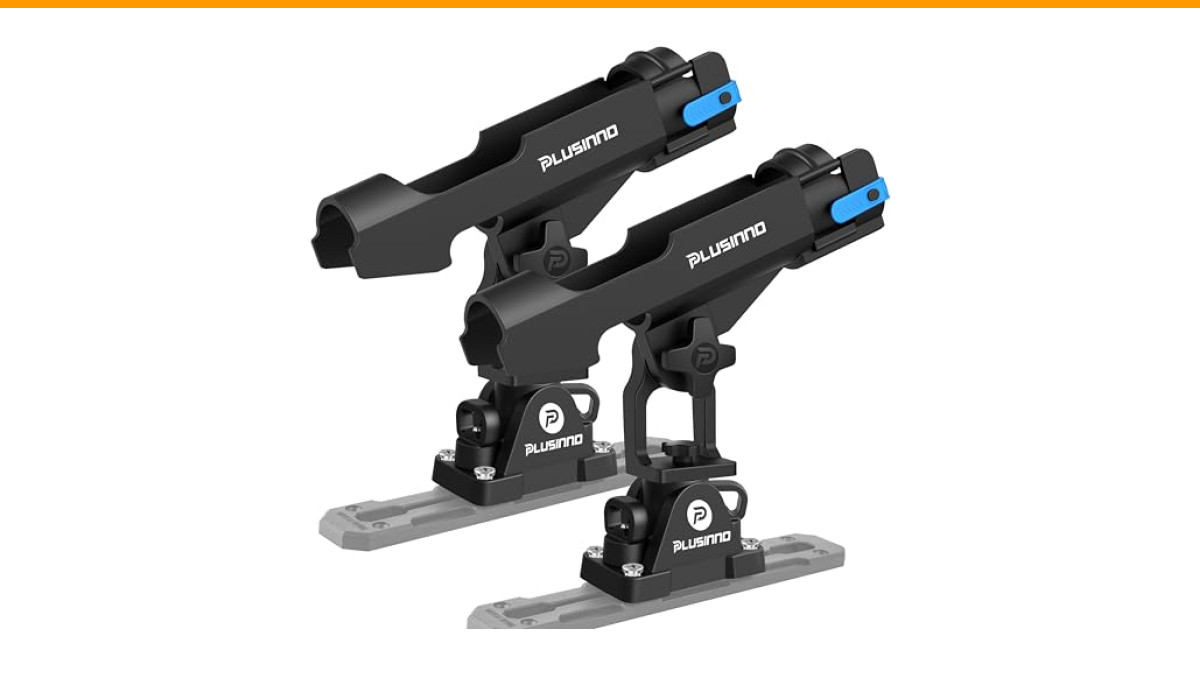
One piece of gear that removes a chunk of the early frustration is a solid rod holder. The PLUSINNO 2 in 1 Fishing Rod Holder mounts on either a track or a flat deck, which covers most kayak setups. The protective strap keeps your rod from sliding overboard when a fish hits hard, and the 360-degree rotation lets you angle the rod so it is out of your paddle stroke. It does not make you a better angler, but it stops you from juggling gear while you are still learning to balance.
The Physics of “Tippy”: Understanding Kayak Stability
That scary feeling when you first sit down is not just nerves. It is physics. Kayaks have two types of stability, and they work against each other.
Primary vs. Secondary Stability
Primary stability is how steady the kayak feels when it is flat on the water. A wide, flat-bottomed kayak feels rock solid at rest. You can sit in it and not think about balance. Secondary stability is how the kayak behaves when it leans. A kayak with good secondary stability will roll to an angle and then hold there, feeling planted even when tilted.
Here is the trade-off: kayaks with high primary stability often have poor secondary stability. They feel great until they tip, and then they tip fast. Kayaks with lower primary stability feel tippy at rest but lock in once you lean them over. That is why a rental kayak at a lake feels like a barge, but a narrow ocean fishing kayak feels like a log. Neither is wrong, but you need to know which one you are sitting in.
How Your Center of Gravity Changes Everything
Your center of gravity sits somewhere around your belly button. When you sit on a kayak seat, that point is high above the waterline. Any movement — reaching for a tackle box, turning to look behind you, casting hard — shifts that center of gravity. The kayak responds instantly.
The fix is not to sit perfectly still. That is impossible. The fix is to keep your weight low and centered. Keep your knees slightly bent and touching the sides of the kayak. That contact gives you feedback, so you feel the kayak start to lean before it becomes a problem. A good rule: if you are reaching for something, do it with your torso, not just your arm. Keep your head over the centerline of the kayak.
The Physical Challenge: Paddling, Fatigue, and Your Core
Most people underestimate how much physical effort kayak fishing takes. You are not just paddling to a spot. You are paddling against wind and current, then holding position, then paddling back. Your arms do the visible work, but your core and legs do the real stabilizing.
The “First 30 Minutes” Experience
Here is what the first half hour actually looks like. You park, unload the kayak, and carry it to the water. That is the first workout. You launch, paddle out about fifty yards, and realize the wind is stronger than it felt on shore. You stop paddling to rig a line, and the kayak immediately turns broadside to the waves. You start paddling again to correct, but now you are drifting toward a weed bed. You finally get anchored, make a cast, and realize you forgot to clip your paddle leash. The paddle slides off the deck and floats away. You grab it, but now your line is wrapped around the paddle blade.
That sequence is normal. It happens to everyone. The physical toll is not from any single action — it is the constant micro-adjustments. Your core is engaged every second. Your shoulders burn from paddling into a headwind. Your lower back aches from sitting in a position you are not used to.
The fix is to shorten your sessions at first. Plan for two hours, not six. Bring a backrest that actually supports you, not just a thin pad. And learn to paddle efficiently. Use your torso to rotate, not just your arms. Long, smooth strokes beat short, frantic ones every time.
The Gear Gap: What You Actually Need vs. What You Think You Need
Beginners bring too much gear. They pack like they are going on a week-long expedition, and then they spend the whole trip untangling rods and tripping over tackle bags. The kayak forces you to be minimal.
The Minimalist Starter Setup
Start with one rod, one small tackle tray, a pair of pliers, and a fish gripper. That is it. Leave the second rod at home for the first few trips. Add a rod holder so the single rod is secure when you need both hands for paddling or drinking water. The PLUSINNO holder mentioned earlier works well here because you can mount it on the track or deck without drilling holes, and the strap keeps the rod from bouncing out on rough water.
You will eventually add a fish finder, a net, and maybe a crate for storage. But do not buy all of it upfront. The kayak has a weight capacity, and every pound of gear makes it sit lower and feel more sluggish. A lighter kayak is easier to paddle, easier to turn, and easier to launch.
One thing you should not skimp on is the paddle leash. A paddle floating away in a current is not just an inconvenience — it is a safety issue. Clip it to the kayak before you launch, not after you are already drifting.
Mastering the Launch and Landing (Without Embarrassing Yourself)
Launching and landing are where most beginners feel the most foolish. The water is shallow, the bottom is uneven, and people on shore are watching. The key is to do it slowly and deliberately.
Surf Launching 101
If you are at a beach with waves, do not try to paddle out through the surf like a jet ski. Walk the kayak out until the water is at your knees. Point the bow straight into the incoming waves. Sit down quickly, plant your paddle, and take strong strokes immediately. The kayak wants to turn sideways to the waves. You have to keep it pointed straight until you are past the breakers.
Landing is the reverse. Approach the beach perpendicular to the waves, not parallel. Ride a wave in, and when the kayak touches bottom, get out before the next wave hits. Do not try to stay seated and paddle through the shallows. You will look like a turtle on its back.
For lake or river launches, the same principle applies: keep the kayak perpendicular to the shoreline. Slide in, sit, and push off. Landing is just a slow glide into the bank.
The Art of the One-Handed Cast and Paddle Control
You cannot use both hands to cast from a kayak. One hand is holding the paddle, or the paddle is clipped to the deck, but you need it within reach at all times. That means you need to cast with one hand.
This is a skill you can practice in your backyard. Stand on the ground, hold the rod with one hand, and make a cast. You will lose distance compared to a two-handed cast, but you gain control. The trick is to use the rod’s flex, not your arm strength. A smooth, quick motion with the wrist and forearm generates enough power for most inshore and lake fishing.
When you do need both hands — to tie a knot, change a lure, or unhook a fish — the paddle goes on the deck. This is where a paddle leash and a rod holder become critical. Clip the paddle, secure the rod in the holder, and then use both hands freely. Without that system, you are constantly juggling, and juggling on a kayak ends with something in the water.
Fighting Fish from a Kayak: You Are the Drag System
Fighting a fish from a kayak is completely different from fighting one from a boat. On a boat, you plant your feet and lean into the rod. On a kayak, you have no anchor. The fish pulls, and you and the kayak move.
That is not a disadvantage. It is an advantage if you use it right. When a big fish runs, let it pull the kayak. You become a human drag system. The kayak’s water resistance tires the fish out faster than your rod’s drag ever could. Do not try to stop the fish with your arms. Let the kayak do the work.
The danger is when the fish runs under the kayak. The line will rub against the hull, and if the fish wraps around the rudder or the drive unit, you are done. The fix is to keep the rod tip high and to the side of the kayak. If the fish runs under, you have to paddle forward to reposition the kayak over the fish, which is counterintuitive but effective.
Line wrap around the paddle is another classic problem. When you are fighting a fish and need to paddle, the line can easily wrap around the blade. The solution is to keep the rod pointed away from the paddle stroke. If you are paddling on the right, keep the rod on the left side of the kayak. It is awkward at first, but it becomes automatic.
Weather, Wind, and Current: Reading the Water from a Low Angle
Your eye level on a kayak is about three feet above the water. On a boat, it is eight or ten feet. That low angle changes how you read the water. You cannot see as far, and you cannot spot structure as easily. You have to rely more on your fish finder and less on your eyes.
Wind is the bigger enemy. A kayak sits high and flat, so even a 10 mph wind can push you sideways. You will spend more time paddling to hold position than actually fishing. This is why anchoring is a critical skill. A simple stakeout pole or a small anchor works. Drop it, and you stop drifting. Pull it up, and you are mobile again.
Current matters just as much. When you anchor in a river, the kayak will swing with the current. Position yourself so you are casting upstream. Your bait will drift naturally into the strike zone. If you anchor facing downstream, your line will drag and tangle.
Safety Check: The Non-Negotiables (PFD, Leash, and a Knife)
Some things are not optional. A PFD (personal flotation device) is number one. Wear it, do not sit on it. Kayak fishing in cold water adds extra risk — cold water shock can hit you the second you go in, making it hard to breathe and swim. A PFD gives you time to recover.
A paddle leash is number two. You already read about losing a paddle. It happens fast, and it is dangerous if you are far from shore.
A knife is number three. Not for fish — for cutting line in an emergency. If you get tangled in a line, or if a fish wraps you up, you need to be able to cut free in seconds. A small, serrated knife clipped to your PFD is the standard.
These three items cost less than a new rod, and they can save your life or at least save your trip.
The Post-Trip Ritual: Cleaning and Maintenance
Kayak fishing in saltwater is brutal on gear. The salt gets into every reel, every hinge, every screw. If you do not rinse your gear, it will corrode within weeks.
The post-trip ritual takes ten minutes. Rinse the kayak inside and out with fresh water. Pay special attention to the scupper holes and any hatches where saltwater pooled. Dry the hull with a towel or let it air dry in the shade. UV light degrades plastic, so store the kayak out of direct sun when possible.
Rinse your rods and reels with fresh water. Loosen the drag, let it dry, and re-tighten it. Wipe down the line and check for nicks. If you used a fish finder, wipe the screen and the transducer. Salt crystals on the transducer will shorten its life.
For the rod holder, a quick freshwater rinse and a check of the screws is enough. The marine-grade stainless steel on the PLUSINNO holder handles saltwater well, but no metal is immune to neglect.
FAQ: Your Biggest Worries, Answered
Do I need to be in good shape to kayak fish?
You do not need to be an athlete, but you need a baseline of core strength and shoulder endurance. If you cannot do ten push-ups or paddle a kayak for 15 minutes without a break, you will struggle. Start with short trips and build up. The kayak does the work once you learn to paddle efficiently.
Can I stand up in a fishing kayak?
Some kayaks are designed for standing, but most are not. If your kayak is under 34 inches wide, standing up is risky. Even on a wide kayak, standing requires practice and calm water. Start by standing on the shore, then on the kayak on land, then in shallow water. Do not try it for the first time in the middle of a lake.
How do I keep my gear from getting wet?
You will get wet. That is part of it. Dry bags are the answer for anything that must stay dry — phone, keys, wallet, extra clothes. A small dry bag strapped to the front or rear deck is sufficient. Keep your tackle in a waterproof box or a tackle bag with a rain cover.
Is a pedal kayak worth the extra money?
Pedal kayaks free up your hands for fishing, which is a huge advantage. They are also faster and easier to control in wind. But they cost two to three times more than a paddle kayak, they are heavier, and they have a drive unit that needs maintenance. If you are just starting, buy a used paddle kayak. If you fall in love with the sport, upgrade to a pedal kayak later.
What is the best way to anchor a kayak?
A small folding anchor or a stakeout pole works best. A stakeout pole is a long metal or fiberglass stick that you push into the bottom. It is quiet and easy to pull up. A folding anchor with a length of rope and a quick-release system is better for deeper water. Never anchor from the bow or stern — anchor from the side so the kayak does not swing with the current.
Final Verdict: Is It Worth the Effort?
- The first few trips will be frustrating. Plan for short sessions and low expectations.
- Stability improves fast once you learn to keep your weight centered and your knees in contact with the hull.
- Core strength matters more than arm strength. A simple plank routine at home pays off on the water.
- Minimal gear is better. One rod, one tackle tray, and a secure rod holder beat a deck full of clutter.
- Let the kayak fight the fish. You are the drag system, and that is a good thing.
- Wind and current are your real opponents. Learn to anchor quickly and position yourself correctly.
- Rinse everything after every saltwater trip. Ten minutes of maintenance saves you hundreds in replacement gear.
Fishing from a kayak is hard. It is also one of the most direct ways to connect with the water. The learning curve is real, but it is short. Give it four or five trips, and you will wonder why you ever thought it was difficult.