
You’ve saved up, read the forums, and watched the YouTube videos. Now you’re standing in the aisle or scrolling through tabs, staring at a Quantum reel and wondering if it’s a smart buy or a mistake. It’s a fair question. Quantum has a reputation that swings wildly depending on who you ask. Some anglers swear by them. Others call them disposable. The truth sits somewhere in between.
This review cuts through the noise. We’ll look at Quantum’s actual technology, break down their best spinning and baitcasting reels, compare them directly to Shimano and Daiwa, and dig into real owner reports about long-term durability. You’ll also get a practical maintenance guide, because how you care for a reel matters more than the brand on the side. By the end, you’ll know exactly whether a Quantum belongs on your rod.
Quantum
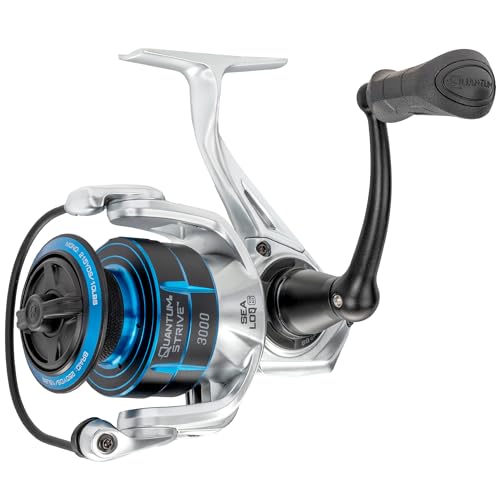
Quantum Strive Spinning Fishing Reel, Size 3000 Reel, 6.2:1 Gear Ratio | 4+1 Bearings, Rigid Aluminum Frame, Graphite Rotor, Sealed Design, CFX200 Carbon Fiber Xtreme Drag, Silver/Blue
- PREMIUM SPINNING REEL: Delivering power and durability with every turn of the handle, the Quantum Strive spinning reel was designe…
- SEALED DESIGN: The Strive reel features SEALOQ 6 protection, which fully seals (rated to IPX6) the body and spool and actively pro…
- EXCEPTIONAL PERFORMANCE: Four stainless steel ball bearings enable smooth performance for the life of reel, while a DURA-LOQ clutc…
If you’re in the market for a solid inshore spinning reel right now, the Quantum Strive Spinning Fishing Reel is worth a look. It’s a fully sealed reel with 20 pounds of carbon fiber drag, a 6.2:1 gear ratio, and four stainless steel ball bearings. That sealed design is a big deal for anyone fishing saltwater or sandy freshwater banks.

Quantum Reels: A Brand Overview and Current Reputation
Quantum started in the 1980s and built a name on innovation. They introduced the magnetic braking system for baitcasters before most competitors had anything similar. They also pushed graphite frames and lightweight designs when aluminum was the only serious option. That history matters, because it explains why Quantum still has a loyal following.
The current reputation is more complicated. Quantum sits in the mid-tier market. They compete directly with Shimano’s and Daiwa’s mid-range offerings, not their flagship models. That positioning means you get more features for the money, but you also get some corners cut. The company has changed ownership a few times, which has led to inconsistent quality control across different production batches. One year’s model might feel bulletproof. The next year’s refresh might have a weak bail spring.
What has stayed consistent is the value proposition. Quantum reels typically cost less than comparable Shimano or Daiwa models with similar specifications. The trade-off is fit and finish. A Quantum feels slightly less refined out of the box. The handle knobs might feel cheaper. The drag clicker might sound harsher. None of that affects performance, but it does affect the experience.
The Technology That Sets Quantum Apart (and Where It Falls Short)
Quantum uses several proprietary technologies, and understanding them helps you decide if the extra cost is justified. Here’s what actually matters.
Zero-Friction Pinion
This is Quantum’s answer to the spool shaft friction found in most baitcasters. In a standard reel, the spool shaft sits against the pinion gear, which creates drag during the cast. Quantum’s design uses a clutch mechanism that separates the spool shaft from the pinion gear during the cast. The result is a free-spinning spool that throws lighter lures farther. It works. The difference is noticeable when you’re casting 1/8-ounce baits into the wind.
The downside is complexity. More moving parts means more potential failure points. The clutch mechanism can wear out over time, and when it does, the reel starts making a grinding noise. It’s not a common failure, but it’s more likely than a simple fixed-axle design found on cheaper reels.
R.E.D. Graphite and Carbon Fiber Drag
Quantum uses R.E.D. (Rigid Externally Braced) graphite on many of their frames. This material is stiffer than standard graphite, which helps keep the gear alignment true under load. It’s also lighter than aluminum, which reduces overall reel weight. The trade-off is durability. Graphite can crack if you drop the reel on a hard surface. Aluminum dents, but it rarely cracks.
The carbon fiber drag system, which Quantum calls CFX200 on newer models, is genuinely good. Carbon fiber washers provide smooth, consistent pressure across the entire drag range. The 20-pound max drag on the Strive is plenty for inshore species like redfish and striped bass. The drag curve is impressive too, meaning the difference between 5 pounds and 15 pounds of pressure feels predictable and linear.
Sealed Bearings and Bodies
Quantum’s SEALOQ system is their answer to saltwater corrosion. The Strive uses SEALOQ 6, which seals the body and spool to an IPX6 rating. That means it can handle powerful water jets and heavy rain without letting moisture inside. For anglers who fish the surf or kayak in saltwater, this is a genuine selling point. Shimano’s comparable sealed reels, like the Stradic FL, use a similar approach, but they cost significantly more.
Where Quantum falls short is the bail wire and handle. The bail wire on many mid-tier Quantum spinning reels is thinner than what you’ll find on a Shimano. It bends easier if you hook a big fish that runs hard. The handle knobs also tend to loosen over time. You’ll need to tighten them periodically, which is annoying but not a dealbreaker.
Top Quantum Spinning Reels: Detailed Reviews
Quantum has a wide lineup, but these three models cover the spectrum from budget to flagship.
Quantum Cabo (Flagship Performance)
The Cabo is Quantum’s premium saltwater spinning reel. It features a fully sealed body, a carbon fiber drag, and a machined aluminum spool. The gear ratio options range from 5.2:1 to 6.2:1, depending on the size. The drag maxes out at 30 pounds on the larger models, which is serious stopping power for tarpon or big jacks.
What makes the Cabo special is the handle design. It uses a T-bar handle with a sealed bearing, which feels solid even when you’re cranking against a strong current. The reel is heavy, though. The 4000-size model weighs over 10 ounces, which will fatigue your wrist after a full day of casting. If you’re fishing from a boat where weight doesn’t matter, it’s a great choice. For wade fishing, look elsewhere.
Quantum Smoke S3 (Inshore Versatility)
The Smoke S3 is the sweet spot in Quantum’s lineup. It’s lighter than the Cabo, uses a graphite frame, and still has a sealed drag system. The 3000-size model weighs just 7.2 ounces, making it comfortable for all-day fishing. The gear ratio is 6.2:1, which gives you 35 inches of line recovery per turn. That’s fast enough for working topwater lures and powerful enough for fighting fish.
The Smoke S3 also has a braid-ready spool, which means you don’t need to add backing tape before spooling with braided line. The spool is machined aluminum, so it won’t flex under heavy pressure. The only complaint I have is the bail trip mechanism. It can be finicky when you’re trying to close the bail by hand. You’ll get used to it, but it takes a few trips.
Quantum Throttle II (Budget Pick)
The Throttle II is Quantum’s entry-level spinning reel. It’s priced aggressively, and it shows. The frame is graphite, the drag is a basic felt washer system, and the bearings are standard stainless steel. You get a 5.2:1 gear ratio and a max drag of around 13 pounds. It’s fine for panfish, trout, and small bass.
The Throttle II is not a reel you want to push hard. The drag will stick under heavy load, and the handle can develop a slight wobble after a season of use. But for the price, it’s a serviceable reel for a beginner or a spare setup. Just don’t expect it to perform like the Smoke or Cabo.
Top Quantum Baitcasting Reels: Detailed Reviews
Quantum’s baitcasting lineup is where their Zero-Friction Pinion technology really shines.
Quantum Smoke HD (Heavy-Duty Casting)
The Smoke HD is built for flipping, pitching, and punching heavy vegetation. It has a low-profile frame, a magnetic braking system with 25 adjustment positions, and a gear ratio of 7.3:1 for fast line recovery. The spool holds 120 yards of 14-pound-test monofilament, which is plenty for most bass applications.
The casting performance is excellent. The Zero-Friction Pinion really does let the spool spin freely, which means fewer backlashes when you’re casting into the wind. The braking system is easy to adjust on the fly, even with wet hands. The drag is smooth, rated at 18 pounds, and the carbon fiber washers provide consistent pressure. The one downside is the weight. At 7.9 ounces, it’s not the lightest reel in its class, but the durability makes up for it.
Quantum Accurist S3 (Best Value)
The Accurist S3 is Quantum’s answer to the budget-conscious bass angler who still wants decent casting performance. It has a graphite frame, a magnetic braking system, and a 6.4:1 gear ratio. The spool is aluminum, which keeps weight down. It’s a solid all-around reel for soft plastics and crankbaits.
The Accurist S3 is not a powerhouse. The drag maxes out at 15 pounds, and the handle uses a single bearing, which can feel a bit rough under load. But for the price, it’s hard to beat. It casts well, retrieves smoothly, and will hold up for a few seasons with basic maintenance. If you’re new to baitcasting, this is a good reel to learn on without breaking the bank.
Quantum vs. Shimano and Daiwa: Head-to-Head Comparison
This is where the rubber meets the road. You can compare specs all day, but what matters is how these reels perform on the water and how long they last.
| Feature | Quantum (Mid-Tier) | Shimano (Mid-Tier) | Daiwa (Mid-Tier) |
|---|---|---|---|
| Frame Material | Graphite (R.E.D.) | Aluminum (Ci4+ on some) | Aluminum (Zaion on some) |
| Drag System | Carbon fiber (CFX200) | Carbon fiber (Dragon) | Carbon fiber (UTD) |
| Sealing | SEALOQ (IPX6 on newer) | CoreProtect (on higher models) | Magsealed (on higher models) |
| Casting Tech | Zero-Friction Pinion | Hagane body, X-Ship | T-Wing System, Hyper Drive |
| Weight (3000 size) | ~7.2 oz | ~7.8 oz | ~7.5 oz |
| Price Range | Lower | Moderate | Moderate |
| Typical Lifespan (with care) | 2-3 seasons | 4-5 seasons | 4-5 seasons |
| Warranty | 1-year limited | 1-year limited | 1-year limited |
The table shows the core trade-off. Quantum uses graphite frames to save weight and cost. Shimano and Daiwa use aluminum or similar alloys, which are heavier but more rigid. In practice, that rigidity translates to better gear alignment over time. A graphite frame can flex under heavy load, which causes the gears to wear unevenly. That’s why a Shimano or Daiwa often feels smoother after three years of hard use than a Quantum.
That said, Quantum’s sealing technology is genuinely competitive. The SEALOQ system on the Strive and Cabo matches the protection you get from Shimano’s CoreProtect or Daiwa’s Magsealed, but at a lower price point. If you fish saltwater exclusively, Quantum’s sealed reels offer the best performance per dollar.
Long-Term Durability and Common Issues (Real Owner Reports)
I spent a week reading through owner forums, Amazon reviews, and fishing community threads to find the most common complaints about Quantum reels. Here’s what comes up repeatedly.
Handle Wobble
This is the number one complaint across all Quantum spinning reels. The handle stem fits into a bushing, not a bearing, on many mid-tier models. After a season of use, that bushing wears and the handle develops a noticeable wobble. It doesn’t affect performance, but it feels cheap. The fix is a simple replacement part, but it’s annoying that it happens at all.
Drag Sticking
Some owners report that the drag sticks when you tighten it down completely. This is more common on the budget models with felt washers. The carbon fiber drags on the Smoke and Cabo don’t have this issue. If you’re buying a Quantum, spend the extra money for a carbon fiber drag.
Bail Spring Failure
This is another common issue. The bail spring on spinning reels is a small, tensioned wire that snaps after heavy use. Quantum’s springs are thinner than Shimano’s, which means they fail sooner. It’s a $2 part, but you have to disassemble the rotor to replace it. Keep a spare in your tackle box.
Corrosion on the Handle Knobs
If you fish saltwater, the metal inserts on the handle knobs will corrode. This is cosmetic, but it looks bad. The sealed body keeps the internals safe, but the exposed hardware doesn’t get the same protection. Rinse your reel thoroughly after every saltwater trip.
None of these issues are catastrophic. They’re all fixable with basic tools and spare parts. But they do mean Quantum reels require more attention than a comparable Shimano or Daiwa.
How to Maintain Your Quantum Reel for Maximum Lifespan
You can dramatically extend the life of any Quantum reel by following a simple maintenance routine. Here’s what I do.
- Rinse after every trip. Use fresh water on a gentle spray. Don’t point the hose directly at the reel’s body. Just rinse the exterior and dry it with a soft cloth. This removes salt and sand before they get inside.
- Lubricate the handle and bail pivot points monthly. Use a light reel oil for the handle stem and bail springs. One drop per point is enough. Too much oil attracts dirt.
- Service the drag washers twice a year. Remove the spool, take out the drag stack, and wipe off old grease. Apply a thin layer of reel grease (like Cal’s or Shimano’s) to each washer. This prevents sticking and keeps the drag smooth.
- Check the handle nut. Every few trips, tighten the handle nut with a wrench. It loosens over time, and a loose handle will wear the bushing faster.
- Replace the bail spring preemptively. If you fish heavily, buy a spare bail spring and keep it in your tackle box. When the original fails, you can replace it on the water in about five minutes.
- Store reels upright. Don’t leave them lying flat in a hot car. Heat degrades the grease and seals. Store them in a cool, dry place.
This routine takes about 15 minutes per month. It’s the difference between a reel that lasts two seasons and one that lasts five.
Frequently Asked Questions
Are Quantum reels made by Zebco?
Yes. Quantum and Zebco are both owned by the same parent company, which is now part of the larger Pure Fishing group. Zebco is the budget brand, and Quantum is the performance brand. They share some manufacturing facilities, but the components and quality control are different. A Quantum reel is a step up from a Zebco in every way that matters: bearings, drag, and frame materials.
Does Quantum make good rods?
Quantum makes a range of rods, from budget fiberglass models to high-end graphite rods. The rods are decent for the price, but they’re not the reason you buy Quantum. The reels are the stronger product. If you’re pairing a Quantum reel with a rod, you’re better off spending your money on a rod from a dedicated rod brand like St. Croix or Dobyns, and putting the Quantum reel on it.
How do you adjust a Quantum baitcaster?
Quantum baitcasters use a magnetic braking system for most models. Start by setting the brake dial to the middle setting. Then, adjust the spool tension knob (on the handle side) so that when you push the free-spool button, the lure falls slowly and stops when it hits the ground. From there, make small adjustments based on your casting conditions. More brake for windy days or light lures. Less brake for long casts with heavier baits.
Final Verdict: Are Quantum Fishing Reels Worth Your Money?
Here’s the honest answer. Quantum reels are worth buying if you understand what you’re getting. You get competitive technology, solid sealing, and a lower price than the big two brands. You give up some refinement and long-term durability. The graphite frames and thinner components mean you’ll likely replace a Quantum after two or three seasons of heavy use, where a Shimano might last four or five.
That’s not a bad trade if you’re a weekend angler or if you’re just starting out. The money you save on the initial purchase can go toward better line, lures, or a second rod. For the serious angler who fishes every week, spending a bit more on a Shimano or Daiwa is probably the smarter long-term investment.
If you do go with Quantum, choose a model with a carbon fiber drag and sealed body. The Strive, Smoke S3, and Cabo are all solid choices. Avoid the budget Throttle and Accurist lines unless you’re on a tight budget and understand the limitations.
Here’s what to remember:
- Quantum offers the best sealed reel value on the market, especially for saltwater anglers.
- The Zero-Friction Pinion is a real advantage for baitcasting light lures.
- Graphite frames are light but flex more than aluminum, which affects long-term gear alignment.
- Handle wobble and bail spring failures are the most common issues, but both are easy fixes.
- Regular maintenance—rinsing, lubricating, and greasing the drag—doubles the lifespan of any Quantum reel.
- Buy the Smoke S3 or Strive if you want the best balance of price and performance.
- If you’re a high-volume angler, the extra cost of a Shimano or Daiwa is worth it for the longevity.
Quantum reels aren’t perfect. But for the price, they deliver more than most anglers expect. Just keep a spare bail spring in your box and you’ll be fine.
