
You’ve tied on a soft plastic swimbait, chunked it into the lake, and reeled it back with a steady crank. Nothing. You try again, faster. Still nothing. Meanwhile, the guy in the boat next to you is pulling fish after fish on what looks like the same lure. The difference isn’t luck. It’s the system he uses to fish it.
Most anglers treat rubber lures like they are bait. You cast, you reel, you hope. But a soft plastic is a tool with a specific set of mechanics. The tail needs to thump. The rod needs to be positioned a certain way. The retrieve speed has to match the water temperature. Miss one of these details and you are just dragging a piece of rubber through the water.
VIVIDLY
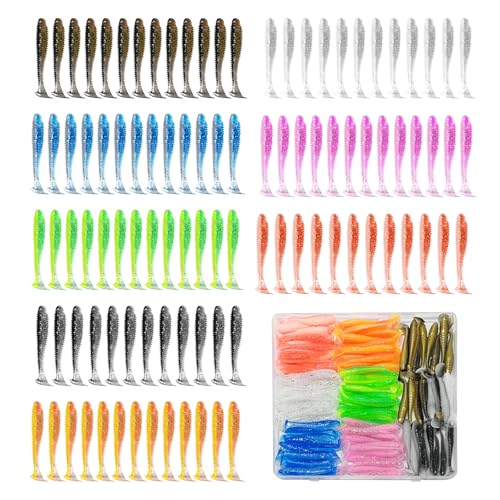
96 Pcs Soft Fishing Lures for Trout Crappie Walleye & bass (2.7-inch) | Soft Plastic Paddle Tail Swimbaits, Lifelike vibrating swim action, soft flexible texture, works for trout crappie & bass
- Large Quantity to Meet Demand: As a consumable, the demand for swimbait is relatively large. Our package contains 8 colors of padd…
- Superior Soft Baits Lures: The fishing lures are made of high-quality PVC material. It can withstand the wear and tear of frequent…
- Lifelike Swimming Action: Paddle tail swimbaits feature a vibration-inducing ribbed body. Grabs water and creates strong vibration…
This guide walks through a complete system for fishing soft plastics: how to read the lure’s action, how to rig it for different conditions, how to move it so fish commit, and what to do in the first ten minutes at a new spot. You’ll get specific numbers, real conditions, and the small tweaks that separate a good angler from a frustrated one.
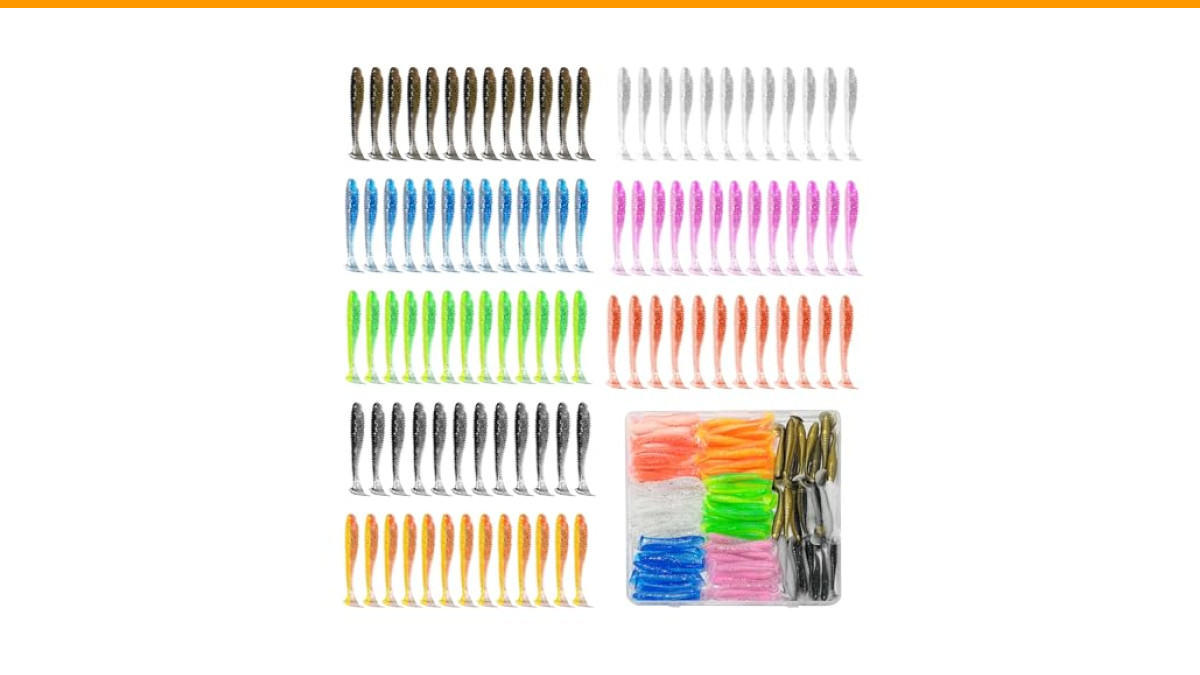
If you’re stocking up on soft plastics, a bulk set makes sense. The VIVIDLY Soft Fishing Lures 96-piece pack covers eight colors with twelve baits each. That’s enough to experiment with color selection without running to the tackle shop every week.
Why Rubber Lures Outfish Hard Baits (and When They Don’t)
Hard baits like crankbaits and jerkbaits excel at covering water fast. They deflect off cover, wobble aggressively, and trigger reaction strikes from aggressive fish. But they have a weakness: they look and act the same on every cast.
Rubber lures are different. The material is pliable, so fish hold onto them longer before feeling something wrong. The action is slower and more natural. You can fish them at a crawl, which is critical when fish are cold or sluggish.
There are situations where a hard bait wins. In heavy grass, a buzzbait or lipless crankbait comes through cleaner. When fish are chasing shad on the surface, a walking topwater bait draws strikes from farther away. But for fishing slow, working structure, or triggering neutral fish, a soft plastic is the better choice.
The key is understanding that soft plastics are a finesse tool. They shine when you slow down and pay attention. If you are fishing fast and covering water, a hard bait does that job better. Match the tool to the mood of the fish.
Anatomy of a Rubber Lure: Action, Tail Design, and Material
Not all rubber lures are the same. The tail design determines the action. A paddle tail (also called a boot tail) pushes water from side to side. It creates a thumping vibration you can feel through the rod. A curly tail spins on the retrieve, producing a tighter, faster vibration. A straight tail with a ribbed body has a subtle shimmer that works well for finesse presentations.
For the VIVIDLY paddletail swimbaits, the ribbed body grabs water and creates a strong vibration. That’s what triggers a fish’s lateral line, the sensory organ that detects movement and pressure changes. A fish might not see the lure clearly in murky water, but it will feel the thump.
Material matters more than most anglers think. Soft PVC baits feel natural in a fish’s mouth. They compress when bitten, giving you an extra second to set the hook. Harder plastics last longer but feel stiff. The trade-off is durability versus action. Softer baits also absorb scent better, which can help when fish are finicky.
One thing to check on any pack of soft plastics: the shape of the body after storage. Baits that sit bent in a tackle box for weeks will retain that curve. The VIVIDLY pack has individual slots for each lure, which keeps the body straight and the tail aligned. It sounds minor, but a bent tail ruins the action.
Rigging for Success: Jig Heads, Texas Rigs, and Weedless Setups
The rig determines how the lure falls, how it moves through cover, and how well you detect strikes. There are three main ways to rig a paddletail swimbait.
Choosing the Right Jig Head Weight
Jig head weight controls the fall rate and the depth you can fish. Too heavy and the lure drops too fast, and you’ll snag bottom. Too light and it floats above the fish.
Here is a practical breakdown:
| Water Depth | Current | Jig Head Weight | Fall Rate Goal |
|---|---|---|---|
| 2-6 feet | Calm | 1/16 oz | Slow, 2-3 seconds per foot |
| 6-12 feet | Calm | 1/8 oz | Moderate, 1-2 seconds per foot |
| 12-20 feet | Calm | 3/16 oz | Moderate, 1 second per foot |
| 6-12 feet | Windy or current | 1/4 oz | Fast, keeps bottom contact |
| 20+ feet | Current | 3/8 oz | Fast, cuts through drift |
When in doubt, start with a 1/8-ounce head for most bass and walleye fishing. It works across a wide range of depths. In a river with strong current, go heavier than you think you need. The current lifts the lure off the bottom, so a heavier head keeps you in the strike zone.
The Perfect Texas Rig: Step-by-Step
The Texas rig is weedless, making it ideal for heavy grass, laydowns, and docks. Here is the process:
- Thread the hook point through the nose of the bait about a quarter inch deep.
- Push the hook eye through the bait until it sits flush.
- Slide the bait up the hook shank until it reaches the eye.
- Lay the hook point against the side of the bait, then bring it through the bait’s body so it exits on the opposite side.
- Rotate the bait so the hook point lies flat against the body, not sticking out.
- Push the hook point back into the bait, just under the skin, so it is completely weedless.
When you cast, the hook point is buried. When a fish bites, the pressure pushes the point through the bait and into the fish’s mouth. Use a stout hook, like a 4/0 or 5/0 EWG (extra wide gap) for a 3-inch bait. A smaller hook won’t get a good hookup ratio.
The biggest mistake with a Texas rig is using too much weight. A 1/8-ounce bullet weight is plenty for most situations. If you need to punch through thick vegetation, go up to 1/4 ounce. But for open water, lighter is better.
Retrieval Techniques: The ‘Slow Roll’ vs. The ‘Hop and Pause’
Two retrieves cover ninety percent of soft plastic fishing: the slow roll and the hop and pause.
The slow roll is exactly what it sounds like. Cast out, point the rod at the water, and reel at a steady, slow pace. The goal is to keep the tail thumping while the lure stays in the lower half of the water column. You should feel a rhythmic pulse through the rod. If you don’t feel it, you’re reeling too fast or the tail is fouled.
Try this: reel at a speed where you can count one Mississippi between each turn of the reel handle. That is a good starting pace. Adjust from there.
The hop and pause is for fishing structure. Cast past a log or a weedline, let the lure sink to the bottom, then reel three or four quick turns. Let it sink again. The bait flutters down like a dying shad. Fish often strike on the fall, so watch your line for any tick or sideways movement.
Matching Your Retrieve to Water Temperature
Water temperature dictates metabolism. In 70-degree water, bass are aggressive and will chase a faster retrieve. In 50-degree water, they are sluggish and won’t move far to eat. Slow down your retrieve by half. In 40-degree water, the slow roll might be too fast. Use a pause-and-twitch cadence, letting the bait sit for several seconds between movements.
A good rule: if the water is cold enough that you need a jacket, fish the bait slow enough that you get bored. That boredom is usually the right speed.
Reading the Water: Where to Cast for Maximum Strikes
Soft plastics are not search baits. You need to put them where fish live. Look for changes in bottom composition, like a sand-to-gravel transition. Look for current breaks, like the edge of a weedbed or a point that deflects water. Look for shade lines, like the shadow side of a dock.
Cast beyond the target and retrieve through it. If you are fishing a point, cast to the deep side first, then the shallow side. Fish position changes with light and temperature. The deep side holds fish during midday sun; the shallow side is better at dawn and dusk.
Pay attention to the angle of your retrieve. Fishing parallel to a weedline is often better than casting directly into it. The lure spends more time in the strike zone. For docks, cast past the dock and reel along the edge, then make a second cast right under the dock if you can get it in there.
The First 10 Minutes: A Simple System for New Locations
You pull up to a new lake or river stretch. You have no idea where the fish are. Here is a routine that produces information quickly.
- Start with a slow roll along the bank. Cast parallel to the shore in 5 to 10 feet of water. This covers water and establishes a baseline for fish activity.
- Check the points. Cast to the tip of any visible point, let the bait sink, and hop it back. Points are natural travel routes for fish.
- Probe the weed edges. Cast along the outside edge of any vegetation. Use a Texas rig to avoid snags.
- Try one deep spot. Find the deepest water visible and let a jig head bait sink to the bottom. Let it sit for 30 seconds, then twitch it.
- Switch colors. If you have not had a bite in 10 minutes, change to a brighter color or a darker color. Contrast often triggers a reaction.
This is not a magic formula. It is a way to eliminate water quickly. If you get a bite on the point, spend more time on points. If the bite comes on the weed edge, focus there. The first 10 minutes are about finding the pattern, not catching the biggest fish.
Common Mistakes That Kill Your Bite (and How to Fix Them)
Three mistakes cost anglers more fish than anything else.
Mistake one: setting the hook too early. With a hard bait, you set the hook the instant you feel a thump. With a soft plastic, you need to wait a half-second. The fish has to compress the soft body before the hook point reaches its mouth. If you set too early, you pull the lure away. Count to one after feeling the bite, then set the hook.
Mistake two: reeling too fast. Most anglers reel faster than they think. The tail thump at a slow speed is more natural than the frantic wobble at high speed. Slow down until you can clearly feel the pulse of the tail. If you cannot feel it, you are going too fast.
Mistake three: ignoring hook sharpness. A dull hook is a death sentence for a soft plastic presentation. The lure feels natural, the fish bites, and the hook bounces off. Check your hook point against your thumbnail. If it slides, sharpen it. If it catches, it is ready. Do this every time you tie on a new lure.
Advanced Tweaks: Trimming, Scent, and Trailer Hooks
When fish are finicky, small modifications make a big difference.
Trimming the bait. If the tail is too long or the action too violent, trim a little off the tail with scissors. This reduces the vibration and slows the fall. For a subtle presentation, cut the tail down by a third. The bait will have a tighter wiggle, which triggers fish that have seen too many standard swimbaits.
Adding scent. Soft plastics absorb scent. Squirt a gel or spray scent into the bag and let the baits soak overnight. The smell masks human odor and adds a natural flavor. This helps most in clear water or heavily pressured lakes.
Adding a trailer hook. On a jig head, a small treble hook attached to the hook bend catches short-striking fish. Thread the treble through the bait’s tail section so it rides just behind the main hook. This works well for trout and crappie, which often nip at the tail.
Rod tip position. Keep the rod tip down near the water during the retrieve. This keeps the line tight to the lure and improves strike detection. If you hold the rod tip up high, you get slack in the line, and you’ll miss subtle bites.
Frequently Asked Questions
What is the best time of day to use rubber lures?
Early morning and late evening are best in summer, when fish are shallow and active. In winter, fish move deeper and are less active, so fish them slower and focus on the warmest part of the day, usually mid-afternoon. Overcast days are better than bright sunny days because fish roam more.
How do I know if my lure is swimming correctly?
Watch it in clear, shallow water near the bank. Reel it at your normal speed and look at the tail. It should be kicking side to side, not spinning or wobbling erratically. You should also feel a steady thump through the rod. If the tail is not kicking, the bait might be rigged crooked or the tail is fouled.
Can I use rubber lures in saltwater?
Yes, but rinse them with fresh water after each trip. Saltwater corrodes hooks and jig heads quickly. Many soft plastics work for redfish, speckled trout, and flounder. Use a heavier jig head to get down in current and cast farther.
What line should I use with soft plastics?
For most freshwater fishing, braided line with a fluorocarbon leader is the best setup. Braid gives you strength and sensitivity, while fluorocarbon is nearly invisible in the water and sinks, keeping the lure down. Use 10-15 lb braid for bass and walleye. For trout and crappie, drop to 6-8 lb line.
How do I store rubber lures so they don’t melt or warp?
Keep them out of direct sunlight and away from heat. Soft plastics react with each other, so store different types in separate compartments. The VIVIDLY pack has individual slots, which helps maintain the shape. Never store soft plastics in a plastic bag with hard baits, as the hooks can puncture and ruin the baits.
Final Cast: Confidence is Your Best Lure
You can have every technique down, but if you don’t trust the lure in your hand, you won’t fish it correctly. You’ll reel too fast, set the hook too early, and switch baits every ten casts. The system outlined here is designed to give you a repeatable process. Rig it right. Retrieve it slowly. Read the water. React to the bite.
- Start with a 1/8 oz jig head for most situations, adjust for depth and current.
- Rig Texas style for weeds and cover, jig head for open water.
- Slow your retrieve down until you can feel the tail thump.
- In cold water, use the hop and pause with long pauses.
- Spend the first 10 minutes at a new spot checking different structure types.
- Wait a half-second after a bite before setting the hook.
- Sharpen hooks before every trip and trim the tail if the action is too violent.
Pick one lake or river stretch and practice these steps. The fish will tell you when you get it right.
