You’re on the water, the bass are holding tight to a weed bed, and your Texas rig keeps snagging every cast. The problem isn’t the hook or the worm — it’s the bullet weight. Tied wrong, it slips, it hangs up, or it kills the action. Fix that, and you’ll feel the bottom, cast farther, and hook more fish.
This guide walks you through the exact steps to tie a bullet weight on a fishing line, whether you want a sliding rig for a natural presentation or a pegged rig for punching through cover. You’ll also learn how to pick the right weight material and size, troubleshoot common failures, and test your setup before it matters. By the end, you’ll know why a bullet weight is more than a hunk of metal — it’s a tool you control.

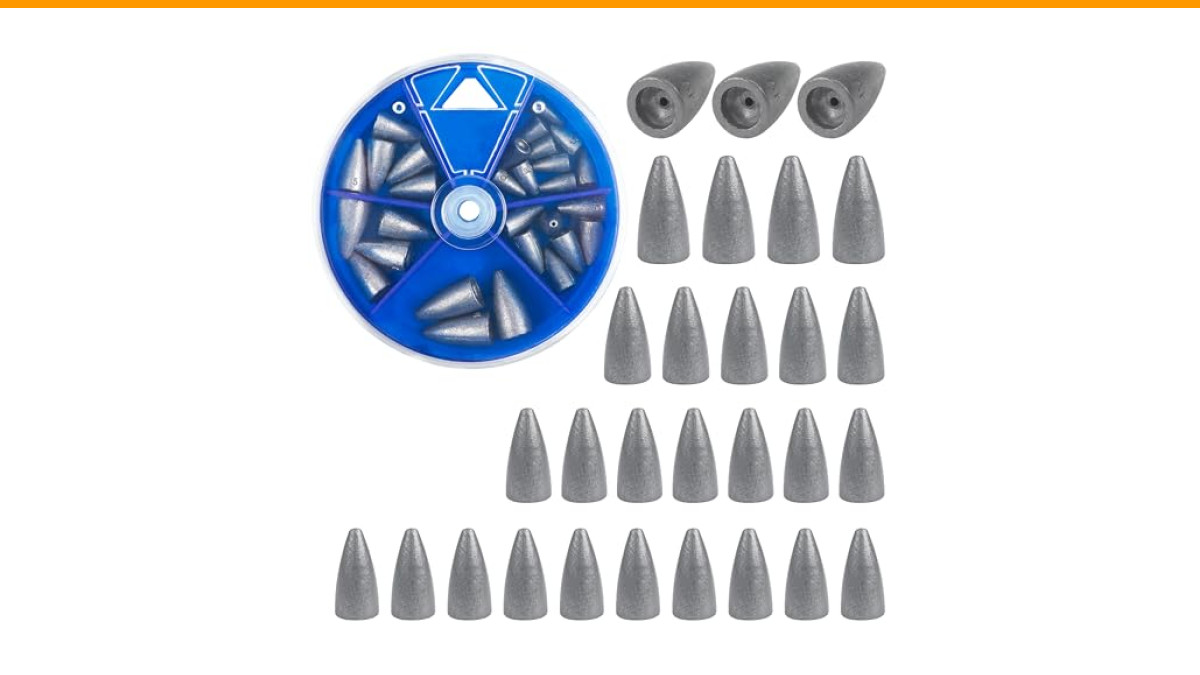
SILANON
Bullet Fishing Sinkers Weights Slip Sinkers Kit-29pcs Fishing Worm Weights Assorted Set for Bass Fishing Saltwater
- Bullet Fishing Sinkers Weights could reduce splashes,cause less waves and almost noiseless
- Worm Sinker Weights commonly used in freshwater or salty water, great for texas rig weights and many other weedless applications.
- Bullet Sinker Weight have a narrow end rounded to avoid snagging,concave base fits worm nose tight
If you’re starting out, a kit like the SILANON Bullet Fishing Sinkers Weights Slip Sinkers Kit gives you 29 pieces across five sizes, from 1/16 oz to 1/4 oz, in a clear compartment box. It’s a practical way to test different weights without buying five separate packs. I’ve used similar kits to dial in the perfect sink rate for different lures and depths.
Why Use a Bullet Weight: Sliding vs. Pegged
The bullet weight’s shape is no accident. Its tapered nose parts water and weeds, reducing splash on the cast and keeping noise low — a real advantage on spooky fish. The narrow end also slides through grass and brush without hanging up, which is why it’s the go-to for Texas rigs and other weedless presentations.
But the biggest decision is whether to let the weight slide freely on the line or peg it in place. Each approach changes how your bait behaves.
Sliding (Unpegged) Bullet Weight
When you thread the line through the weight’s bore and leave it loose, the weight slides up and down the line. This gives the worm or creature bait a free, natural fall — the weight drops first, and the bait flutters behind it. That’s deadly in open water or when fish are suspending. The sliding action also lets you feel the weight tick over rocks and wood, so you can keep in contact with the bottom.
The downside: in heavy cover, the weight can slide down and hang up on a branch while the hook stays free. It also shifts on the hookset, which can reduce the force transferred to the hook point.
Pegged Bullet Weight
Pegging locks the weight tight against the hook or lure. This is essential for punching through matted vegetation — the weight and bait move as one, so the bait doesn’t trail behind and snag. It also improves hookset power because the weight doesn’t slide away from the hook when you set.
Pegging changes the action, though. The bait falls nose-first, which is less natural but often triggers reaction strikes in thick cover. You’ll also cast farther with a pegged weight because it doesn’t slide back and forth during the cast.
So which one? It depends on where you’re fishing. Open water, docks, and sparse grass — slide it. Thick weeds, lily pads, or wood cover — peg it.
Choosing the Right Bullet Weight (Material, Size, and Bore)
Not all bullet weights are created equal. Material and size affect sink rate, sensitivity, and casting distance. The bore (the hole through the center) also matters — a too-small bore won’t fit your line, and a too-large bore lets the weight wobble.
Tungsten vs. Lead: Pros and Cons
Lead has been the standard for decades. It’s cheap, dense, and easy to mold. But lead is soft and gets nicked up, which creates snag points. It’s also toxic, so many anglers are switching to tungsten.
Tungsten is about 50% denser than lead, so a tungsten weight of the same size is heavier — or the same weight is smaller. That smaller profile penetrates weeds better and feels more sensitive because it transmits bottom contact more clearly. Tungsten is harder, so it doesn’t deform as easily, and it’s environmentally safer.
The trade-off is cost. Tungsten runs two to three times the price of lead. The SILANON kit uses a lead-free alloy, which gives you the density and hardness of tungsten without the price tag — a good middle ground for most anglers.
Matching Weight Size to Line Test and Lure
You can’t just grab any weight. Match it to your line strength and bait size.
- 1/16 oz to 1/8 oz — best for 6-8 lb test line and small finesse worms (4-6 inches). Good for shallow water and light cover.
- 1/8 oz to 1/4 oz — the workhorse range. Pairs with 10-15 lb test and standard 7-inch worms. Use 1/8 oz in 5-10 feet of water, 1/4 oz for deeper or faster current.
- 3/8 oz to 1/2 oz — for heavy cover, deep water (15+ feet), or strong current. Use with 15-20 lb test and bulky baits like beavers or craws.
Line diameter matters too. A thick 20 lb test monofilament won’t fit through a small 1/16 oz bore. Check the bore size before you buy — most weights list the line range. If the weight slides hard over the line, it’s too tight and will hang up on your cast.
Essential Tools and Materials for the Rig
You don’t need much, but having the right stuff makes the difference between a clean rig and a mess.
- Bullet weight — pick the size based on the chart above.
- Line — fluorocarbon or monofilament. Fluorocarbon sinks faster, which helps the weight get down. Mono floats, so it works better for topwater or slow presentations.
- Hook — offset worm hook (size 1/0 to 5/0) for Texas rigs, or a jighead for other setups.
- Bead — a small plastic or glass bead between the weight and the knot. It protects the knot from the weight’s sharp edge and adds a little click that can attract fish.
- Bobber stop or toothpick — for pegging (we’ll cover that below).
- Scissors or line cutters — for clean cuts.
A bead isn’t mandatory, but I always use one. The weight’s bore edge can fray your knot over time, especially with braided line. A bead is cheap insurance.
Step-by-Step: How to Tie a Bullet Weight (Sliding Method)
The sliding method is the foundation. Once you master it, pegging is just an extra step.
Threading the Line and Adding a Bead
- Cut a clean end on your line.
- Slide the line through the bullet weight’s narrow end first — the wide end goes toward the hook. This keeps the tapered nose pointing forward, which is what cuts through water and weeds.
- Slide the bead onto the line next, so it sits right behind the weight.
- Now tie your hook or jighead to the end of the line.
That’s it — the weight is free to slide between the bead and your rod tip.
Tying the Terminal Knot (Hook or Jighead)
A standard improved clinch knot works well for most lines up to 15 lb test. For braid or heavier line, use a Palomar knot — it’s stronger and easier to tie in low light.
- Pass the line through the hook eye and double back, leaving a 6-inch tag.
- Wrap the tag around the standing line 5-7 times.
- Pass the tag through the loop just above the eye, then through the big loop you created.
- Wet the knot and pull tight. Trim the tag.
Test the knot by pulling hard. If it slips, you didn’t wet it enough or the wraps are loose.
How to Peg a Bullet Weight for a Weedless Presentation
Pegging is simple but easy to mess up. The goal is to lock the weight tight against the hook or bead so it doesn’t slide.
Using a Bobber Stop or Toothpick
The most common method is a bobber stop — a small rubber band or string with a bead that you slide down the line. Here’s how:
- Slide the bobber stop onto the line before the weight.
- Slide the weight on, then the bead.
- Tie your hook.
- Pull the bobber stop down until it presses against the weight. The stop’s bead locks it in place.
Another trick is a toothpick. Insert the toothpick into the weight’s bore, then break it off flush with the wide end. The toothpick jams against the line and holds the weight in place. This works but can damage your line if you’re not careful — the wood can fray the line when you cast.
I prefer a bobber stop for most situations. It’s reusable, doesn’t damage the line, and lets you adjust the peg position quickly. For punching through thick mats, a toothpick is faster and more secure, but carry a few spares because they’re one-time use.
Common Mistakes and How to Fix Them (Slipping, Snagging, Weak Knots)
Even experienced anglers hit these snags. Here’s how to fix them.
Weight slips down the line during the cast. This happens when the bore is too large for your line. Fix it by using a smaller bore weight or adding a bead that’s slightly larger than the bore. If you’re using a sliding rig, a little slip is normal — but if it slides all the way to the hook, your weight is too loose.
Snagging on weeds or rocks. Check the weight’s nose. If it’s dented or has a burr, it will catch. File it smooth or replace it. Also, make sure the wide end is facing the hook — if you threaded it backward, the flat end will catch on everything.
Knot fails mid-cast. This is usually a knot issue, not a weight issue. The weight slamming against the knot on the cast can weaken a poorly tied knot. Use a bead to cushion the impact, and tie a stronger knot like the Palomar. Also, check your line for nicks — a scratch on the line near the weight will snap under load.
Weight doesn’t sink fast enough. If you’re using a 1/8 oz weight in 20 feet of water, it’ll take forever to reach the bottom. Switch to a heavier weight or a thinner line (fluorocarbon sinks faster than mono).
Testing Your Rig: Sink Rate and Action Check
Before you cast into the lake, test your rig in the yard or on the water’s edge.
- Tie the rig to your line and let it hang off the rod tip.
- Lower it into the water and watch how it falls. A good rig falls nose-first, with the weight leading.
- If the weight hangs up or the bait spins, you’ve got a problem — likely the weight is too heavy or the hook is tied wrong.
- Cast it a few times in open water. Feel the weight ticking the bottom. If you don’t feel it, the weight is too light or your line is too thick.
You want a sink rate that lets you maintain bottom contact without dragging. A good rule of thumb: you should feel the weight tap the bottom every few seconds, not drag constantly.
If you’re fishing deep or current, you’ll need a heavier weight. The SILANON kit’s 1/4 oz pieces are a good start for depths up to 15 feet. For deeper, go up to 3/8 or 1/2 oz.
Frequently Asked Questions
Can I use a bullet weight with braided line?
Yes, but you need a bead. Braid has no stretch and the weight’s sharp edge can cut it. The bead protects the line and the knot. Also, braid is thinner than mono of the same test, so a smaller bore weight will fit — check the bore size before buying.
What’s the best knot for tying a bullet weight?
You don’t tie the weight to the line — you thread the line through it. The knot goes on the hook. Use a Palomar for braid or heavy line, and an improved clinch for mono or fluorocarbon up to 15 lb test. Always wet the knot before tightening.
How do I stop the bullet weight from sliding down to the hook?
Use a bobber stop or peg it with a toothpick. For a sliding rig, add a small bead that’s slightly larger than the bore — it won’t slide past the weight. If you want the weight to stay put, peg it.
Does the weight color matter?
Sometimes. Black or dark weights blend in better with muddy bottoms, while shiny weights can reflect light and spook fish in clear water. It’s not a huge factor, but if you’re fishing pressured waters, a matte finish helps.
Can I use a bullet weight for saltwater fishing?
Yes, but make sure it’s made of a corrosion-resistant material. Lead will corrode, and tungsten is fine. The SILANON kit is labeled for saltwater, so it’s a safe bet. Rinse your gear after every saltwater trip to extend its life.
Final Cast: Key Takeaways
- Slide the weight for a natural fall in open water; peg it for weedless punching.
- Match weight size to line test and depth — 1/8 oz for shallow, 1/4 oz for deep.
- Always use a bead to protect your knot from the weight’s bore.
- Tie a Palomar knot for braid or heavy line; wet it before tightening.
- Test your rig’s sink rate before fishing — adjust weight if you don’t feel bottom contact.
- Check the weight’s nose for burrs and replace if it snags.
- Try a lead-free option like the SILANON kit for better sensitivity and less environmental impact.