You bought a lovely piece of wall art, but the walls are full. Or you want to add greenery near a window, but the sill is too narrow. Maybe you just want a mobile above a crib without drilling a huge hole. The solution is often the same: hang it from the ceiling.
Most people grab a hook and a piece of string. That works, but it looks like a piece of string. The trick to making decor look like it floats is using monofilament fishing line. It is nearly invisible, strong, and cheap. This guide covers the entire process, from picking the right line to hiding the hook, so you get that clean, floating look without the trial and error.

Arooow
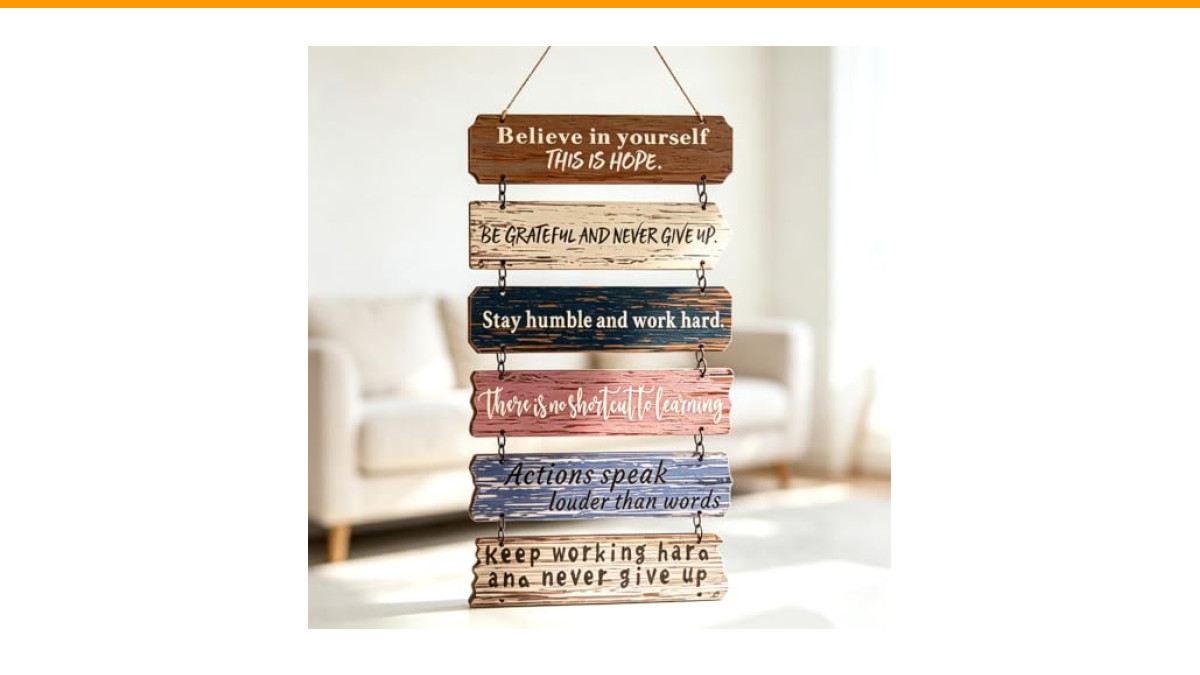
Office Motivational Wall Art Decor, Wood Rustic Hanging Motivational Wall Art Decor Sign, Inspiring Positive Quotes Wall Art, Christian Teachings Faith Wood Decor for Home Living Room Bedroom Bathroom Classroom Gym 12"x20" (6)
- Wisdom of life: The content includes profound philosophy of life, which will help you understand the true meaning of life and enha…
- Exquisite Design: Made of high-quality wooden boards, suitable for hanging in study rooms, offices, living rooms, adding positive…
- High-quality materials: Use qualified wood, no breakage or deformation, smooth surface, neat edges to avoid unnecessary burrs, viv…
You will learn which line holds what weight, how to tie knots that don’t slip, how to handle tricky ceilings, and how to build a multi-level display that actually looks intentional. I have hung everything from small ornaments to heavy planters using these methods, and I will share the specific numbers and tools that make the difference.
If you are decorating an office or a reading nook, consider pairing the floating decor with a solid anchor piece. The Arooow motivational wooden wall sign works well for this. It comes with a hemp rope and a folding buckle, so you can hang it on a standard hook without buying extra hardware. It gives the room a grounded focal point while your suspended pieces add depth above.
Why Fishing Line is the Ultimate Invisible Hanger
Fishing line, specifically monofilament, is the default choice for invisible hanging. It is a single strand of nylon that is clear or slightly tinted. When hung against a ceiling, it disappears unless light hits it at a specific angle.
Compare that to wire, which kinks, or thread, which breaks. Monofilament stretches a little, which is actually a benefit. It absorbs shock if someone bumps into the decor, and it does not snap under normal weight fluctuations.
It is also cheap. A spool costs a few dollars and handles dozens of projects. You do not need to buy a special kit. You probably already have the other tools at home.
Choosing the Right Line: Monofilament vs. Clear Vinyl vs. Wire
Not all clear lines are the same. The three common options are monofilament fishing line, clear vinyl cord, and beading wire. Each has a specific job.
- Monofilament (fishing line): Best for most decor. It is flexible, has some give, and holds a knot reasonably well if you use the right one. Available in test strengths from 4 lb to 50 lb or more.
- Clear vinyl cord: Thicker and stiffer. It is great for heavier items because it does not stretch as much. However, it is more visible and can look milky, not crystal clear.
- Beading wire: Made of twisted steel strands with a clear coating. It holds shape and does not stretch, but it kinks easily and can be visible under bright light. Use it only for items that must stay perfectly level.
Weight Capacity and Sagging Explained
The number on the fishing line package (e.g., 20 lb test) is the breaking strength. That is the point where the line snaps under a steady pull. For hanging decor, you want a safety margin of at least 4x. If your item weighs 2 pounds, use 8 lb test line. If it weighs 10 pounds, use 30 lb or 40 lb test.
Sagging is a different problem. Monofilament stretches over time, especially with heavier loads. A 10 lb item on a 20 lb line will droop an inch or two within a week. To avoid this, use a higher test line than necessary and keep the line as short as possible. For long drops (over 3 feet), consider using clear vinyl cord or a wire to minimize stretch.
| Line Type | Best For | Max Weight (Safe) | Visibility | Stretch |
|---|---|---|---|---|
| Monofilament 10 lb test | Ornaments, small art, photos | 2.5 lb | Very low | Moderate |
| Monofilament 30 lb test | Plants, medium frames, mobiles | 7 lb | Low | Low |
| Clear vinyl cord (1/16 inch) | Heavy planters, chandeliers | 15 lb | Medium | Very low |
| Beading wire | Level art, rigid structures | 10 lb | Medium | None |
Essential Tools and Materials for a Flawless Install
You do not need a toolbox full of gear. Here is the short list:
- Fishing line (correct test strength)
- Ceiling hooks (swag hooks or screw-in cup hooks)
- Drill with a 3/32 inch bit for pilot holes
- Needle-nose pliers (for tightening knots)
- A ladder or step stool
- Measuring tape
- Scissors or a sharp knife
For drywall ceilings, you need a toggle bolt or a molly bolt if you are hanging more than 5 pounds. A simple screw hook into drywall will pull out over time. For wood beams or joists, a regular screw hook works fine.
Step-by-Step: How to Attach Fishing Line to Your Ceiling
Let us walk through the standard process for a lightweight item (under 5 lb) on a drywall ceiling.
- Mark the spot. Use a pencil to mark where the hook goes. Make sure it is near a joist if possible. Use a stud finder to locate one.
- Drill a pilot hole. Use a bit slightly smaller than the screw hook’s core. For most cup hooks, a 3/32 inch bit works. Drill straight up, about 1 inch deep.
- Screw in the hook. Twist the hook into the pilot hole by hand or with pliers. Do not force it. If it resists, back it out and drill a slightly larger hole.
- Cut the line. Cut a piece of fishing line about 8 inches longer than the drop distance.
- Tie the line to the decor. Thread the line through the hanging point on your item. Use a double overhand knot or a figure-eight knot.
- Tie the other end to the hook. Loop the line over the hook and tie a secure knot. Leave a tail of about 2 inches.
- Trim and test. Pull the line tight, trim the excess tail with scissors, and give the decor a gentle tug to test the hold.
The Perfect Knot for Slippery Monofilament
Monofilament is slippery. A standard overhand knot will slip undone under load. You need a knot that locks. The Palomar knot is the best choice. It is simple and holds well on monofilament.
Here is how to tie it:
- Double the line to make a loop.
- Pass the loop through the hook or the decor’s hanging hole.
- Tie a loose overhand knot with the doubled line.
- Pass the loop over the hook (or through the hole) again.
- Pull both ends tight. The knot cinches down on itself.
It takes about 20 seconds once you get the hang of it. Practice on a piece of scrap line first.
How to Hide the Hook for a Seamless Look
The line is invisible, but a big brass hook ruins the illusion. The fix is to use a small, white or clear hook that blends with the ceiling. A swag hook is a small brass hook with a loop at the base. Screw it in, and the loop sits flush against the ceiling. Paint it to match the ceiling color before installing.
For a truly invisible look, use a ceiling medallion. This is a decorative ring that covers the hook entirely. You hang the line from the hook, then push the medallion up against the ceiling. It looks like a built-in fixture. This works well for chandeliers and larger plants.
Another trick: place the hook near a wall or corner. The angle makes it harder to see. Also, try to avoid placing hooks directly under bright lights, as the shadow will reveal the line.
How to Hang Heavy Decor (Chandeliers, Planters, and Art)
Heavy items need a different approach. A 15-pound planter will pull a standard screw hook out of drywall. You have two safe options.
Option 1: Screw into a joist. Locate the ceiling joist with a stud finder. Screw a heavy-duty eye bolt or a 3/8 inch screw hook directly into the wood. This supports up to 50 pounds or more.
Option 2: Use a toggle bolt. If you cannot hit a joist, use a toggle bolt. Drill a hole large enough for the folded toggle to pass through. Push the toggle through, then screw in the hook. The toggle opens up behind the drywall and spreads the load. A 1/8 inch toggle bolt supports about 20 pounds in 1/2 inch drywall.
For chandeliers, you must also consider the electrical box. Most ceiling boxes are rated for 50 pounds. If your chandelier weighs less than that, you can mount a hook to the box. If it weighs more, you need to add support bracing in the attic or use a specialized ceiling fan brace.
Use a drop ceiling hook (also called a swag hook) for pendant lights. These have a larger loop and are designed to hold the weight of a light fixture. Always use a chain or wire for the electrical connection, not the fishing line. The line should only support the weight, not the electrical wiring.
Mastering Multi-Level Arrangements for Visual Impact
Hanging three or four items at the exact same height looks flat. The eye needs variation. The rule of thumb is to vary the drop lengths by at least 30 percent.
For example, if you hang three small planters, set the drops at 12 inches, 18 inches, and 26 inches. That creates a diagonal line that draws the eye across the room.
Here is a simple formula for a balanced cluster:
- Pick a central anchor point.
- Hang the largest item at the longest drop.
- Hang the second item at a drop that is 70% of the first.
- Hang the third item at a drop that is 50% of the first.
Use a laser level or a measuring tape to set the initial points. After that, adjust by feel. Stand back and look. If two lines cross, you are on the right track.
For a mobile art piece, use a wooden dowel or a metal ring as a central hub. Tie three or four lines to the hub, then attach the decor to the ends. This spreads the weight and creates a 3D sculpture effect.
Troubleshooting: Tangles, Sagging, and Popcorn Ceilings
Tangled lines are a pain. The fix is to use a small piece of tape to hold the line taut while you work. Also, never store fishing line coiled tightly. It will take on a memory and tangle every time.
Sagging happens for two reasons: the line stretched, or the knot slipped. If the knot slipped, you used the wrong knot. Switch to a Palomar knot. If the line stretched, you need a heavier test line or a different material. Clear vinyl cord does not stretch as much.
Popcorn ceilings are fragile. Drilling into them cracks the texture. The best approach is to avoid drilling entirely. Use a removable adhesive hook rated for ceilings. These use a sticky pad that presses onto the surface. They work for items under 2 pounds. For heavier items, you must drill, but you can minimize damage.
First, use a utility knife to score a small circle in the popcorn texture where you plan to drill. Peel away the texture inside that circle. This exposes the smooth drywall underneath. Drill your pilot hole and screw in the hook. The remaining texture hides the small patch area. When you remove the hook later, patch the hole and re-roll the texture with a spray can.
Creative Ceiling Decor Ideas Beyond Ornaments
Fishing line is not just for Christmas ornaments. Here are some ideas that look great and are easy to execute.
- Floating shelves: Use a wooden board and hang it from two points of fishing line. It looks like it is hovering. Keep the weight under 10 pounds.
- Macrame plant holders: Hang a macrame piece from the ceiling instead of a wall bracket. The line is invisible, so the plant appears to float.
- Pendant lights without wiring: Use battery-operated LED puck lights. Hang them with fishing line at different heights over a table. No electrician needed.
- Seasonal decor: Hang paper lanterns, dried flowers, or lightweight wreaths. Swap them out easily by untying one knot.
- Photo displays: Run a single line across a corner and clip photos to it with mini clothespins. The line is invisible, so the photos look like they are floating in space.
One word of caution: keep hanging decor at least 7 feet above the floor in walkways. You do not want someone walking into a planter.
Frequently Asked Questions
Can I use regular sewing thread instead of fishing line?
Sewing thread breaks under very little weight and stretches. It also frays. Fishing line is stronger and does not fray. Use fishing line for anything heavier than a single sheet of paper.
How do I remove the fishing line later without damaging the ceiling?
Cut the line at the hook and pull it through the decor. Unscrew the hook. Fill the pilot hole with spackle and smooth it flat. For popcorn ceilings, use a small dab of joint compound and texture spray.
Will fishing line damage the paint on my ceiling?
No, the line itself does not damage paint. The hook does. If you use a removable adhesive hook, there is no damage. Screw hooks leave a small hole, which is easy to patch.
What if my ceiling is concrete or plaster?
Concrete needs a masonry bit and a plastic anchor. Drill a hole, tap in the anchor, then screw in the hook. Plaster is softer but brittle. Use a drill on low speed and a sharp bit to avoid cracking.
How long does the line last before it degrades?
Monofilament degrades with UV light. Indoors, it lasts years. If your ceiling has direct sunlight exposure, check the line every few months for stiffness or cracking. Replace it once a year in that case.
Final Thoughts
Hanging decor from the ceiling with fishing line is a small skill that pays off in big ways. It lets you use vertical space that would otherwise sit empty. Start with a lightweight item and a simple hook. Once you get the knot down and see how clean it looks, you will start looking for more things to hang.
- Use 4x the weight rating for safety margin.
- Always tie a Palomar knot for monofilament.
- Drill a pilot hole to avoid splitting the ceiling.
- Paint your hooks to match the ceiling.
- Vary drop lengths by 30 percent for visual interest.
- For heavy items, screw into a joist or use a toggle bolt.
- Check the line yearly for UV damage.