
You just bought a nice baitcasting rod, or maybe you inherited one from a buddy. The reel on it is busted, but you have a perfectly good spinning reel sitting in the garage. It seems like a no-brainer: just bolt the spinning reel onto the baitcasting rod and get back to fishing. You save money and you’re on the water in ten minutes. But before you grab a screwdriver, there are some hard physical realities you need to understand.
This article walks you through exactly what happens when you mix these two systems. You’ll learn why the reel seat doesn’t match, what that trigger grip does to your hand, and why the rod’s action works against you. More importantly, you’ll get a safe way to test the setup if you insist, plus three budget-friendly alternatives that solve the actual problem you’re trying to fix.

KastKing
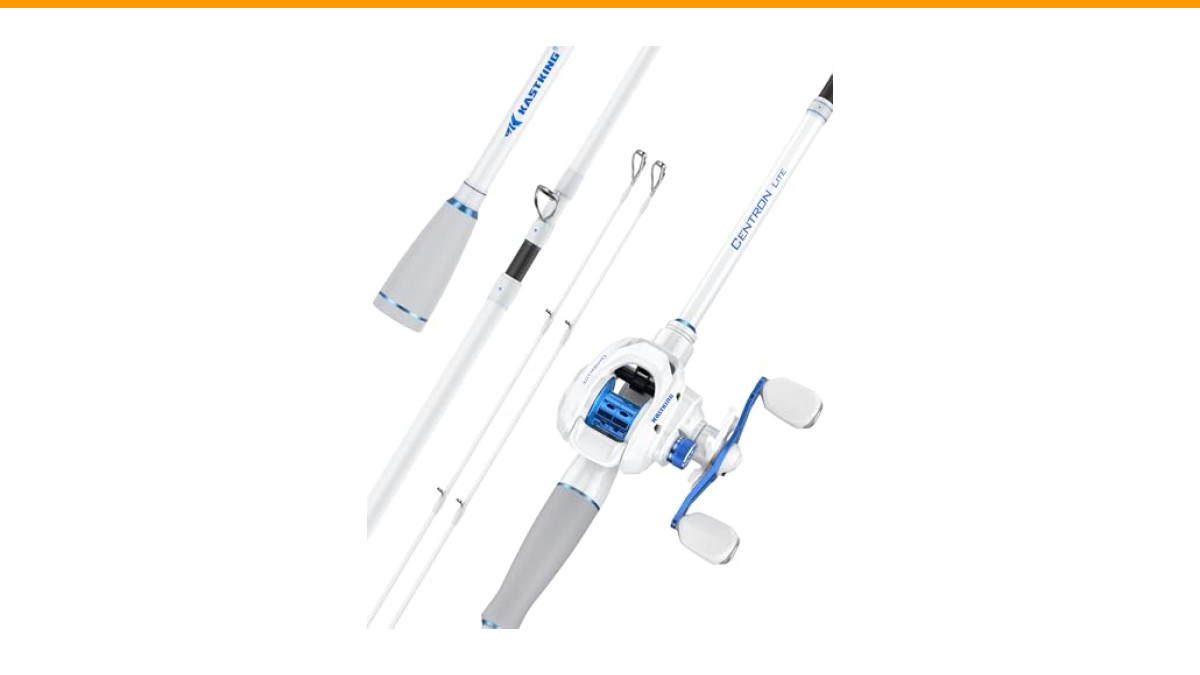
KastKing Centron Lite Travel Baitcasting Fishing Rod and Reel, 6'6" M Right Handed Reel Spinning
- Packable 4-Piece Travel Combo: The KastKing Centron Lite Travel Baitcasting Combo breaks down small for easy transport and storage…
- KastFlex IM6 Graphite + PTS One-Piece Feel: Built on responsive KastFlex IM6 graphite blanks for lighter weight, crisp sensitivity…
- Stainless Steel Guides & Comfortable Handles: Strong, durable stainless-steel guides with premium ceramic inserts ensure smooth pe…
After reading, you’ll know whether this combo is a clever hack or a recipe for lost fish and bruised knuckles. Spoiler: it’s mostly the latter, but not for the reasons most people think.
If you’re traveling light and want a proper matched setup that packs down small, the KastKing Centron Lite Travel Baitcasting Combo solves the whole dilemma. It pairs a dedicated Centron baitcaster with a 4-piece IM6 graphite rod, so you never have to improvise with mismatched gear. The rod breaks down to fit in a backpack or car trunk, and the included spare tip section is a nice safety net for rough travel.
Quick Answer: Yes, But You Shouldn’t
Physically, a spinning reel will mount on most baitcasting rods. The reel foot slides into the reel seat, and you can tighten the locking rings down. It stays put. That’s where the good news ends.
The problem is that a baitcasting rod is designed around a reel that sits on top of the rod, with the line guides on the top side. A spinning reel hangs underneath the rod. When you mount it on a casting rod, the line comes off the spool at an angle that scrapes against the first guide. That friction kills casting distance and creates line twist.
So yes, it’s possible. It’s also a bad idea for reasons we’ll get into below. The real question isn’t whether it fits—it’s whether you’ll enjoy fishing with it. You won’t.
Why Anglers Try This Combo (The Real Motivation)
Nobody wakes up and decides to mismatch their gear for fun. There’s always a reason. Most of the time, it’s one of these three:
- Budget constraints: You have one rod and one reel, and buying a second rod isn’t in the cards this month.
- Travel convenience: You’re packing light for a trip and want to minimize gear. One rod that does double duty seems smart.
- Inherited or gifted gear: Someone gave you a casting rod with no reel, or vice versa. You’re just trying to make it work.
I get it. Fishing gear is expensive, and reusing what you have feels responsible. But this particular mismatch creates problems that cost you more in time and frustration than a cheap rod would. The physics of rod blank bias and reel torque work against you from the moment you pick it up.
Let’s break down exactly why this combo fails, starting with the physical parts that don’t line up.
The 4 Physical Mismatches That Ruin the Setup
Reel Seat Size and Locking Issues
Baitcasting reel seats are shorter and wider than spinning reel seats. The reel foot on a spinning reel is narrower, so it sits loose in a casting reel seat. You can shim it with tape or cardboard, but that’s a temporary fix that adds wobble.
The locking rings on a casting seat are designed to clamp down on a baitcaster’s flat foot. A spinning reel’s foot is curved. The rings won’t seat flush, which means the reel can shift under load. During a hard hookset or a strong fight, that movement translates to lost sensitivity and missed strikes.
Line Guide Position and Friction
This is the biggest killer. Baitcasting rods have small, tight line guides positioned on the top of the rod. Spinning rods have larger guides, with the first guide (the stripper guide) sitting farther from the reel and positioned to accept line coming off a stationary spool.
When you mount a spinning reel on a casting rod, the line leaves the spool at a sharp downward angle, then has to bend upward to enter the first guide. That angle creates friction. You’ll hear it—a distinct squeal or grinding sound on the cast. That friction robs you of distance and puts unnecessary wear on your line.
Trigger Grip Interference
Most baitcasting rods have a trigger grip—that little finger hook on the underside of the reel seat. It’s there to give you leverage when casting with a baitcaster. When you mount a spinning reel on top, the trigger sits right where your middle finger naturally wraps around the rod.
It’s not just uncomfortable; it changes your grip angle. You can’t hold the rod the way you would with a spinning setup, so your casts become awkward and less accurate. After an hour, your hand cramps up. I’ve tried it, and it’s genuinely unpleasant.
Rod Action and Power Distribution
Baitcasting rods have a faster action and a stiffer backbone than spinning rods of the same power rating. They’re built to handle the torque of a baitcaster’s spool during the cast and to give you solid hooksets on fish that hit hard.
A spinning reel delivers line with less initial force. The rod’s fast action means the tip loads up quickly, but the stiff backbone doesn’t flex enough to absorb the slower, more gradual cast of a spinning reel. The result? You can’t load the rod properly, so your casts fall short. And when a fish bites, the rod’s stiffness transmits too much force too quickly, often pulling the hook right out of the fish’s mouth.
What Actually Happens When You Cast and Fight Fish
Casting Distance and Accuracy Loss
Here’s the practical math. A spinning reel casts by letting the line slip off a stationary spool. The line guides on a spinning rod are large and positioned to minimize friction as the line loops off. A baitcasting rod’s guides are small and tight, designed for line that’s already traveling in a straight line off a revolving spool.
When you cast with the mismatched setup, the line hits the first guide at a sharp angle. You lose 20-30% of your casting distance right there. Accuracy suffers too, because the line’s erratic path through the guides creates unpredictable flight. You’ll find yourself aiming for a spot and landing five feet to the left, every single time.
Hookset Weakness and Missed Bites
The rod’s backbone is the part that transfers your hookset force to the fish. On a baitcasting rod, that backbone is positioned assuming the reel sits on top. When you flip the reel to the bottom, the rod’s spine orientation changes relative to your hand.
You’ll notice it on the hookset. The rod feels dead, like it’s not transferring your energy cleanly. Fish that hit short or soft will get off more often because the rod can’t load up properly to drive the hook home. This is especially noticeable with finesse presentations like drop shots or small jerkbaits.
Rod Balance and Fatigue
A baitcasting rod is balanced for a reel that sits on top. The center of gravity is designed to sit between your thumb and forefinger. When you mount a spinning reel underneath, the balance point shifts dramatically toward the butt of the rod.
That might sound minor, but it means the rod tip feels heavier. You’ll constantly adjust your grip to compensate, which fatigues your forearm and wrist much faster. After a full day of fishing, your arm will feel like you just did a hundred curls. It’s not a workout—it’s a punishment.
The Hidden Danger: Reel Detachment and Injury
This is the part most articles skip. When you mount a spinning reel on a baitcasting rod, the reel foot doesn’t sit flush in the seat. You’re relying on friction and whatever shims you improvised to hold it in place.
During a powerful cast, the reel can shift or even pop loose. If that happens mid-cast, you’re suddenly holding a rod with a reel swinging free at the end. The reel can smack you in the face or chest, and the rod tip whips dangerously. I’ve seen a reel fly off and land in the water, never to be seen again. That’s an expensive mistake.
The risk is highest with heavier lures, where the casting force is greater. A 3/4-ounce lure on a stiff rod generates serious torque on the reel seat. If the foot slips, you’re not just losing gear—you’re risking a hook in the hand or worse.
How to Test It Safely (If You Must)
Maybe you’re still curious. Fine. Here’s how to test the setup without risking injury or losing gear.
- Use light line: Spool the reel with 6-8 pound monofilament. Don’t use braid—it cuts through guides and your fingers if things go wrong.
- Remove all lures: Tie on a small practice plug or a bare hook with a split shot. No treble hooks, no heavy crankbaits.
- Secure the reel properly: Wrap electrical tape around the reel foot and the reel seat before you tighten the locking rings. This prevents any shifting.
- Cast at 50% power: Start with short, gentle casts. Pay attention to how the line flows through the guides. If you hear squealing or feel resistance, stop.
- Check the reel seat after every cast: If the reel moved even a millimeter, the setup is unsafe. Abort the test.
This test will confirm everything I’ve said. You’ll feel the reduced casting distance, hear the line friction, and notice the awkward grip. But at least you’ll know from experience, not just from reading.
The Reverse: Baitcasting Reel on a Spinning Rod
People ask about the opposite setup too. Mounting a baitcasting reel on a spinning rod is even worse. Spinning rod reel seats are longer and narrower, so the baitcaster’s foot won’t fit at all. You’d have to rig something with zip ties, which is dangerous and foolish.
Even if you could mount it, the spinning rod’s slower action and softer tip can’t handle the baitcaster’s casting dynamics. You’d get backlash on every cast, and the rod would feel like a wet noodle when fighting fish. Don’t do it. Just buy the right rod for the reel you have.
Better Alternatives: 3 Setups That Solve Your Problem
Instead of fighting the mismatch, here are three setups that actually work, all under $100 if you shop smart.
| Setup | Best For | Approximate Cost | Why It Works |
|---|---|---|---|
| 6’6″ Medium Spinning Combo (e.g., Ugly Stik GX2) | Light lures, finesse presentations | $50-70 | Matched rod and reel, smooth casting, no friction issues |
| 7′ Medium-Heavy Casting Combo (e.g., Abu Garcia Black Max) | Heavier lures, bass fishing | $70-90 | Proper reel seat, correct guide train, balanced grip |
| KastKing Centron Lite Travel Combo | Travel, backpacking, multi-species | Check current price | Packable 4-piece rod matched with a Centron baitcaster, spare tip included |
The KastKing option is particularly good if your original motivation was travel convenience. It’s a 4-piece rod that fits in a backpack, and the reel is already matched to the rod’s action and power. No improvisation needed.
If you’re on a strict budget, the Ugly Stik GX2 combo is a workhorse. It’s not fancy, but it casts well and handles fish reliably. It took me a day to get used to the heavy tip, but it’s never let me down.
Final Verdict: When It’s Acceptable vs. When It’s Stupid
Here’s the honest breakdown.
Acceptable: If you’re testing it for a few minutes out of curiosity, or if you’re in a survival situation where you have no other option and you’re fishing for dinner. Even then, use light line and no heavy lures.
Stupid: Using it for a full day of fishing, targeting big fish, or relying on it for a tournament. The casting distance loss, hookset weakness, and reel detachment risk make it a bad trade.
You won’t break the rod by trying it. But you’ll catch fewer fish, and you’ll probably lose a reel or take a hook to the hand. Neither outcome is worth it.
- A spinning reel physically mounts on a baitcasting rod, but the line guides and grip make it cast poorly.
- You’ll lose 20-30% of casting distance due to line friction at the first guide.
- Hooksets feel weak because the rod’s backbone isn’t aligned with the reel’s position.
- Reel detachment is a real risk—the foot doesn’t seat flush, and heavy casts can pop it loose.
- Rod balance shifts, causing forearm fatigue much faster than a matched setup.
- If you must test it, use light line, no lures, and check the reel seat after every cast.
- Buying a budget-matched combo under $100 solves your problem without the headaches.
FAQs
Will a spinning reel damage a baitcasting rod?
No, the rod itself won’t be damaged. The reel foot might scratch the reel seat if it shifts, but the rod blank and guides are fine. The bigger risk is you damaging the reel when it detaches mid-cast.
Can I use a baitcasting rod for spinning reels with lighter lures?
Technically yes, but it’s counterproductive. Baitcasting rods are stiffer and have a faster action, which makes them poor at casting light lures (under 1/4 ounce) even with a spinning reel. The rod can’t load properly, so you lose distance and feel.
What happens if the reel foot doesn’t fit the reel seat?
You’ll have a loose connection that worsens with every cast. The reel can rotate slightly, which changes your casting angle and reduces accuracy. In the worst case, it pops out entirely. Shims and tape are temporary fixes, not solutions.
Is it better to use a spinning reel on a casting rod or a baitcaster on a spinning rod?
Neither works well, but the spinning reel on a casting rod is less catastrophic. The baitcaster on a spinning rod won’t even fit without major modification, and the rod action makes backlash almost guaranteed. If you have to choose, go with the spinning reel on the casting rod, but only for short-term use.
What’s the cheapest way to fix this mismatch?
Buy a budget spinning combo. The Ugly Stik GX2 or similar runs around $50-70 and will outperform your mismatched setup in every way. You’ll catch more fish and enjoy the experience more. That’s a better investment than any shim or workaround.
