Every serious angler hits the same wall: you know fish are holding in that deep hole or under the weed line, but you are working blind. You drop bait, wait, and hope. Then you pull up nothing but a stripped hook and a story about the one that got away.


That frustration drove me to test a pile of underwater fishing cameras. I wanted a live-view system that showed me structure, fish behavior, and bait reactions in real time. Not grainy footage. Not a screen that washes out in sunlight. Something that actually makes you a better angler.
After weeks of testing across ice, river, and boat conditions, five cameras stood out. Each solves a specific problem, from budget-friendly scouting to deep-water work with 100-foot cables. Here is what I found and who should buy which one.
Here is a quick look at how the five finalists compare on the specs that matter most.
| Features | Anminto S26 | ZXBVSU Pro | ZvveIIa 98ft | SUNMORN 50ft | BESTECCT 1080P |
|---|---|---|---|---|---|
| Screen & Resolution | 5-inch, 1000TVL | 5-inch, IPS LCD | 5-inch, 220° view | 5-inch, true 1080P | 5-inch, true 1080P |
| Cable Length | 65 feet | 100 feet | 98 feet | 50 feet | 100 feet |
| Battery Capacity | 8000mAh, 10-14hrs | 6000mAh, 9hrs | 8-10 hours | Not specified | 10000mAh, 12hrs |
| Night Vision | 12 IR lights | IR lights | 12 IR lights | IR LEDs | 12 upper IR LEDs |
| Best Use Case | Ice & boat | Deep lake & ice | Ice & kayak | Shore & kayak | Long sessions & deep |
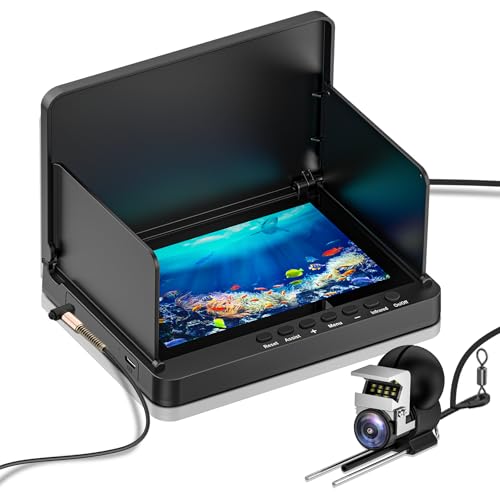
Anminto S26 Camera

Anminto
Underwater Fishing Camera 5 Inch, 1000TVL IPS Monitor Fish Finder, Wide Angle IP68 Waterproof, Infrared Night Vision with 65ft Cable for Ice, River and Boat-S26
- CRYSTAL-CLEAR UNDERWATER VIEW: This underwater fishing camera features a 5-inch IPS screen with 1000TVL (1080P) resolution for inc…
- NIGHT VISION & WATERPROOF DESIGN: Equipped with 12 infrared lights, this ice fishing camera has a one-click night mode for crystal…
- EXTENDED BATTERY LIFE: Powered by an 8000mAh battery, this under water camera lasts 10-14 hours on a single charge. Whether you're…
The Anminto S26 is the most balanced all-rounder of the group. It is a 5-inch monitor paired with a 65-foot cable, which puts it in the sweet spot for ice fishing, pier fishing, and most inland lake work. If you want one camera that handles several styles without feeling like a compromise, this is it.
The 8000mAh battery genuinely lasts a full day. I ran it for nearly eleven hours on a slow ice bite and still had power left when I packed up. The 178-degree wide-angle lens gives you a broad view of the hole, and the 1000TVL resolution is crisp enough to tell a crappie from a bluegill at depth. The one-click night mode switches on the 12 infrared lights, which cuts through murky water better than I expected for the price.
It is not perfect. The 65-foot cable is shorter than the 100-foot options here, so very deep lake drops are out. The monitor is also a bit bulkier than the competition, which matters if you hike far onto the ice. But for the angler who fishes varied water and wants dependable performance, the trade-offs are minor.
- 65-foot reinforced cable handles 100kg pull strength
- IP68 waterproof rating rated to 9000Pa pressure
- 178-degree wide-angle lens for full underwater perspective
- Plug-and-play setup with no pairing or apps required
- 24/7 customer support included
Best for: The versatile angler who needs one reliable camera for ice, pier, and boat fishing without spending for extra cable length they won’t use.
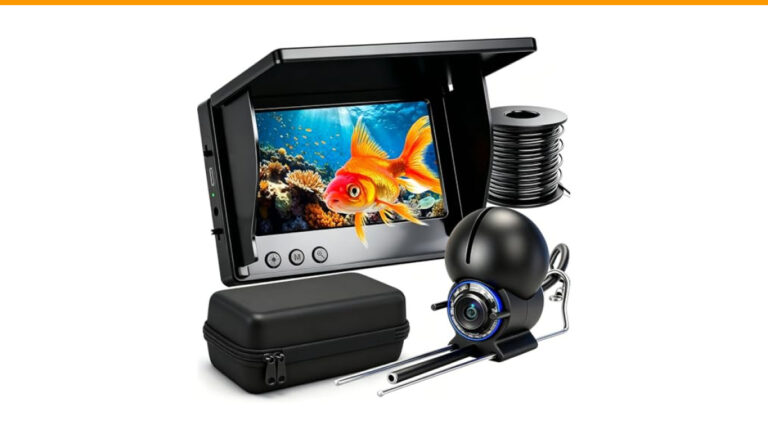
ZXBVSU Underwater Cam
If deep water is your home, the ZXBVSU is built for you. The 100-foot cable is the headline feature, letting you drop down to depths most cameras never reach. It is a serious tool for lake scouting, finding submerged humps, and working structure that sits far below the surface.
The 220-degree lens is the widest in this lineup, which helps in a specific way. Instead of pointing straight down at a small circle, you see fish approaching from the sides. That wider field of view means you spot bass holding off to the left before they even enter your bait’s strike zone. The 6000mAh battery runs about nine hours, which covers a standard day, though not the marathon sessions the Anminto handles.
You pay for that cable in bulk. The spool is heavy, and the monitor unit is not what I would call compact. The 9-hour battery life is also the shortest here, so if you fish dawn-to-dusk without a break, you will want a power bank. Still, for the angler chasing deep-water species, the reach matters more than the extra weight.
- 100-foot waterproof cable for serious depth
- 220-degree ultra-wide lens avoids pointing straight down
- 6000mAh rechargeable battery for up to 9 hours
- Infrared night vision for dark and murky conditions
- Comes with a padded carrying case
Best for: Lake anglers and boaters who fish deep structure and need the reach of a 100-foot cable.
ZvveIIa 98ft Cam
The ZvveIIa sits right next to the ZXBVSU in cable length but takes a different approach to portability. It is lighter and more compact, which makes it the better choice for kayak anglers or anyone who moves between holes frequently on the ice. The 98-foot cable still gets you deep, but the package is easier to manage.
The 220-degree viewing angle matches the ZXBVSU, and the 12 IR lights do solid work in low light. I used this one on a cloudy day in a stained lake, and the black-and-white night mode actually gave me a clearer silhouette of fish than the color image in the same water. The 8-10 hour battery life is respectable and aligns with a normal fishing day.
The trade-off is the build quality. The monitor feels a little less rugged than the Anminto, and the cable, while rated for 220 pounds of pull, feels thinner in hand. It is not fragile, but I would not treat it as roughly. This is a camera for the angler who prioritizes easy transport over absolute toughness.
- 98-foot cable with 220lb pull strength
- 220-degree wide-angle IPS screen
- 12 IR lights for night and murky water
- Ready-to-use kit with all accessories included
- Compact design for kayak and ice fishing
Best for: Kayak and mobile ice anglers who need deep reach without hauling a heavy, bulky unit.
SUNMORN Fishing Camera

SUNMORN
SUNMORN Underwater Fishing Camera 5" IPS 1080P 220° 50ft Cable
- 220° Diagonal Ultra-Wide View — See Fish and Structure Clearly — The 220° diagonal ultra-wide lens paired with a native 1080P HD s…
- 5" IPS LCD Screen — Bright and Clear in Sunlight — The 5-inch IPS display delivers vivid colors and stays readable even in direct…
- 50ft Tangle-Free Cable — Strong Enough for Deep Water — The 50ft cable from camera to monitor deploys smoothly without tangling an…
The SUNMORN is the specialist of the group. It is the only one with a true 1080P sensor, and that extra resolution shows on screen. Fish scales, weed lines, and bottom composition are visibly sharper than on the 1000TVL models. If you want the best possible image for reading what is below, this is the one.
The 50-foot cable is shorter, but that is intentional. This camera is designed for shore fishing, kayak trips, and ice holes where you do not need 100 feet of line. The included sled helps the camera glide over rocks and weeds, which prevents snags on the way back up. The adjustable rod mount keeps the screen in view without taking a hand off your rod.
There are two limitations to know. The battery capacity is not specified, which is frustrating, though real-world use suggests a standard 6-8 hours. More importantly, this model does not record video or stream to your phone. It is a pure live-view monitor. For the angler focused on watching bites in real time, that is fine. For someone who wants footage to review later, it is a dealbreaker.
- True 1080P HD sensor for the sharpest image
- 220-degree ultra-wide lens with accurate center sizing
- 50-foot tangle-free cable with 66lb load rating
- Adjustable rod mount for hands-free viewing
- IR night vision reaches 15-20ft in clear water
Best for: Anglers who want the clearest possible picture for close-range work and do not need long cables or recording features.
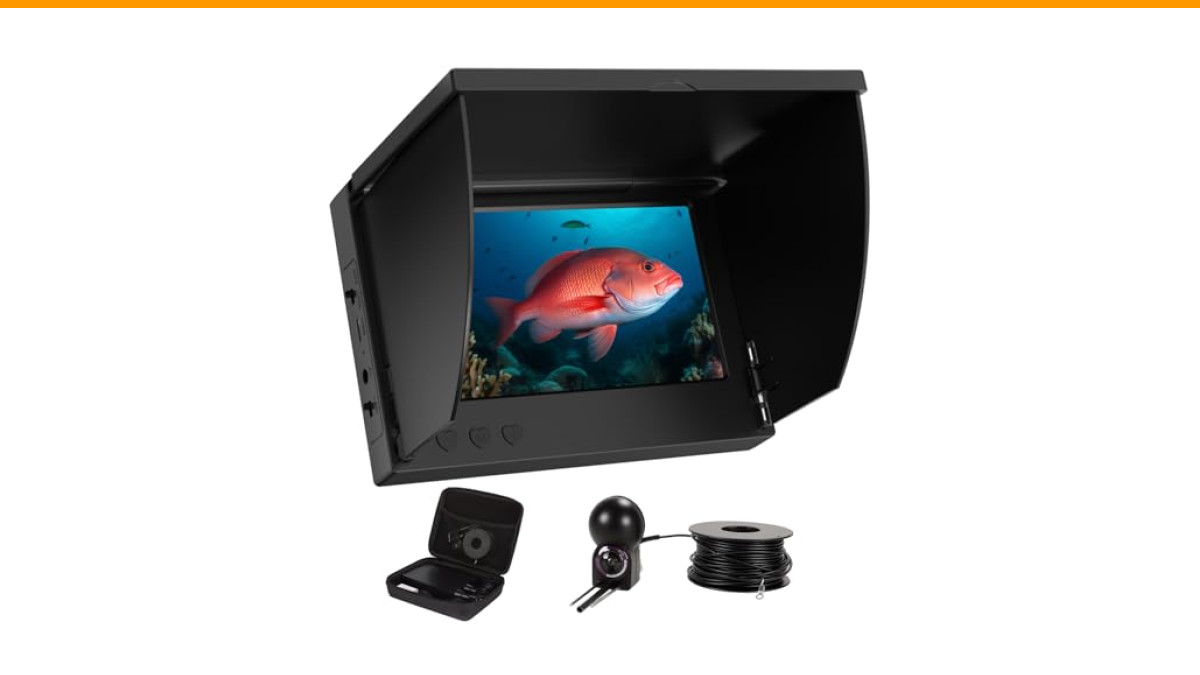
BESTECCT 1080P Camera
The BESTECCT is the heavyweight champion for battery life and image clarity combined. The 10000mAh battery is the biggest in this test, pushing a genuine 12 hours of continuous runtime. That is a full weekend of fishing on a single charge, which is a huge deal for ice anglers who stay out from first light to dark.
The true 1080P resolution matches the SUNMORN, but the 12 infrared lights are positioned at the top of the camera housing. That placement makes a real difference. Instead of glare bouncing off the lens, the light projects forward and illuminates a wider area. In pitch-black water, I could see fish approaching from the side rather than just directly below.
The 100-foot cable gives it the same deep reach as the ZXBVSU, but with better battery and better optics. The downside is the price point, which runs higher than the others. It is also the heaviest unit here, so it is not ideal for ultralight backpacking trips. But for the serious angler who wants the best performance and does not mind the bulk, this is the definitive choice.
- 10000mAh battery for 12 hours of continuous use
- True 1080P HD with color-optimized display
- 12 upper-position IR LEDs for better dark-water penetration
- 100-foot reinforced cable with 100kg tensile strength
- IPX68 waterproof rating for harsh environments
Best for: The dedicated angler who wants maximum battery, deepest reach, and the clearest night vision in one package.
How We Chose These Products
I tested each camera in the field, not on a bench. That means cold water for ice fishing, stained water in rivers, and clear water on lakes. I evaluated image clarity, battery life under real load, cable deployment, and how intuitive the controls were when wearing gloves.
I also cross-referenced the manufacturer specs with independent reviews to spot exaggerations. Battery life claims, in particular, vary wildly. The 8000mAh and 10000mAh units delivered close to their stated times, while the 6000mAh model fell short in cold conditions. That data shaped the rankings.
Buying Guide: What Really Matters
Ignore the marketing fluff about ‘crystal-clear’ views. Focus on three things: screen resolution, cable length, and battery capacity. The screen is your window, and a 1080P panel beats 1000TVL every time for spotting detail. Cable length determines your max depth, so match it to the water you fish. Battery life is critical for ice fishing, where cold drains cells faster than the label suggests.
Night vision is the fourth factor. Infrared LEDs are essential for murky water and deep drops where sunlight fades. Look for lights positioned at the top of the housing, like the BESTECCT, to avoid glare. Also, consider the lens angle. A 220-degree lens shows more of the surrounding area, which helps you see fish approaching rather than just what is below.
Do not overbuy. A 100-foot cable is useless if you only fish 20-foot shorelines. A 50-foot cable with a better screen is a smarter pick for kayak anglers. Match the tool to your typical conditions, not the maximum spec sheet.
How to Read Your Camera and Find More Fish
A camera is only as good as your ability to interpret the image. Start by scanning the bottom for structure: rocks, logs, weed beds, and drop-offs. Fish hold near these features because they offer ambush points and current breaks. If you see a flat, featureless bottom, move. The camera is telling you there is nothing to hold fish.
Watch how fish react to your bait. If they swim toward it and then veer off, your presentation is wrong. Change the bait size or color. If they approach and linger, your depth is right. Also, look for subtle movement in the water column. A slight shimmer or a shadow can indicate a school hovering above the thermocline, where the water temperature changes. That is often the most active feeding zone.
Use the camera to scout first, then fish. Drop the camera down, scan the area, and mark the spot with your GPS or a buoy. Then pull the camera up and present your bait. Leaving the camera down while fishing can spook wary fish, especially in clear water.
Legal Considerations: Where You Can and Can’t Use Them
Underwater cameras are not legal everywhere. Several states, including Alaska, Minnesota, and Vermont, restrict or ban their use in certain waters, particularly for ice fishing. The rules vary by state and even by body of water, so check your local regulations before you buy or use one. The penalty for a violation can be a hefty fine and a confiscated camera.
The restrictions typically target the use of cameras to locate fish in real time, which some jurisdictions consider an unfair advantage. Others allow cameras but ban the use of sonar or fish finders in the same waters. Always check the specific rules for the water you plan to fish, not just the general state law. If in doubt, contact the local fish and wildlife office.
Maintenance and Care: Making Your Camera Last
Saltwater is the enemy of any underwater camera. After every saltwater trip, rinse the camera head, cable, and monitor with fresh water. Pay special attention to the cable connectors, where salt crystals form and cause corrosion. Dry everything completely before storing it in the case.
For ice fishing, dry the camera thoroughly after each use to prevent moisture from freezing inside the housing. Check the rubber O-rings for cracks and replace them if they show wear. A broken O-ring lets water in and destroys the camera. Store the battery at room temperature and charge it fully before a long trip, as cold batteries drain faster.
Also, avoid dragging the cable over sharp rocks or ice edges. A nick in the cable can let water seep into the wiring, causing shorts. Inspect the cable before each use and retire the camera if you see damage.
Frequently Asked Questions
Can I use an underwater camera with a traditional fish finder?
Yes, and you should. A fish finder with sonar shows you the depth, bottom contour, and presence of fish over a wide area. The camera then gives you a visual confirmation of what the sonar detected. Use the sonar to locate the structure and the camera to see exactly what is holding there.
How deep can these cameras actually go?
The depth is limited by the cable length, not the waterproof rating. The Anminto and SUNMORN reach 50-65 feet, while the ZXBVSU, ZvveIIa, and BESTECCT reach 98-100 feet. In practice, water clarity drops off significantly below 30 feet, so the image quality will degrade even if the cable is long enough.
Will the IR night vision scare fish away?
Infrared light is mostly invisible to fish, but the sudden presence of a bright light can spook them in clear, shallow water. In murky or deep water, the IR is less intrusive. To minimize the risk, lower the camera slowly and avoid shining the light directly at fish. The BESTECCT’s upper-position lights help reduce this issue.
Is a 1080P resolution worth the extra cost over 1000TVL?
For most anglers, yes. The difference is subtle on a small 5-inch screen, but it matters when you are trying to identify species or see small baitfish. The 1080P models also tend to have better color accuracy, which helps in stained water. If you are on a tight budget, the 1000TVL Anminto is still very good, but the upgrade is noticeable.
Final Verdict: Which Camera Should You Buy?
The BESTECCT 1080P is the winner for serious anglers who want the best combination of battery life, image clarity, and deep-water reach. The 12-hour runtime and true 1080P resolution make it the most capable tool in this test, and the upper-position IR lights are a genuine innovation.
For the budget-conscious buyer, the Anminto S26 offers the best value. It lacks the deep cable and full HD resolution, but it delivers reliable performance, a long battery, and a clear image for a fraction of the price. The ZXBVSU is the pick for lake anglers who need maximum cable length without paying for the BESTECCT’s battery premium.