You know the scene. You pull up to a dock, drop a bait near the pilings, and watch fish turn away. Or you cast under the dock, get snagged on a barnacle-encrusted post, and lose your rig. Docks are fish magnets, but they punish sloppy gear and sloppy technique.
Most anglers grab whatever combo sits in the garage. That works until you need to skip a lure three feet under a walkway or pull a 4-pound bass out from under a boat lift. Dock fishing is a different game. It demands short, accurate casts, a rod with backbone near the butt, and a reel that won’t seize up when salt spray hits it.

PLUSINNO
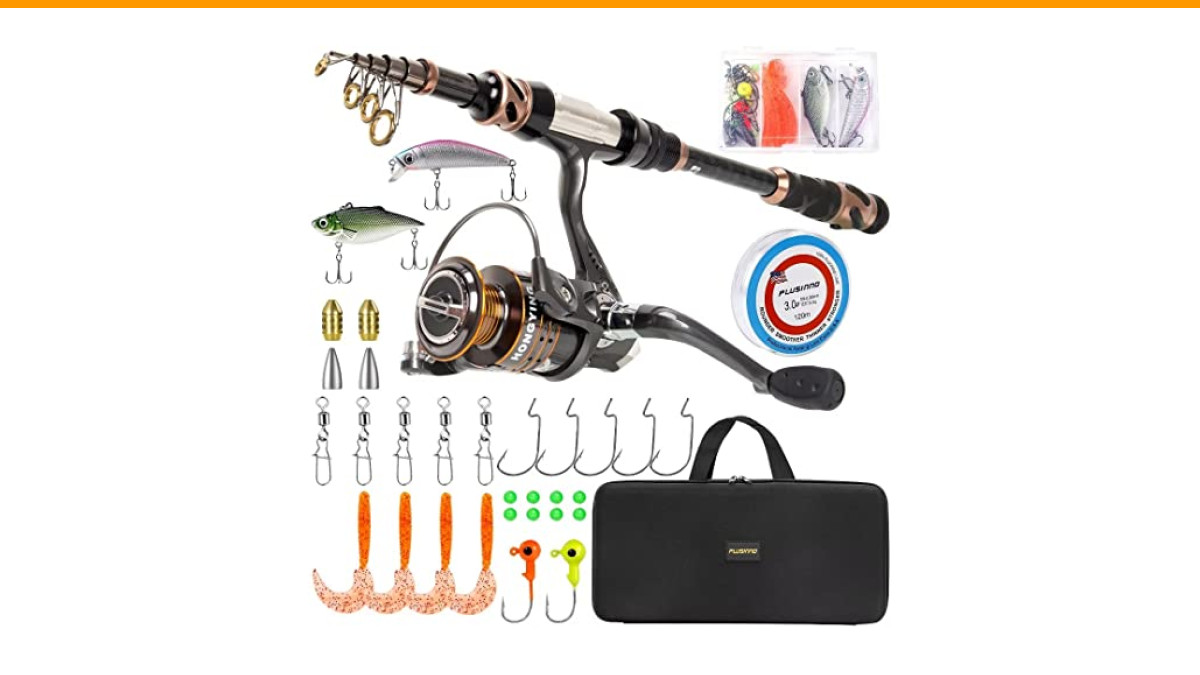
PLUSINNO Fishing Rod and Reel Combos -24 Ton Carbon Fiber Telescopic Fishing Pole - Spinning Reel 12 +1 Shielded Bearings Stainless Steel BB-Free Carrier Bag Case, Travel Saltwater Freshwater Fishing
- 🎣 Warm Prompt: Full Kit with Carrier Case Include 1 Fishing Rod + 1 Fishing Reel + Fishing Line + Various Fishing Lures + Fishing…
- 🎣 Full Kit with Carrier Case is special made for novice, including nessary accessories for fishing. You can use it without buying…
- 🎣 PLUSINNO Telescopic Fishing Rod are constructed with High Density 24-Ton Carbon Fiber reinforced with Fiberglass Composite for p…
This guide covers five rod and reel combos that handle real dock conditions. You’ll also get the knots that hold against barnacles, the approach tactics that keep fish from spooking, and a maintenance routine that stops corrosion before it starts. No fluff, just what works.
If you’re starting from zero, a complete kit saves time and money. The PLUSINNO Fishing Rod and Reel Combo bundles a 24-ton carbon fiber telescopic rod, a 12+1 bearing spinning reel, line, lures, hooks, and a carrier bag. It’s a practical way to test dock fishing without buying a dozen separate pieces. The telescopic design also fits in a backpack, which helps when you’re walking a long pier.
Why Dock Fishing Demands a Specialized Combo
A bass rod built for open water feels clumsy under a dock. You need a shorter rod, usually 6 feet or less, to flip and skip into tight spaces. Longer rods hit the dock ceiling and make accurate casts harder.
Dock pilings grow barnacles and mussels. Those shells cut line like a razor. Your combo needs a reel with a smooth drag that lets fish run away from structure, not into it. A stiff drag snaps light line instantly.
Gear ratio matters more than most people think. A 5.2:1 reel gives you torque to winch fish away from pilings. High-speed reels, like 7:1, work for burning spinnerbaits but make it easier to overrun the fish and pull hooks.
Rod action is the other half. A fast tip helps skip lures under docks. But you also need a strong mid-section to control a fish that wraps around a post. Moderate-fast action hits the sweet spot for most dock work.
The 5 Hidden Gem Combos for Dock Adventures
These aren’t the flashiest rods on the shelf. They’re proven performers for the specific abuse docks dish out.
Combo #1: The Budget Barnacle Buster
You don’t need a $300 setup to fish docks. The Ugly Stik GX2 paired with a Pflueger President reel costs around $100 total. The fiberglass rod bends instead of breaking when you hook a fish that dives under a dock. It’s heavy, but that weight helps when you’re horsing a fish out of cover.
The GX2’s tip is soft enough to skip light lures. The reel’s drag is smooth down to 2 pounds, which protects 8-pound test line. This combo takes abuse. You can bang it against a piling and it keeps working. The trade-off is sensitivity. You won’t feel subtle bites as well as you would with graphite.
For docks in freshwater lakes, this is the default pick. It’s also the combo you let a friend borrow without worrying.
Combo #2: The Precision Skipper
Skipping a jig under a dock requires a rod with a fast tip and a reel that casts light weights well. The Daiwa Tatula XT 6-foot-6 medium-heavy rod with a 7.1:1 baitcasting reel is a favorite for this. The short length lets you sidearm cast under low clearance.
The key is the reel’s braking system. Daiwa’s Magforce Z brakes reduce spool speed at the end of the cast, which prevents backlash when you’re throwing 3/8-ounce jigs into tight windows. You’ll still get backlash if you’re sloppy, but the learning curve is shorter.
This combo shines with braided line. The 30-pound braid handles snags around pilings and gives you the strength to pull a lure free when you hang up. Use a fluorocarbon leader to avoid spooking fish in clear water.
It’s not perfect for skipping tiny finesse baits. The medium-heavy power loads up too much for 1/8-ounce weights. But for standard dock jigs and spinnerbaits, it’s hard to beat.
Combo #3: The Heavy Cover Hauler
Some docks sit over deep water with heavy timber and old boat lifts. You need a rod that can stop a big fish before it reaches the structure. The Dobyns Fury 705CB with a Shimano Curado 200K covers this role.
The rod is 7 feet long, which is a bit much for tight docks, but the extra length helps you steer fish away from pilings. The reel’s 6.2:1 gear ratio balances speed and torque. You can crank a 5-pound bass out of a brush pile without stalling.
Spool it with 50-pound braid. That sounds heavy, but you’re not casting far. You’re winning a tug-of-war against a fish that wants to wrap you around a piling. The heavy line also lets you pull snagged lures free instead of breaking them off.
This combo is overkill for small docks with light fish. But if you’re fishing tidal creeks with docks that hold stripers or big bass, it’s the right tool.
Combo #4: The Ultralight Finesse Finder
When fish get pressured, they stop hitting big lures. That’s when an ultralight setup saves the day. The St. Croix Triumph 6-foot ultralight with a Shimano Sienna 1000 reel is a deadly combo for dock fishing with small plastics.
The rod’s light tip lets you cast 1/16-ounce jig heads under docks with pinpoint accuracy. The reel’s drag is smooth enough to fight a 2-pound bass on 4-pound line without breaking off. This is the combo for drop-shotting a small worm next to a piling and watching a big fish inhale it.
You sacrifice the ability to turn a fish away from structure. A decent fish can wrap you around a post before you react. But the finesse presentation catches fish that ignore everything else.
Use 6-pound fluorocarbon line. It sinks faster than mono and is nearly invisible in clear water. Check your drag before each trip. Ultralight reels need a lighter touch than you think.
Combo #5: The All-Around Angler’s Pick
If you only own one dock combo, make it a 6-foot-6 medium-power spinning rod with a 2500-size reel. The Fenwick HMG paired with a Penn Battle III fits this description perfectly.
The rod handles lures from 1/8 to 3/8 ounce, which covers most dock presentations. The reel’s sealed drag handles saltwater without seizing, making it a good choice for coastal docks. The 6.2:1 gear ratio retrieves lures quickly but still has enough torque for most fish.
Spool it with 15-pound braid and a 12-pound fluorocarbon leader. That setup works for bass, crappie, redfish, and anything else that lives around docks. It’s not the best at any one thing, but it’s good at everything.
The only downside is the price. The HMG retails around $160, and the Penn reel adds another $100. But you’ll use this combo for years without needing an upgrade.
Dock-Specific Rigging: Knots, Leaders, and Lures
Your knot is the weakest link in dock fishing. Barnacles cut line, but a poorly tied knot fails even when nothing touches it. Learn two knots and you’re covered.
The improved clinch knot works for attaching lures to monofilament or fluorocarbon. Thread the line through the eye, wrap it around the standing line five times, then pass it back through the loop near the eye. Wet the knot before cinching it down. A dry knot generates heat and weakens the line.
For braided line, use the Palomar knot. Double the line, pass it through the lure eye, tie a simple overhand knot, then pass the lure through the loop. Pull tight. This knot retains nearly 100% of line strength and is easy to tie in low light.
When you connect braided main line to a fluorocarbon leader, the FG knot is the strongest option. It’s tricky to learn, but it slides through rod guides smoothly and holds up to repeated casting. Practice it at home until you can tie it in under a minute.
Leader length depends on water clarity. In murky water, a 12-inch leader is enough. In clear water, use a 3-foot leader. The leader’s main job is invisibility, not abrasion resistance. Fluorocarbon is more abrasion-resistant than mono, but it still cuts on sharp barnacles.
For lures, keep it simple. A 3/8-ounce swim jig with a paddle-tail trailer is the most versatile dock bait. It skips well, imitates baitfish, and comes through cover reasonably well. A weightless Senko works when fish are finicky. A 1/4-ounce spinnerbait with a single Colorado blade is another solid option because it resists snagging on pilings.
Stealth Tactics: How to Approach Docks Like a Pro
Fish under docks see you before you see them. A shadow crossing the water sends them scattering. Your approach matters as much as your gear.
Position your boat so the sun is behind you. Your shadow falls away from the dock, not over the water beneath it. If the sun is low, angle your approach so your shadow doesn’t hit the water under the dock at all.
Kill the trolling motor 30 feet away and coast in. The vibration of an electric motor spooks fish holding tight to structure. Use a push pole or a paddle for the last few feet in shallow water.
Make your first cast count. Fish under a dock often hold tight to the shaded side of the pilings. Cast past the piling, let the lure sink, then work it back toward the shaded side. The strike usually comes as the lure passes the piling’s shadow line.
Don’t stand up. A standing angler casts a bigger silhouette and makes more noise. Stay seated or kneel when you’re within casting range. Keep your movements slow and deliberate.
Noise carries through the water. A tackle box dropped on the deck sounds like a gunshot to fish. Set everything down gently. Close rod locker doors softly. Small habits make a big difference.
Maintenance: Protecting Your Combo from Corrosion
Saltwater docks are brutal on fishing gear. Even freshwater docks with high boat traffic have brackish conditions. A little maintenance goes a long way.
Rinse your rod and reel with fresh water after every trip. Use a hose with a gentle spray, not a pressure washer. Pay special attention to the reel’s line roller, bail arm, and drag knob. These spots trap salt and corrode quickly.
Dry everything with a microfiber towel. Then spray the reel with a corrosion inhibitor like CorrosionX or Reel Magic. Work the reel’s handle to distribute the oil throughout the gears.
Once a month, remove the reel’s spool and wipe down the inside. Check the drag washers for salt buildup. If they feel gritty, replace them. A smooth drag is essential for fighting fish around structure.
Rod guides need attention too. Wipe the ceramic inserts after each trip. A cracked insert can cut your line at the worst moment. Replace any guide that shows chips or roughness.
Telescopic rods need extra care. Sand and salt get inside the joints. Rinse the rod with the sections fully extended, then let it dry before collapsing it. Apply a thin coat of silicone spray to the joints to keep them sliding smoothly.
Upgrading Your Combo: The $20 Mod That Changes Everything
You don’t need to buy a new reel to improve dock performance. A set of carbon fiber drag washers costs about $15 and transforms a budget reel.
Stock drag washers on cheap reels are made of felt or paper. They stick, stutter, and fail under heavy loads. Carbon fiber washers provide smooth, consistent pressure from 1 pound to 15 pounds. That smoothness lets you fish lighter line without worrying about break-offs.
Installation takes about 20 minutes. Remove the spool, take out the drag stack, and replace the washers. Most reels have a schematic online. You’ll need a small screwdriver and a pair of tweezers.
Another cheap upgrade is replacing the stock bearings with ceramic hybrid bearings. They cost about $10 each and spin smoother than steel. They also resist corrosion better, which matters for dock fishing.
These mods won’t turn a $30 reel into a $200 reel. But they improve the two things that matter most for dock fishing: drag smoothness and corrosion resistance. That’s a worthwhile trade for $20.
Final Verdict: Which Combo Wins for Your Dock Style?
Match the combo to the conditions you fish most.
- Freshwater lakes with light pressure: The Budget Barnacle Buster (Ugly Stik GX2 + Pflueger President) is all you need.
- Tight docks with heavy cover: The Precision Skipper (Daiwa Tatula XT + baitcaster) gives you the accuracy and control to skip baits into small windows.
- Deep water, big fish, heavy structure: The Heavy Cover Hauler (Dobyns Fury + Shimano Curado) stops fish before they reach the pilings.
- Pressured fish that ignore big baits: The Ultralight Finesse Finder (St. Croix Triumph + Shimano Sienna) catches fish that won’t commit.
- One combo for everything: The All-Around Angler’s Pick (Fenwick HMG + Penn Battle III) handles most dock situations without compromise.
If you’re just starting, the PLUSINNO combo mentioned earlier gives you a full kit to learn on. You can upgrade individual pieces as you figure out what you need.
| Combo | Best For | Line Recommendation | Key Strength | Key Weakness |
|---|---|---|---|---|
| Budget Barnacle Buster | Freshwater docks, beginners | 10-12 lb mono | Durability, low cost | Heavy, low sensitivity |
| Precision Skipper | Tight casts under docks | 30 lb braid + fluoro leader | Cast accuracy, backlash control | Stiff for light lures |
| Heavy Cover Hauler | Deep water, big fish | 50 lb braid | Horsepower, torque | Long length hinders tight docks |
| Ultralight Finesse Finder | Pressured fish | 6 lb fluorocarbon | Sensitivity, finesse presentation | Lack of power for structure |
| All-Around Angler’s Pick | Versatility, saltwater | 15 lb braid + fluoro leader | Balanced performance | Higher price |
Frequently Asked Questions
What is the best rod length for dock fishing?
Stick with 6 to 7 feet. Shorter rods (6 feet or less) give you better control for skipping and flipping under low clearance. Longer rods (7 feet) help you steer fish away from pilings but make tight casts harder. A 6-foot-6 medium or medium-heavy is the most versatile choice.
Should I use braided line or monofilament for dock fishing?
Braided line is the better choice for most dock situations. It has zero stretch, which helps you set hooks through slack and pull fish away from structure. It also handles abrasion from barnacles better than mono. Use 20-30 pound braid for general dock fishing. The downside is visibility, so tie on a fluorocarbon leader.
How do I skip a lure under a dock without getting snagged?
Use a sidearm cast with a low trajectory. Aim at the water surface about 2 feet past the dock edge. The lure should skip like a flat stone. Use a reel with good braking control to avoid backlash. Practice on open water first. Keep your rod tip low and follow through smoothly.
What lures work best around dock pilings?
Swim jigs with paddle-tail trailers are the most reliable. They skip well, imitate baitfish, and come through cover. Weightless stick baits (Senkos) work when fish are finicky. Spinnerbaits with a single blade resist snagging. For deeper docks, a 1/4-ounce football jig with a craw trailer works well.
How often should I replace line on my dock fishing reel?
Replace monofilament every 2-3 months if you fish weekly. Braided line lasts longer, up to a year, but inspect it for frayed sections near the lure. The first 20 feet of line takes the most abuse from barnacles and repeated casting. If you see nicks or fuzz, cut it off and re-tie.
What to Do Before Your Next Dock Trip
- Check your drag. It should be smooth and set light enough that a fish can run away from structure.
- Tie fresh knots. Retie your lure every time you fish. A knot that’s been through a few casts is weaker.
- Bring a lure retriever. A telescopic pole with a hook end saves you from losing $8 jigs to snags.
- Wear polarized sunglasses. You’ll see fish holding under docks and avoid casting into shadows where they’re not.
- Rinse your gear after every trip. Salt and grime build up fast and ruin reels.
- Keep a spare spool with different line weight. Switch from 30-pound braid to 10-pound mono when conditions change.
- Practice your skipping cast in the yard. Use a practice plug or a weight with the hook removed. Ten minutes a week makes a big difference.
