The first time you watch a fish swim up to your lure on a screen, everything changes. You stop fishing blind. You see the bass turn its head, track your jig, and either commit or bail. That moment is why anglers spend serious money on LiveScope. But the system choices get confusing fast, and one wrong pick means wasted cash and a transducer that doesn’t match your style.
Garmin’s LiveScope line has become the gold standard for live sonar. The XR System bundle, built around the GLS 10 black box and the LVS62 transducer, targets anglers who need serious depth and range. It’s not the cheapest way into live sonar, and it’s not the simplest. It is the one that reaches furthest into the water column, and that matters more than you might think when you fish deep structure or open water.
This review covers the Garmin LiveScope XR System in real-world terms. You’ll see who it suits best, where it struggles, and how it compares to other LiveScope setups. We’ll also walk through the practical details like power draw, mounting, and what the LVS62 transducer actually changes. By the end, you’ll know if this bundle belongs on your boat.
Here’s a quick look at the key specs that separate this system from the rest of the LiveScope family.
| Features | LiveScope XR System |
|---|---|
| Max Depth (Freshwater) | 500 feet |
| Max Depth (Saltwater) | 350 feet |
| Transducer | LVS62 |
| Sonar Module | GLS 10 black box |
| Viewing Modes | Forward, Down, Perspective |
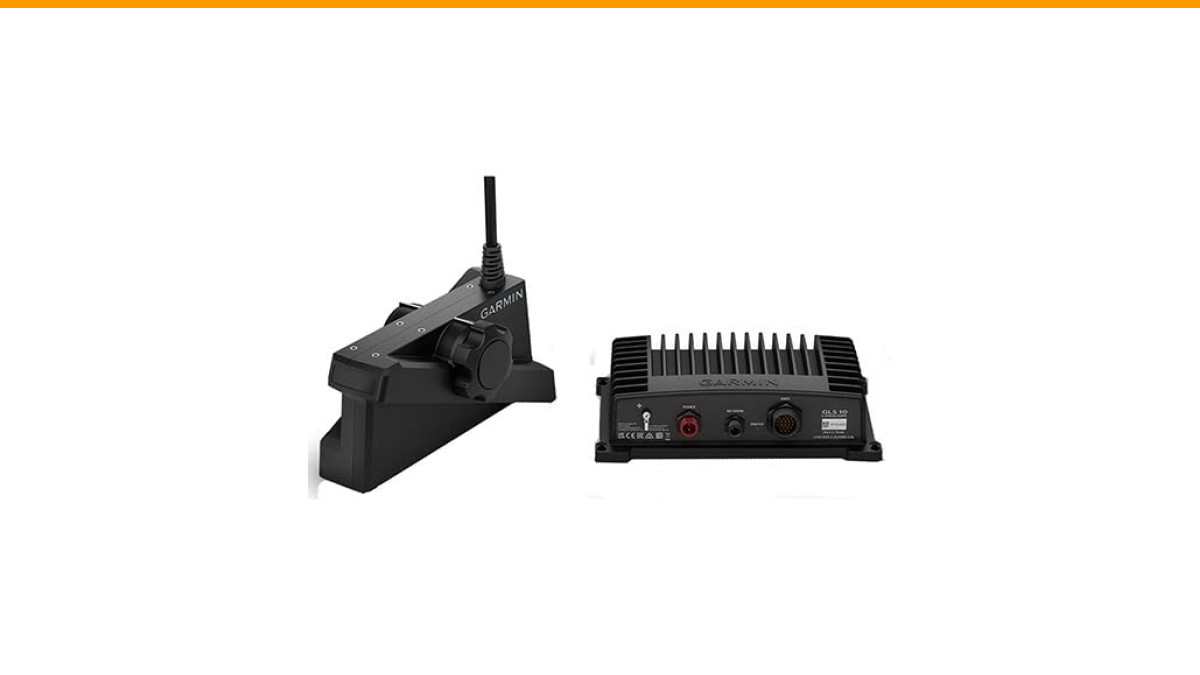
Garmin LiveScope XR Bundle

Garmin
Garmin LiveScope XR System Bundle with GLS 10 and LVS62 Transducer, LiveScope System for Open Water, Sharp Sonar Images, Vivid Color, Clear Vision (010-02719-00)
- Explore the deep with an extended range up to 500’ in freshwater and 350’ in saltwater.
- Find fish circling your boat with clear views close around your hull.
- Upgrade your current LiveScope System black box (GLS 10 sonar module) with just a new transducer.
This bundle is for the serious open-water angler. You run a bass boat on a big reservoir, or you chase stripers and saltwater species where the fish hold deep. You already know how to use live sonar, or you’ve watched enough videos to understand the edge it gives you. The XR System rewards that investment with range no other Garmin transducer matches.
The headline number is 500 feet in freshwater. That’s not just marketing. The LVS62 transducer pushes a wider, stronger beam than the standard LVS34, and you notice it when you mark fish at 80, 120, even 200 feet down. The image stays crisp enough to see individual fish and their direction of travel. The vivid color palettes help too—they pull contrast out of the image so a fish’s arch doesn’t blur into the bottom. You’ll also get the GLS 10 black box, which is the same sonar module used across the LiveScope line, so if you ever upgrade from an older system, you already know how it works.
But there are trade-offs. The LVS62 transducer is physically larger and heavier than the LVS34. It puts more stress on a trolling motor mount, and it can be a pain to fit on smaller rigs. The 500-foot range also demands a clear water column—in stained or muddy water, you won’t get anywhere near that number. And the price is steep. This is a flagship bundle, not a budget entry point. You’ll be fine with this system unless you fish mostly shallow cover, where the extra range does nothing for you, or you run a kayak where the transducer weight becomes a real problem.
- Extended range up to 500 feet in freshwater, 350 feet in saltwater
- LVS62 transducer with GLS 10 sonar module
- Supported modes: Forward, Down, and Perspective
- Vivid color palettes for maximum contrast and clarity
- Compatible with existing GLS 10 black box upgrades
Best for: The angler who fishes deep open water and wants the longest reach Garmin offers, and who already has a boat setup that can handle a larger transducer.
How We Chose This System
We evaluated the LiveScope XR System against the specific demands of real fishing scenarios, not just spec sheets. The criteria centered on depth capability, image clarity at distance, ease of integration with existing Garmin hardware, and the physical demands of mounting the transducer. We weighed the LVS62’s extended range against the standard LVS34 to understand where the extra cost pays off and where it’s wasted.
We also considered the upgrade path. The GLS 10 black box is a proven module, and the fact that you can swap transducers without replacing the whole system matters for anglers who want to start with a smaller setup and grow. The final pick reflects a balance of raw performance and practical usability for the majority of serious anglers.
Buying Guide: What Really Matters
Before you commit to any LiveScope system, think about the water you fish most. Depth and clarity are the two biggest factors. If you fish shallow lakes and rivers, the standard LVS34 transducer gives you plenty of range at a lower price and with a lighter mount. The XR’s 500-foot reach only helps if you actually fish water that deep. Measure your typical fishing spots before you spend the extra money.
Power consumption is another angle that gets overlooked. LiveScope systems draw serious current, and the XR is no exception. A full day on the water demands a dedicated battery setup, not just your cranking battery. Most anglers run a separate 12-volt deep-cycle battery for the sonar unit and black box. Plan for that in your budget and your boat layout. You don’t want to be the guy who kills his trolling motor battery halfway through the morning because the sonar was pulling from the same source.
Mounting the LVS62 transducer is a project, not a plug-and-play job. The larger footprint means you need a sturdy trolling motor mount or a through-hull installation. Cable routing matters too—keep the transducer cable away from the trolling motor’s power wires to avoid electrical interference that shows up as noise on the screen. Take your time with the install. A poorly mounted transducer will ruin the image quality no matter how good the electronics are.
Our Top Recommendation
The Garmin LiveScope XR System is the clear winner for anglers who chase deep fish. The 500-foot freshwater range is a genuine advantage when you’re marking suspended bass on a river ledge or following a school of stripers in open water. If that’s your fishing, this is the system to buy.
For a different budget or a lighter setup, the standard LiveScope Plus system with the LVS34 transducer is the sensible alternative. It covers the vast majority of fishing situations, costs less, and mounts more easily. Kayak anglers and anyone fishing shallow cover should look there instead. But if you want the longest reach and you have the boat to support it, the XR System delivers.
Frequently Asked Questions
Can I use the LiveScope XR with my existing Garmin chartplotter?
The GLS 10 black box connects to any compatible Garmin unit with a network port, including the 93sv, 106sv, and Ultra 2 series. You’ll need a network cable and to make sure your chartplotter’s software is up to date. The XR system works as an add-on to your current setup, not a replacement.
How much battery does the LiveScope XR draw?
The GLS 10 black box draws around 1.5 amps at 12 volts, and the transducer adds a bit more. Your chartplotter draws its own power. For a full day on the water, plan on a dedicated 12-volt battery with at least 20 amp-hours of capacity. A standard group 24 deep-cycle battery handles it fine.
Is the LVS62 transducer worth the price over the LVS34?
Only if you fish deeper than 100 feet regularly. The LVS34 gives you excellent image quality down to about 200 feet, and it’s lighter and easier to mount. The LVS62’s advantage shows at extreme depths and in saltwater, where the wider beam keeps fish visible longer as they move through the cone.
Will the LiveScope XR work for ice fishing?
Technically yes, but it’s not the ideal choice. The LVS62 transducer is heavy, and the 500-foot range is wasted through a hole in the ice. Garmin’s ice fishing bundles use the smaller LVS34 transducer with a purpose-built flasher-style unit. If you primarily ice fish, buy that bundle instead. If you want one system for both open water and ice, the standard LiveScope Plus is the better compromise.
