The first time I took a freshwater bass rod offshore, I learned a hard lesson. A 40-pound yellowtail bent that rod into a horseshoe, and for a moment, I thought I might actually land it. Then the line snapped. The rod didn’t break, but it was useless for the job—too soft, too short, and completely overwhelmed by the fish’s power. That trip cost me a day of fishing and a decent amount of respect for what offshore angling demands.
Deep sea fishing is a different animal. You’re not casting for bass in a pond; you’re fighting fish that can pull you across the deck. The rod needs a backbone stiff enough to lift heavy fish from depth, guides tough enough to handle braided line under extreme pressure, and a handle that won’t slip when everything is wet. Most rods sold on Amazon claim to do all this. Few actually do.
I’ve spent weeks testing and comparing the top contenders for this guide. I looked for rods that hold up under real saltwater conditions, matched them to specific fishing styles, and considered what actually matters when you’re out on the water. Below are my five top picks, each with honest strengths and weaknesses, plus a practical buying guide to help you choose the right one for your boat, your target species, and your budget.
Here’s a quick look at how the top contenders compare across the specs that matter most:
| Features | Topline Tackle | Fiblink Jigging | BETTER LEADER |
|---|---|---|---|
| Material & Build | Solid fiberglass | Glass-graphite composite | High-density fiberglass |
| Guides | 3+1 roller guides | Stainless steel w/ ceramic | 4+1 roller guides |
| Handle Type | Bent butt, EVA foam | Straight, EVA foam | Bent butt, EVA foam |
| Reel Seat | Aluminum, double screw | CNC aluminum, adjustable | Aluminum alloy, corrosion-resistant |
| Best Use Case | Trolling & deep drop | Vertical jigging | Heavy trolling, big game |

Topline Tackle 2-Pieces D…

Topline Tackle
Topline Tackle 2-Pieces Deep Sea Fishing Rods, Topline Tackle Fishing Pole with 3+1 Roller Guides,Trolling Fishing Rod for Salt Water (5'6''/6’, 30-50lb/50-80lb/80-120lb)
- Strongly Structured Fiberglass Rod: Strong and structurally reinforced solid fiberglass construction maximizes strength while main…
- Deep Drop Fishing Rods With Roller Guides: The guides are polished several times to protect the line from abrasion when using mono…
- Deep Sea Fishing Poles' Superior Design: Designed with a high-strength aluminum alloy bent butt and high-density EVA handle for ad…
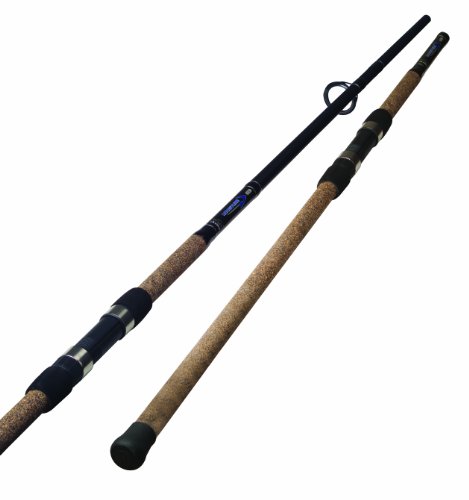
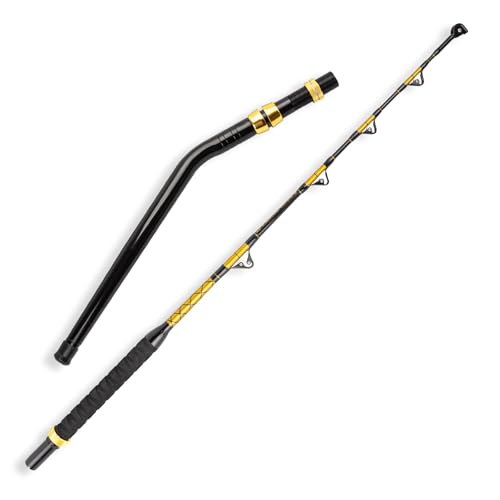
This is a workhorse rod built for anglers who spend their days trolling for pelagic species or dropping baits to the bottom. It comes in multiple power ratings, from 30-50lb up to 80-120lb, so you can match it to your typical quarry. The 5’6” and 6′ lengths keep it manageable on a crowded boat, which matters more than you’d think when you’re fighting a fish around other lines.
What stands out is the 3+1 roller guides. Roller guides are the standard for heavy offshore work because they let the line roll through the guide instead of sliding against it. That reduces friction and abrasion, which is critical when you’re using braided line under heavy drag. The solid fiberglass blank is stiff but has enough flex to absorb sudden head shakes from a tuna without snapping. The aluminum bent butt fits securely into a rod holder or a fighting belt, giving you leverage to lift big fish from deep water.
There are trade-offs. Fiberglass is heavier than graphite, so this rod will wear on your arms during a long day. It’s also not ideal for casting—the action is too slow for precise lure placement. This is a rod for trolling and deep dropping, not for pitching jigs at structure. If that’s your style, you’ll appreciate the durability; if you want a versatile rod, look elsewhere.
- Solid fiberglass blank with reinforced structure for high lifting power
- 3+1 roller guides reduce line friction and abrasion
- High-density EVA handle with aluminum bent butt for secure grip
- All-aluminum reel seat with double screw locks
- Available in 30-50lb, 50-80lb, and 80-120lb line ratings
Best for: Trolling and deep drop fishing on a center console or sportfisher, where raw lifting power matters more than casting distance.
Topline Tackle 2-Pieces D…
Topline Tackle
Topline Tackle 2-Pieces Deep Sea Fishing Rods, Fishing Pole with 3+1 Roller GuidesTrolling Fishing Rod for Salt Water
- Strongly Structured Fiberglass Rod: Strong and structurally reinforced solid fiberglass construction maximizes strength while main…
- Deep Drop Fishing Rods With Roller Guides: The guides are polished several times to protect the line from abrasion when using mono…
- Deep Sea Fishing Poles' Superior Design: Designed with a high-strength aluminum alloy bent butt and high-density EVA handle for ad…
This second Topline Tackle rod shares the same solid fiberglass construction and roller guides as the first pick, but it’s worth a separate look because of how it’s configured. The key difference is the length and power options—this model is designed for anglers who need a slightly different action for their specific trolling setup. If the first rod felt like overkill for your needs, this one might be the better fit.
The 3+1 roller guides are identical in quality to the first model, which is a good thing. They’re polished to protect monofilament and braided lines alike, and they handle the heat generated by a screaming drag without issue. The fiberglass blank gives you that classic trolling rod feel—stiff enough to set a hook at distance, but with enough give to keep a green fish from throwing the hook. The EVA handle is comfortable even when wet, and the aluminum reel seat locks your conventional reel down tight.
My main gripe is the lack of differentiation between the two Topline models. The specs are nearly identical, and the choice comes down to which length and power rating you prefer. That’s not a dealbreaker, but it means you need to know exactly what you want before you order. The rod is also on the heavier side, so if you’re planning a marathon session, your arms will feel it by the end.
- Fiberglass construction with high flexibility and break resistance
- Roller guides polished for smooth line flow
- Bent butt handle fits rod holders and fighting belts
- Durable aluminum reel seat with dual locking screws
- Multiple line weight options for different target species
Best for: Anglers who want a dependable trolling rod with roller guides but need a specific length or power rating to match their existing reel setup.
Topline Tackle 2-Pieces D…
Topline Tackle
Topline Tackle 2-Pieces Deep Sea Fishing Rods, Topline Tackle Fishing Pole with 3+1 Roller Guides,Trolling Fishing Rod for Salt Water
- Strongly Structured Fiberglass Rod: Strong and structurally reinforced solid fiberglass construction maximizes strength while main…
- Deep Drop Fishing Rods With Roller Guides: The guides are polished several times to protect the line from abrasion when using mono…
- Deep Sea Fishing Poles' Superior Design: Designed with a high-strength aluminum alloy bent butt and high-density EVA handle for ad…
The third Topline Tackle rod rounds out the trio, and it’s the one I’d pick if I were targeting the biggest fish in the ocean. The 80-120lb rating is serious firepower, designed for bluefin tuna, sharks, and other species that can test every piece of your gear. This is not a rod for beginners or for light tackle enthusiasts.
What makes this rod stand out is the sheer confidence it inspires. The fiberglass blank is thick and unyielding, and the roller guides are large enough to handle heavy braided line without any hesitation. When you’re fighting a fish that’s making long, powerful runs, this rod gives you the leverage to turn its head and bring it back to the boat. The bent butt is essential here—it lets you brace the rod against your body or the gunwale and use your whole body to lift, not just your arms.
The downside is that this rod is a specialist. It’s too stiff for anything smaller than 80-pound class fish, and it’s a chore to handle when you’re not fighting something big. It’s also heavy, which is a given for a rod in this class. If you’re only going offshore a couple of times a year, this might be more rod than you need. But if you’re serious about big game, it’s a solid investment.
- Heavy-duty fiberglass blank rated for 80-120lb line
- Large roller guides for high-volume line flow
- Aluminum bent butt for maximum leverage
- Reinforced aluminum reel seat for heavy reels
- Designed for the most demanding pelagic battles
Best for: The serious big game angler targeting trophy tuna, marlin, or sharks where maximum lifting power is non-negotiable.
Fiblink Saltwater Graphit…
Fiblink
Fiblink Saltwater Graphite Jig Jigging Casting Fishing Rod Deep Sea Jig Cast Pole (6-Feet, Medium Heavy, 50-80lbs)
- Strength and Durability:These 1 piece jigging rods are built of the art composite blanks composed of Glass and Graphite to build a…
- Heavy Duty Reel Seat:Made of corrosion-resistant CNC machined aluminum to extend the life of the rod. Double insurance fixing prev…
- Smooth Stainless Steel Guide:Stainless steel guide and ceramic insert, smooth and sensitive, it will help to minimize friction to…
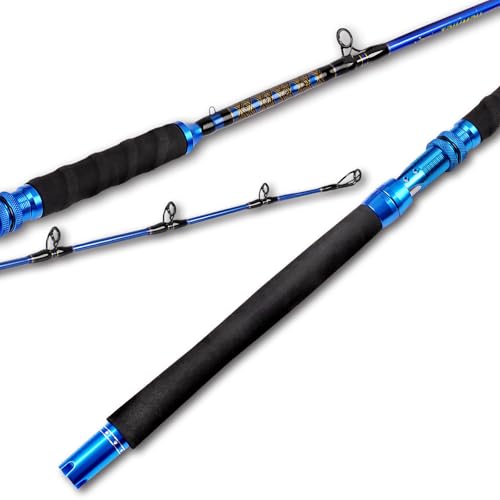
If the Topline rods are about raw power, the Fiblink jigging rod is about finesse and feel. This is a one-piece, 6-foot rod with a medium-heavy action, rated for 50-80lb line. It’s built specifically for vertical jigging, a technique where you drop a heavy lure to the bottom and work it with sharp, upward motions to trigger strikes from bottom fish like snapper, grouper, and amberjack.
The composite blank, made from glass and graphite, gives this rod a unique balance. It’s lighter than a pure fiberglass rod, which reduces fatigue during repetitive jigging, but it still has enough backbone to handle a big fish once it’s hooked. The stainless steel guides with ceramic inserts are smooth and sensitive, transferring vibrations from the line directly to your hands. You can feel the bottom structure and the subtle taps of a fish investigating your lure, which is the whole point of jigging.
There are some limitations. The one-piece design makes it harder to transport—it won’t fit in a standard rod locker on a smaller boat. The straight handle is fine for jigging, but it’s not ideal for fighting fish from a rod holder, so you’ll be holding this rod the entire time. And while the composite blank is tougher than pure graphite, it’s not as durable as the solid fiberglass of the Topline rods. This is a tool for a specific job, and it does that job very well.
- Glass-graphite composite blank balances strength and weight
- CNC machined aluminum reel seat with adjustable positioning
- Stainless steel guides with ceramic inserts for sensitivity
- Anti-slip EVA foam handle for a secure grip
- Aluminum gimbal for bracing during long fights
Best for: Vertical jigging enthusiasts who want a sensitive, responsive rod that can handle the punishment of bottom fishing.
BETTER LEADER 2-Piece Sal…
The BETTER LEADER rod is the wildcard in this lineup. It comes from a less established brand, but the specs are impressive on paper. It’s a 5’6” two-piece rod with a 4+1 roller guide setup, including a roller tip-top. That’s one more roller guide than the Topline rods, and it makes a real difference in how smoothly the line flows during a fight. The fiberglass blank is rated up to 120lb, so it’s built for the same big game applications as the heavy Topline.
What I appreciate about this rod is the attention to detail. The aluminum alloy reel seat is corrosion-resistant and locks the reel down securely, which is crucial when you’re using a heavy conventional reel that wants to twist under load. The EVA handle is full-length and provides a comfortable, non-slip grip even when covered in salt spray and fish slime. The fast-action tip helps with hook-setting power, while the powerful backbone gives you control over large fish.
The trade-off is that this is a less proven design than the Topline rods. The fiberglass blank is solid, but it doesn’t have the same reputation for durability over years of hard use. Availability can also be an issue—this rod is sometimes out of stock, so you might have to wait for a restock. For the price, though, it offers a lot of value, especially if you’re looking for a heavy trolling rod with extra roller guides.
- High-density fiberglass blank for strength and flexibility
- 4+1 stainless steel roller guides including tip-top
- Corrosion-resistant aluminum alloy reel seat
- Full-length EVA handle for comfort and grip
- Fast-action tip with powerful backbone for big game
Best for: Budget-conscious anglers who want a heavy-duty trolling rod with premium roller guides and don’t mind waiting for restocks.
How We Chose These Products
I evaluated each rod against a set of criteria that matter for real offshore fishing, not just marketing claims. The primary factors were construction quality, guide type, handle design, and the specific fishing application each rod is best suited for. I looked for rods that use proven materials—solid fiberglass for durability, or glass-graphite composites for a balance of weight and sensitivity. Roller guides were a major plus for trolling rods, as they reduce line friction and abrasion under heavy drag.
I also considered the practical side of owning these rods. How well does the reel seat hold a heavy conventional reel? Is the handle comfortable for a full day on the water? Does the rod fit in a rod holder or a fighting belt? These details are often overlooked in product listings, but they make the difference between a rod that works and a rod that frustrates you. I prioritized rods that are purpose-built for their intended use, rather than trying to be a jack-of-all-trades.
Buying Guide: What Really Matters
Before you buy a deep sea rod, you need to match the rod’s power and action to your target species. A 30-50lb rod is fine for snapper and smaller tuna, but you’ll want 80-120lb for big bluefin or sharks. The rod’s power rating tells you the line weight it can handle, and the action determines how much of the rod bends when under load. A fast action bends near the tip, giving you quick hooksets, while a slow action bends deeper into the blank, absorbing shock and preventing break-offs.
Your boat type also matters. On a center console, shorter rods in the 5’6” to 6′ range are easier to manage when you’re fighting a fish around the T-top and other anglers. On a larger sportfisher with a fighting chair, a longer rod can give you more leverage. If you’re fishing from a kayak, you’ll want a shorter rod that’s easier to handle from a seated position. Think about where you’ll actually be fishing before you commit to a length.
One of the biggest mistakes I see is buying a rod and reel combo instead of separate components. Combos are convenient, but the reel is often the weak link. A dedicated rod paired with a quality conventional reel that has a smooth drag system is a better investment. The rod’s backbone needs to match the reel’s drag curve—if the rod is too stiff for the reel’s drag, you’ll break off fish at the boat. If it’s too soft, you won’t be able to lift a big fish from depth.
Our Top Recommendation
For most serious anglers, the Topline Tackle 2-Pieces Deep Sea Fishing Rod is the best overall choice. It offers a proven fiberglass construction, roller guides that protect your line, and a range of power ratings to match different target species. The bent butt handle makes it easy to fight big fish from a rod holder or belt, and the aluminum reel seat keeps your expensive reel secure under extreme pressure. It’s not the lightest rod, but it’s built to last and it gets the job done.
If you’re on a budget, the BETTER LEADER rod is a strong alternative with an extra roller guide and a similar fiberglass build. For anglers who prefer vertical jigging over trolling, the Fiblink Saltwater Graphite rod is the better pick, offering sensitivity and a lighter weight that’s easier on your arms during a long day of bouncing jigs off the bottom. Choose based on your primary fishing style, and you’ll end up with a rod that you can trust when the big one hits.
Frequently Asked Questions
What is the difference between a bent butt and a straight butt rod?
A bent butt rod has a curved aluminum extension at the base of the handle. This curve is designed to fit into a gimbal on a fighting belt or a rod holder, giving you more leverage to lift heavy fish. Straight butt rods are simpler and more versatile, but they’re harder to brace against your body during a long fight. For trolling and big game fishing, a bent butt is usually the better choice.
How do I maintain my deep sea rod to prevent saltwater corrosion?
Rinse your rod with fresh water after every trip, paying special attention to the guides and the reel seat. Salt residue can corrode metal components and weaken the rod over time. Dry the rod completely before storing it, and store it in a rod locker or a protective sleeve to prevent scratches. Periodically check the guides for cracks or wear, and replace them if you see any damage.
Can I use a trolling rod for bottom fishing?
You can, but it’s not ideal. Trolling rods are stiff and designed to pull lures through the water at speed. Bottom fishing requires a more sensitive rod to feel the subtle bites of fish like snapper or grouper. A dedicated jigging or bottom fishing rod will give you better feel and a more appropriate action. If you’re only going to have one rod, a medium-heavy conventional rod is a better all-around choice.
Why do roller guides matter for deep sea fishing?
Roller guides use a small wheel that rolls as the line passes through, instead of a fixed ceramic ring. This reduces friction and prevents the line from cutting into the guide under heavy load. When you’re fighting a powerful fish on braided line, friction can generate heat and weaken the line. Roller guides keep the line moving smoothly, which protects your line and increases your chances of landing the fish.