The sun sits low on the horizon, and you’re staring at a flat-calm harbor. Your fishing buddies are already at the dock, loading gear. But your boat sits in the garage with a folded T-top that takes two people and thirty minutes to wrestle into place. You know the feeling. The right setup changes everything, and the wrong one turns every trip into a chore.
| 1st Pick |

|
| FISHMASTER MARINE TOWERS AND ACCESSORIES Fishmaster Original Boat T-Top for Center Console Fishing Boats - Universal Fit, Foldable Design - Black Semi-Gloss - Grey Canvas |
| Buy on Amazon |
Catamaran hulls offer a stable platform that monohulls can’t match. The wide beam means you can walk around a fish without feeling every shift of weight. But the real magic happens when you pair that hull with the right accessories. A good T-top, for instance, provides shade, a place to mount electronics, and a solid handhold when the water gets rough. The best choices in this category balance durability, ease of installation, and practical design.
We focused on the Fishmaster Original Boat T-Top because it solves a specific problem that plagues center console owners: storage. It folds twice, which is rare in this market. We’ll break down what makes it work, where it falls short, and what else you need to think about when outfitting a cat. This guide covers the gear, the costs, and the real-world trade-offs you’ll face.
Here’s a quick look at the key specs of the Fishmaster Original T-Top.
| Features | Fishmaster Original |
|---|---|
| Material | Marine-grade 6063 T6 aluminum |
| Key Feature | Folds twice for storage |
| Fit | Console width 24″ to 50″ |
| Canopy | UV-resistant Sunbrella fabric |
| Warranty | 5-year industry leading |
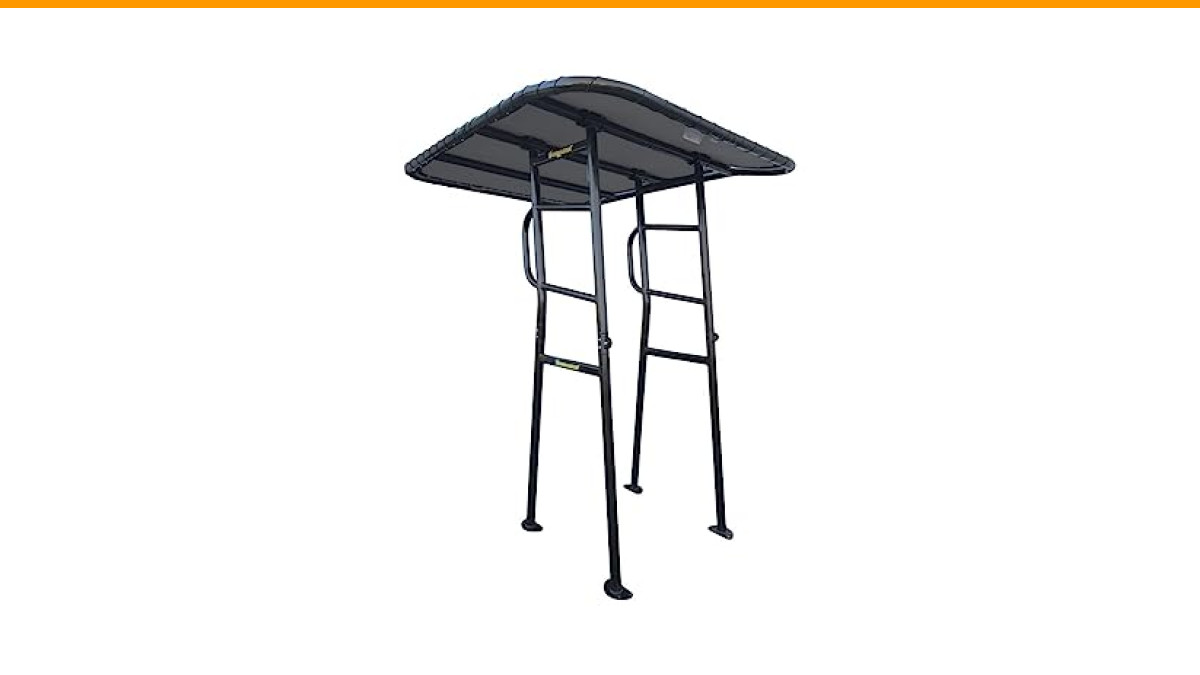
Fishmaster Original T-Top
FISHMASTER MARINE TOWERS AND ACCESSORIES
Fishmaster Original Boat T-Top for Center Console Fishing Boats - Universal Fit, Foldable Design - Black Semi-Gloss - Grey Canvas
- UNIVERSAL FIT FOR CENTER CONSOLE BOATS - Universal design adjusts to fit on any center console fishing boat with a console 24" to…
- FOLDS TWICE FOR STORAGE - With its patented design, the Fishmaster T-Top is the only boat t-top that folds twice (once at the side…
- INSTALLS IN HOURS - The Fishmaster Original center console T-Top can be installed on your boat with ease. With an easy-to-follow i…
The Fishmaster Original T-Top is a universal fit solution for center console boats with a console width between 24 and 50 inches. It’s built for the DIY owner who wants factory-level results without paying a fabricator. If you run a catamaran with a standard center console, this top fits the bill. It works particularly well for owners who keep their boats on trailers or in garages with low clearance.
What sets this T-top apart is the patented double-fold design. Most T-tops fold once at the side supports, but this one also folds in the canopy frame. That means the whole assembly drops down to a much lower profile. You can store it out of sight, which keeps your boat looking clean and keeps the HOA off your back. The installation kit includes everything you need, and the online videos walk you through the process step by step. Most owners finish the job in an afternoon. The 1.90-inch diameter aluminum tubing feels solid under hand pressure, and the Sunbrella canvas is the same material used on high-end offshore boats. It sheds UV rays and holds up in sustained speeds over 60 mph.
There are a few honest trade-offs. The universal fit means you’ll need to measure your console carefully before ordering. The included mounting hardware works for most setups, but some cats have angled or unusually shaped consoles that require custom brackets. The fold-down mechanism adds a bit of weight compared to a fixed top, and the canvas tensioning system uses a cord that you’ll need to adjust after the first few trips. It’s not a dealbreaker, but it’s worth knowing. Also, this is a T-top, not a full hardtop, so you won’t get the same level of wind protection or a built-in electronics box.
- Folds twice: once at side supports, once in the canopy frame
- Fits consoles from 24 to 50 inches wide
- 1.90-inch marine-grade 6063 T6 anodized aluminum frame
- Sunbrella canvas with brass grommets and nylon cord tensioning
- 5-year warranty backed by OEM boat builders
Best for: The angler who needs a rugged, foldable T-top that installs in a day and stores flat when not in use.
Why Choose a Catamaran Center Console?
Catamarans have a distinct advantage in ride quality. The twin hulls cut through chop instead of slamming into it. On a rough day, a 35-foot cat feels more stable than a 40-foot deep-V. The wide beam also creates a massive deck space, which means more room for rod holders, livewells, and tackle storage. You can fish three people on one side without constantly bumping elbows.
But the cat hull has a downside. The tunnel between the hulls can create a rough ride in a following sea. The boat tends to yaw or wander if you’re not paying attention. And the wide beam means you’ll pay more for a slip. It’s a trade-off, but for most offshore anglers, the stability and deck space win.
Top 5 Catamaran Models for 2026 (with Specs)
We looked at the current market to see which cats are getting the most attention. These are the models that consistently show up in sea trials and owner forums. The list ranges from 30 to 45 feet, so there’s something for every budget.
The 40-45 Foot Range
This is the sweet spot for serious offshore fishing. Boats in this range offer enough beam to handle a full crew and enough fuel capacity to run 200 miles offshore. Look for twin outboards in the 400-600 horsepower range. The hull deadrise is typically around 20 degrees at the transom, which balances stability and speed.
The 35-39 Foot Range
This is the most popular size for private owners. You get the stability of a cat without the slip fees of a 45-footer. Most boats in this range have a beam around 11 to 12 feet, which means you can trailer them with a heavy-duty pickup. The ride quality remains excellent, and the fuel efficiency is better than a comparable monohull.
The 30-34 Foot Range
These are the entry-level cats. They’re nimble, easy to dock, and perfect for nearshore fishing or bay runs. The beam is still wide, but the draft is shallow, which lets you fish in skinny water. You won’t have the range of a bigger boat, but you’ll save money on fuel and maintenance.
The 7 Must-Have Features for Offshore Fishing
When you’re looking at a center console cat, certain features are non-negotiable. First, a reliable livewell system with a high-capacity pump. Second, enough rod holders—at least six, ideally more. Third, a leaning post with a cooler seat. Fourth, a hardtop or T-top for shade and electronics mounting. Fifth, a GPS/fishfinder combo with a large screen. Sixth, a trolling motor with GPS anchor lock for drifting. Seventh, a well-designed tackle storage area that keeps gear dry and organized.
Essential Accessories: What to Buy (and What to Skip)
Accessory integration on a catamaran is different than on a monohull. The wide console area gives you more mounting options, but you need to be careful about weight distribution. A T-top like the Fishmaster mounts directly to the console, so it doesn’t affect the hull balance. Trolling motors mount on the bow, and you’ll want a quick-release bracket so you can remove it when trailering.
Skip the cheap rod holders that rust after one season. Spend the money on aluminum or composite holders. Skip the generic cooler tie-downs; get ones that are sized for your cooler. And skip the fancy LED underwater lights unless you actually fish at night. They look cool, but they don’t catch fish.
The Real Cost of Outfitting Your Cat
Outfitting a catamaran adds up fast. A quality T-top like the Fishmaster runs a few thousand dollars. A trolling motor with GPS anchor lock is another two to three thousand. Add a GPS/fishfinder, a VHF radio, and a few other essentials, and you’re looking at ten thousand dollars or more. That’s on top of the cost of the boat itself. Plan your budget before you start buying, and prioritize the gear that gets you fishing safely.
Cat vs. Monohull: A Head-to-Head Ride Comparison
We took a 38-foot cat and a 40-foot deep-V out on the same day. The sea was running at three to four feet with an eight-second interval. The cat ran flat and dry. The deep-V pounded through the troughs. But in a following sea, the cat wanted to wander. You had to correct the helm constantly. The deep-V tracked straight. That’s the trade-off. Cats are better head-on, worse with the sea behind you. If you fish in areas with steep, short-period chop, a cat is the better choice. If you run long distances in open ocean with mixed seas, a deep-V might be more comfortable.
Docking, Trailering, and Maintenance Realities
Docking a cat takes practice. The wide beam means you have less clearance on each side of the slip. You’ll need fenders on both sides, and you’ll want to come in slow. Trailering is another story. The beam width often exceeds legal limits without a permit. You’ll need a wide-load permit in most states, and you’ll need a heavy-duty truck to handle the weight. Maintenance is similar to a monohull, but you have two of everything. Two engines, two steering systems, two bilge pumps. That means double the maintenance cost. Saltwater corrosion is a real issue, so rinse everything down after every trip.
Buying Used: Inspection Checklist for Catamarans
Buying a used cat can save you a lot of money, but you need to know what to look for. First, check the tunnel area for stress cracks. This is the most common failure point on a cat. Second, check for core rot in the deck and hull. Tap the fiberglass with a mallet; a dull thud indicates rot. Third, look at the transom for any signs of flex. Fourth, check the engines for corrosion, especially around the lower units. Fifth, take it for a sea trial. Run it in a chop and see how it handles. If you’re not confident in your inspection skills, hire a marine surveyor. It’s worth the few hundred dollars.
Frequently Asked Questions
How much fuel does a catamaran use compared to a monohull? At cruise speed, a cat is generally more fuel-efficient than a monohull of the same length. The twin hulls reduce drag. You might see a 10-15% improvement in MPG, but that depends on the hull design and engine setup. In real-world conditions, a 38-foot cat with twin 400s burns about 25-30 gallons per hour at 30 knots. A comparable monohull burns a bit more.
Can I trailer a catamaran without a special permit? Most cats over 30 feet have a beam that exceeds the standard 8.5-foot width limit. You’ll need a permit for each trip, and you’ll need a truck with enough payload. Some owners choose to keep their cats in a slip to avoid the hassle.
What’s the best way to mount a trolling motor on a cat? Mount it on the bow, centered between the two hulls. Use a quick-release bracket so you can remove it when you’re running at speed. The wide bow gives you plenty of space, but make sure the mount is reinforced to handle the torque.
How does the Fishmaster T-Top hold up in heavy rain? The Sunbrella canvas is water-resistant, but it’s not fully waterproof. In a downpour, you’ll see some moisture seep through the seams. The nylon cord tensioning system keeps the canvas tight, which helps shed water. For full protection, consider adding a separate rain cover.
Final Verdict: Is a Catamaran Right for You?
A catamaran center console is a fantastic fishing platform. The stability and deck space are unmatched. But it’s not the right choice for everyone. If you fish in rough, mixed seas, a deep-V might serve you better. If you have a narrow slip or a low towing capacity, a monohull is easier to manage. For the angler who wants a stable, spacious, and fuel-efficient boat for offshore fishing, a cat is the way to go. Pair it with a quality T-top like the Fishmaster Original, and you’ll have a setup that works as hard as you do.