
You know the frustration. You mark a promising ledge on your phone, motor over, and then spend twenty minutes drifting while squinting at a tiny screen that washes out in direct sunlight. The fish are there, but your electronics are lying to you. You need a unit that shows you what is actually below the boat, not a fuzzy guess.
A dedicated fish finder GPS combo solves that. The right unit gives you crisp sonar returns, reliable GPS mapping, and a screen you can actually read at noon. The Humminbird Helix 5 G3 sits right in the sweet spot for anglers who want serious performance without stepping up to a full network system. It packs CHIRP sonar, GPS chartplotting, and real-time mapping into a package that fits on most consoles and kayak rails.
This review covers the Helix 5 G3 in detail. You will learn who should buy it, where it struggles, and whether the sonar and mapping features justify the investment. I have spent time with this unit on freshwater lakes and understand its quirks. Here is what you need to know before you buy.
Here is a quick look at the key specifications for this unit:
| Features | Humminbird Helix 5 G3 |
|---|---|
| Sonar Technology | Dual Spectrum CHIRP |
| GPS Mapping | Basemap (10,000+ lakes) |
| Real-Time Mapping | AutoChart Live (8 hrs storage) |
| Control Method | Keypad with softkeys |
| Best Use Case | Freshwater bass & walleye |
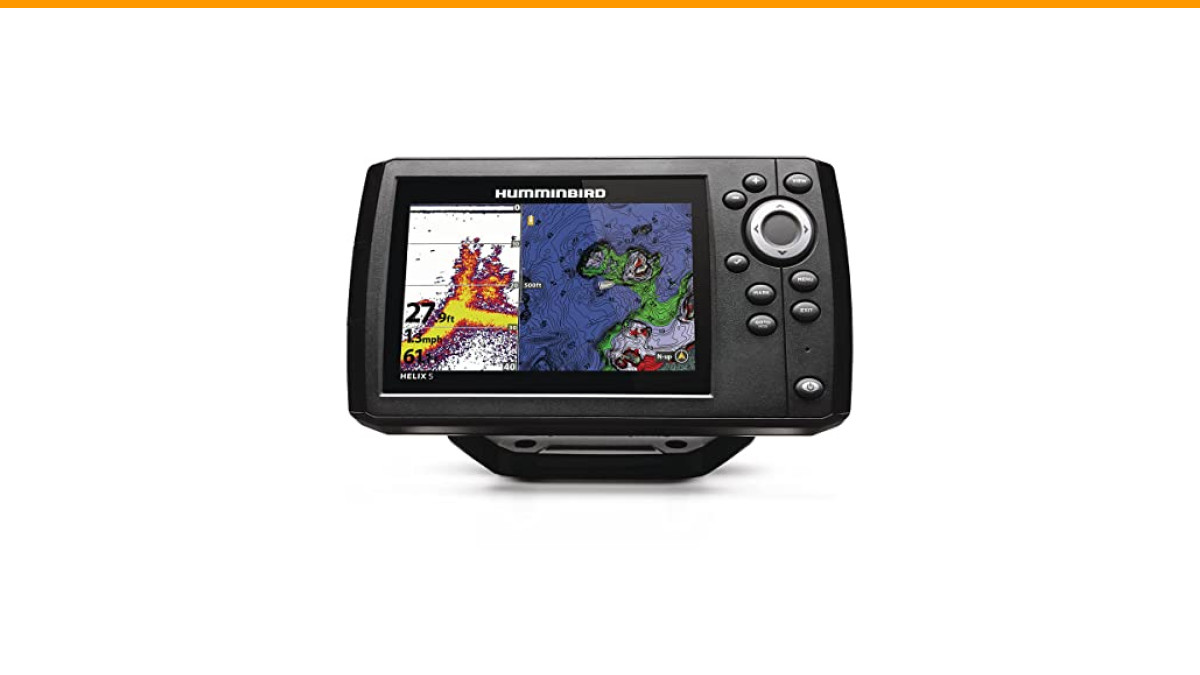
Humminbird Helix 5 G3 GPS

Humminbird
Humminbird Helix 5 G3 GPS Fish Finder with Transducer & Dual Spectrum Chirp Sonar
- Dual Spectrum CHIRP Sonar: Delivers views of fish arches and fish-holding structure with two ways to search — Wide Mode for maximu…
- Enhanced GPS Navigation: Equipped with Humminbird Basemap, this chartplotter includes coverage of 10,000+ lakes and continental U.…
- Enhanced GPS Navigation: Equipped with Humminbird Basemap, this chartplotter includes coverage of 10,000+ lakes and continental U.…
This unit is built for the angler who fishes inland lakes and rivers and wants a dependable screen for finding structure and holding waypoints. If you run a 16- to 20-foot aluminum or fiberglass boat, this fits your console without looking oversized. Kayak anglers with a track mount also use this successfully, though you will need a battery solution that handles the power draw.
The Dual Spectrum CHIRP sonar is the real workhorse here. You get two search modes from one transducer. Wide Mode covers more water to find scattered fish and bait. Narrow Mode zooms in on a specific piece of cover, like a submerged brush pile, and gives you better target separation. That means you can see a school of crappie holding tight to a stump instead of just a blob on the screen. The low-Q transducer design helps with this, providing cleaner arches for fish that are hugging the bottom.
Navigation is handled by the built-in Basemap, which includes coverage for over 10,000 lakes and the continental U.S. coastline. It is not a high-definition contour map like LakeMaster, but it gives you a solid outline and depth markers to get you in the ballpark. You can also buy a LakeMaster or Navionics card and slide it into the slot for premium contour detail. The real stand-out feature is AutoChart Live. While you idle along a shoreline, the unit records depth contours, bottom hardness, and vegetation in real time. You create your own custom map of a lake on the spot. That is a feature usually found on much more expensive units.
Honest trade-offs? The 5-inch screen is small. It is bright and readable, but you will not get the split-screen luxury of a 9-inch unit. You can view sonar and map side by side, but everything gets cramped. The keypad control is reliable and works with wet hands, but it takes a day to memorize the menu flow. And while the Basemap is useful, it lacks the detail that serious tournament anglers expect for offshore structure fishing. You will likely want to budget for a mapping card eventually.
- Dual Spectrum CHIRP sonar with Wide and Narrow modes for coverage or detail
- Pre-loaded Humminbird Basemap with 10,000+ lakes and U.S. coastal coverage
- AutoChart Live creates custom depth contours and bottom hardness maps while you drive
- Compatible with LakeMaster, CoastMaster, and Navionics premium chart cards
- Keypad and softkey controls that work in rain and rough water
Best for: The inland angler who wants CHIRP sonar and custom mapping on a budget and does not mind a smaller screen for the price.
How We Chose This Product
Selecting a fish finder comes down to matching the technology to the way you fish. I focused on the core features that matter most on the water: sonar clarity, GPS accuracy, mapping capabilities, and ease of use. The Helix 5 G3 earned its place because it offers a rare combination of CHIRP sonar and real-time mapping at a price point that does not require a second mortgage.
I also considered the practical side of installation. The included transducer is a transom mount design that works well on most aluminum and fiberglass hulls. The unit itself is compact enough to fit on smaller consoles or a RAM mount on a kayak. I weighed the cost of adding premium maps later against the value of the built-in Basemap. For most inland anglers, the included map is enough to get started, and the AutoChart Live feature lets you build better maps yourself over time.
Buying Guide: What Really Matters
Screen size and resolution are the first things you notice, but they are not the whole story. A 5-inch screen is fine for a primary sonar view. If you plan to run a split screen with map and downscan, you will want a larger display. Check the pixel resolution too. A higher pixel count means sharper images of fish arches and structure. The Helix 5 G3 uses a 480V x 800H display, which is acceptable for its size.
Sonar technology is the heart of the unit. CHIRP sends a sweep of frequencies and compiles the returns into a cleaner image. That gives you better target separation than traditional single-frequency sonar. You need to decide if you want side imaging to see to the left and right of the boat. The Helix 5 G3 does not have side imaging. If that is a must-have, you need to look at a different model. For down-looking sonar, this unit performs strongly.
GPS mapping and waypoint storage are critical for returning to productive spots. Check how many waypoints the unit can store and whether it supports external mapping cards. The Helix 5 G3 supports microSD cards for LakeMaster and Navionics, which is a big plus for expanding your mapping detail. Also consider the network expansion. This unit does not have Ethernet ports, so you cannot share data with other units or connect a trolling motor with built-in sonar. That is a limitation for anglers who want a fully integrated boat.
Installation Tips: Mounting and Transducer Placement
The included transducer is a transom mount design. On an aluminum boat, mount it on the starboard side, away from the propeller wash and any rivets that could cause turbulence. On a fiberglass boat, you may need to sand the area flat to get a solid mount. A poorly mounted transducer will lose bottom reading at speed. Take your time with this step.
For the display unit, a ball-and-socket mount gives you the flexibility to angle the screen toward you. If you fish from a tiller boat or kayak, consider a RAM mount. The unit connects to power with a standard fuse tap. Ensure your boat’s wiring can handle the draw. The Helix 5 G3 draws about 0.8 amps at normal brightness, so most starting batteries are fine. Do not run it off a trolling motor battery that is already low.
Frequently Asked Questions
How accurate are depth readings in deep water?
The Helix 5 G3 handles depth readings well down to about 400 feet with the included transducer. Accuracy depends on the transducer angle and water conditions. In deep water, the CHIRP sonar gives you a solid bottom lock. You will see some noise at high boat speeds, which is normal. Slow down to get a clean reading.
Can I add live sonar to this unit later?
No. The Helix 5 G3 does not have the necessary Ethernet or network ports to support a live sonar module like a Mega Live or a Garmin Panoptix. If you plan to add live sonar in the future, you need to start with a higher-tier model that includes network connectivity. This unit is a closed system.
Are these units compatible with my boat’s existing wiring?
Most likely, yes. The unit comes with a power cable that connects to a 12-volt DC source. You need to wire it to your boat’s fuse panel or directly to the battery with an inline fuse. The power draw is low enough that you do not need a dedicated circuit. Just ensure the connections are clean and protected from the elements.
Final Verdict: Should You Buy It?
The Humminbird Helix 5 G3 is a strong choice for the angler who wants reliable CHIRP sonar and the ability to create custom maps without spending a fortune. It is not the biggest screen on the market, and it lacks side imaging and network expansion. But for the price, you get a well-built unit that will help you find and return to fish.
If you fish mostly inland lakes and rivers, and you prioritize down-looking sonar and GPS mapping, this is a great fit. If you need side imaging or plan to integrate with a trolling motor, keep saving for a larger model. Check the current price on Amazon to see if it fits your budget.
