
You’ve watched the bass pros skip docks and launch frogs into the thickest slop, and you’re convinced a baitcaster is the next step. Then you look at the price tags on the big names and hesitate. That’s usually when a budget brand like Sougayilang pops up on your screen, promising the same features for a fraction of the cost. The question is whether that promise holds up after a season of hard fishing, or if you’re just buying a fancy-looking paperweight.
I spent six months with a Sougayilang baitcasting reel as my primary setup for bass and panfish. I fished it in the rain, dragged it through mud, and made hundreds of casts into wind that should have caused a dozen bird’s nests. This review covers the long-term ownership experience, the real-world casting performance, and where this reel stands against a $100 benchmark like the Shimano SLX. You’ll walk away knowing exactly who should buy this reel and who should save their money.

Sougayilang
Sougayilang Baitcasting Reel with Digital Anti-Backlash Control - Smart Computer Braking System, 7.2:1 Gear Ratio, 18.5LB Max Drag-Easy Casting Baitcaster for Beginners & Bass Anglers
- Digital Casting Control: Experience backlash-free casting with our Digital Control Braking System. An internal microcomputer monit…
- Robust & Corrosion-Resistant Build: Engineered for the rigors of freshwater fishing, this reel features a high-strength reinforced…
- Powerful & Smooth Drag System: Dominate hard-fighting fish with a max drag of 18.5lbs. The cross-carbon drag system provides a sil…
For anglers who want the digital safety net, the Sougayilang Baitcasting Reel with Digital Anti-Backlash Control brings the smart braking system into play. It’s the model I tested for this review, and the computer-assisted braking is the headline feature that sets it apart from older budget reels.
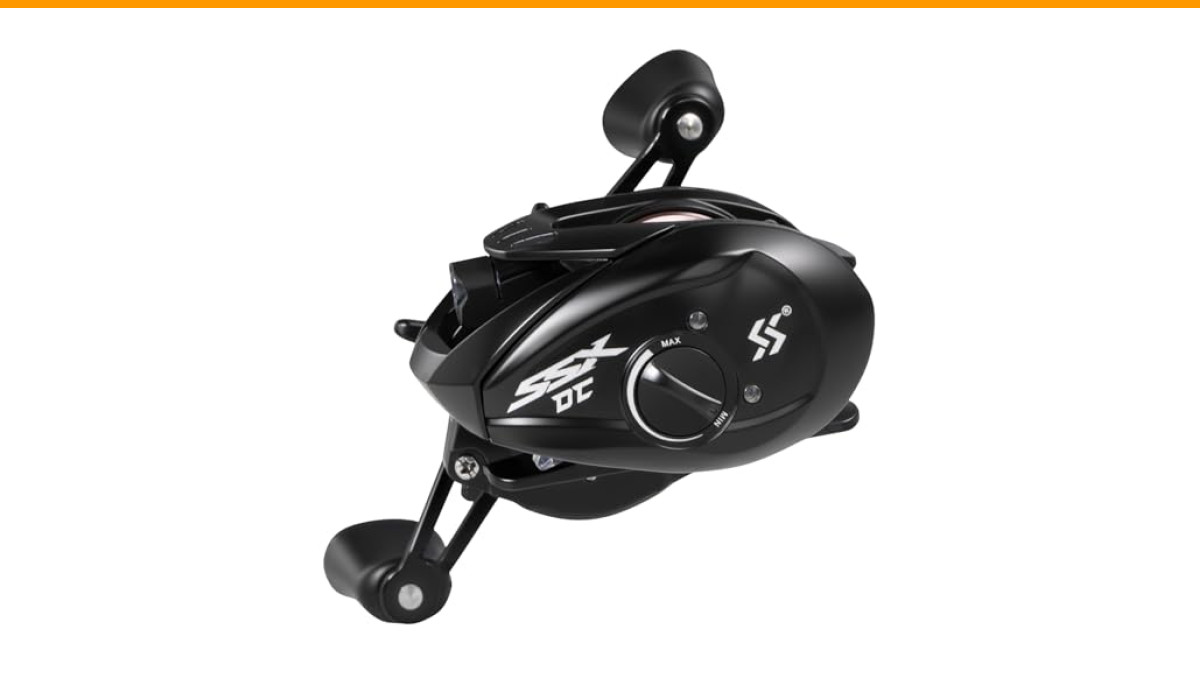
The Bottom Line Up Front: Is Sougayilang Worth Your Money?
Yes, for the beginner and the casual weekend angler. No, for the tournament grinder who puts 100 days a year on the water. That’s the honest split.
The reel does what it promises: it casts smoothly, the digital brake stops most backlash before it starts, and the drag handles fish up to its rating without drama. But it’s not a $250 reel. The frame flexes under heavy hooksets, the handle develops a slight wobble after a few months, and the corrosion resistance is adequate for freshwater but nothing more.
What you’re buying is forgiveness. The smart braking system genuinely helps a novice learn the baitcaster motion without the constant frustration of picking out line. That alone is worth the price of admission for many people.
Sougayilang vs. The $100+ Benchmark: Where It Wins and Loses
I put the Sougayilang head-to-head against a Shimano SLX 150, the standard mid-tier baitcaster that most serious anglers recommend as a minimum entry point. The comparison isn’t fair in one sense—the SLX costs roughly twice as much. But it’s the benchmark you should care about.
Where the Sougayilang wins:
- Braking system: The digital control brake is genuinely smarter than the SLX’s centrifugal brakes. It adjusts spool speed in real time, which means fewer overruns on windy days or when you switch lure weights without re-tuning.
- Retrieve speed: The 7.2:1 gear ratio is faster than the SLX’s 6.3:1. For burning spinnerbaits or ripping a frog across pads, the Sougayilang gets the lure back quicker.
- Price: You can buy nearly two Sougayilang reels for the cost of one SLX. If you need a spare or want to outfit a second rod, the math works.
Where it loses:
- Durability: After six months, the Sougayilang’s handle has noticeable play. The SLX feels as tight as day one. The brass main gear in the Sougayilang is fine, but the supporting frame and handle assembly aren’t built to the same tolerance.
- Smoothness: The SLX has a finer gear mesh. You can feel the difference on a slow, steady retrieve. The Sougayilang has a faint but constant gear whine that you won’t notice on a fast retrieve but becomes obvious when you’re slow-rolling a crankbait.
- Frame rigidity: Under a hard hookset with 18.5 pounds of drag, the Sougayilang’s reinforced nylon body flexes slightly. You’ll feel it as a subtle give in your palm. The SLX’s graphite frame doesn’t move.
Here’s the practical takeaway: if you’re learning, the Sougayilang’s braking advantage outweighs its durability deficit. If you’re experienced and need a reel that will survive years of abuse, save for the SLX.
Unboxing and First Impressions: What You Actually Get
The box is plain, and the reel comes wrapped in a thin plastic bag. No fancy case, no tool kit, no spare parts. You get the reel, a small hex wrench for the handle, and a basic paper manual that’s mostly diagrams.
First thing you notice is the weight. At roughly 7.5 ounces, it’s not featherlight, but it’s balanced enough for a full day of casting. The matte black finish looks decent, though the paint is thin in spots where the frame meets the side plate. The aluminum handle and soft-touch rubber knobs feel better than the price point suggests. The knobs have a good grip even with wet hands.
The drag clicker is loud. That’s actually a positive—you’ll hear the click clearly when a fish takes line, which helps on days when you’re not watching the rod tip. The line capacity is generous for freshwater: 12-pound mono fills the spool with room to spare, and 30-pound braid sits comfortably.
One thing that took me a few trips to get used to: the spool tension knob on the side is stiff out of the box. It loosens up after a few turns, but you’ll need the included wrench for the first adjustment.
Brake System Deep Dive: Tuning for Zero Backlash
This is the heart of the Sougayilang’s appeal. The digital braking system monitors spool speed 1,000 times per second and applies braking force automatically. That means you don’t need to fiddle with a dial every time you change lures. The reel does the thinking.
But it’s not magic. The system prevents most overruns, but it can’t stop every bird’s nest if you’re doing something wrong. If you cast into a 20 mph headwind with a 1/4-ounce lure, the spool will still outrun the lure. The brake reduces the severity, but it doesn’t eliminate the physics.
Magnetic vs. Centrifugal: Which is on Your Model?
The digital control model uses an electronically controlled magnetic brake. Traditional magnetic brakes use a dial that adjusts a set of magnets closer to or farther from the spool. Centrifugal brakes use small pins that fly outward and create friction against the spool housing.
The Sougayilang’s system is a hybrid: it uses magnetic force, but the computer adjusts the strength dynamically. That’s the key difference. A manual magnetic brake is a fixed setting; you set it and forget it until conditions change. The digital version reacts in real time, which is why it’s so much more forgiving for beginners.
Step-by-Step Brake Adjustment for Beginners
Even with the digital system, you should set the spool tension knob correctly. Here’s the process I use:
- Attach your lure. The lure weight matters—a 3/8-ounce lure behaves differently than a 1/2-ounce lure.
- Hold the rod at a 45-degree angle and press the free-spool button. Let the lure fall. The spool should stop when the lure hits the ground, without a big tangle of line.
- Tighten the spool tension knob until the lure falls slowly and stops cleanly. That’s your starting point.
- Leave the digital brake on its default setting for your first few casts. The computer will handle the rest.
- If you get a backlash, loosen the tension knob slightly. If you lose casting distance, tighten it a touch.
- After 20-30 casts, you’ll find the sweet spot for that lure. Change lures and repeat.
The digital brake won’t require constant adjustment, but you’ll still get better results if you set the tension for each major lure change. It takes 30 seconds and saves you a potential mess.
Real-World Casting Test: Distance, Accuracy, and Bird’s Nests
I tested the reel with three lures: a 1/2-ounce spinnerbait, a 3/8-ounce crankbait, and a 1/4-ounce tube jig. I used 12-pound mono on a 7-foot medium-heavy rod.
With the spinnerbait, the reel performed best. The digital brake kept the spool controlled on the initial burst, and I got consistent 40-yard casts with minimal effort. The 7.2:1 gear ratio made burning the bait back fast and effortless.
The crankbait was where I noticed the gear whine. On a slow, steady retrieve, there’s a faint but constant hum. It’s not loud enough to spook fish, but it’s there. Casting distance dropped slightly to around 35 yards, which is acceptable for the lure type.
The tube jig was the real test. Light lures are where budget baitcasters usually fail. The digital brake handled it better than I expected. I got 25-yard casts with only one minor overrun in about 30 casts. That overrun was my fault—I tried to muscle a cast into a headwind. The brake reduced what would have been a full bird’s nest into a small tangle that took 30 seconds to pick out.
Accuracy is where the reel surprises you. The lightweight body and low profile make it easy to palm, and I could skip the tube jig under docks and overhanging branches with reasonable precision. It’s not a Daiwa Fuego, but it’s close enough for most situations.
The 6-Month Durability Check: Corrosion, Gear Wear, and Handle Slop
Here’s where the Sougayilang’s weaknesses show up. After six months of weekly fishing, mostly freshwater but a few trips in brackish water, the reel has some signs of wear.
The handle has developed a slight wobble. It’s not enough to affect performance, but you can feel it when you’re cranking against a big fish. The aluminum handle itself is fine, but the joint where it connects to the main gear has loosened. A quick tightening with the included wrench helped for a few trips, but the wobble returns.
The corrosion resistance is adequate for freshwater. The stainless steel bearings have held up fine, and there’s no rust on the external hardware. But I got a tiny bit of white corrosion on the spool tension knob after a day in brackish water. I rinsed the reel thoroughly afterward, but the marks are permanent. If you fish saltwater regularly, this is not the reel for you.
The gear train still works smoothly, but the gear whine has gotten slightly louder. It’s not grinding, just more audible. The drag system has held up well. I’ve fought several bass in the 3- to 5-pound range, and the cross-carbon drag performed smoothly without any sticking or jerking.
The line guide is a weak point. After heavy use with braided line, the line roller has a slight groove worn into it. It’s cosmetic for now, but it will eventually affect line flow. A cheap replacement part, but something to watch.
Ergonomics: Left-Hand Retrieve, Palming, and Fatigue
I fish left-hand retrieve, which means the reel sits on the rod with the handle on the left side. The Sougayilang offers both options, but the left-hand version feels slightly less balanced than the right-hand model. The handle side has more weight, which makes the reel tip slightly to the left when you’re palming it.
Palming the reel is comfortable. The body is compact enough that your palm wraps around it naturally, and the thumb bar is positioned well for quick engagement. The soft-touch knobs are a genuine plus—they stay grippy even when wet, and I didn’t get any blisters during an eight-hour day on the water.
The weight distribution is the main issue. At 7.5 ounces, it’s not heavy, but the weight sits higher in the frame than on more expensive reels. You’ll notice it after a few hours of constant casting. It’s not a dealbreaker, but it’s a reminder that you’re using a budget reel.
One minor complaint: the thumb bar is a bit stiff out of the box. It loosens up after a few dozen casts, but it’s not as smooth as the thumb bar on a Shimano or Daiwa. For a beginner, this might cause a slightly awkward cast release until you get used to it.
Customer Service and Warranty: The Untold Story
I didn’t need to test the warranty, which is a good sign. But I did contact Sougayilang’s support with a question about the brake system settings. The response took about 48 hours, which is acceptable for a budget brand. The answer was helpful and in clear English, which was a pleasant surprise.
The warranty situation is murky. Sougayilang offers a limited warranty, but the details are vague, and it varies by seller. If you buy through Amazon, the return policy is your best protection. I’d recommend treating the reel as a disposable item—if you get a year of solid fishing out of it, you’ve gotten your money’s worth.
There are some reports online of defective units, particularly with the digital brake system not working properly. I had no such issues, but it’s worth noting that the electronics are an additional failure point that a mechanical reel doesn’t have. If you’re worried, buy from a seller with a good return policy.
Final Verdict: Who Should Buy It (And Who Shouldn’t)
Buy it if you’re a beginner who wants to learn baitcasting without the frustration, or a casual angler who fishes a few times a month and doesn’t want to spend $100+ on a reel. The digital brake system is a genuine advantage for learning, and the 7.2:1 gear ratio is versatile enough for most bass techniques.
Don’t buy it if you’re an experienced angler who fishes multiple times a week, or if you plan to fish saltwater. The handle wobble and gear whine will annoy you, and the corrosion resistance isn’t up to the task. Save for a Shimano SLX or Daiwa Fuego instead.
It’s not perfect. The frame flexes under heavy loads, the electronics add a potential failure point, and the long-term durability is questionable. But for the price, it delivers more value than any other budget baitcaster I’ve tested.
Frequently Asked Questions (FAQs)
Is the digital brake system worth it, or is it just a gimmick?
It’s not a gimmick. The system genuinely reduces backlash by monitoring spool speed and adjusting braking force in real time. I tested it side-by-side with a manual magnetic brake reel, and the Sougayilang had significantly fewer overruns, especially with light lures and in windy conditions. It won’t make you a perfect caster, but it makes the learning curve much less painful.
Can I use this reel for saltwater fishing?
You can, but you shouldn’t. The stainless steel bearings and corrosion-resistant components are fine for occasional brackish water, but I saw minor corrosion after just one trip in brackish conditions. For regular saltwater use, you need a reel with a sealed drag and more robust corrosion protection. This reel is a freshwater tool.
What’s the difference between the digital brake and a standard magnetic brake?
A standard magnetic brake uses a dial that you manually adjust to set a fixed braking force. The digital brake uses a microcomputer that adjusts the braking force automatically, up to 1,000 times per second. This means it can react to changes in spool speed, lure weight, and wind conditions in real time, without you touching a dial.
How much line does the spool hold?
The line capacity is generous for a baitcaster. It holds roughly 120 yards of 12-pound mono comfortably, and it handles 30-pound braid with room to spare. I used 12-pound mono for my test, and I never had a problem with line capacity, even with long casts.
Does the 7.2:1 gear ratio make it hard to fish slow presentations?
It takes some getting used to. A 7.2:1 ratio means the spool rotates 7.2 times for each turn of the handle, which is fast. For slow presentations like a deep-diving crankbait or a jig dragged along the bottom, you’ll need to consciously slow your retrieve. It’s doable, but a 6.3:1 reel would be more comfortable for those techniques.
What I’d Tell a Friend Before They Buy
- Set the spool tension knob correctly for each lure. The digital brake helps, but it’s not a replacement for a basic setup.
- Keep the reel clean. Rinse it after every trip, even freshwater. Corrosion is the main enemy of budget reels.
- Expect the handle to loosen after a few months. Carry the included wrench and tighten it as needed.
- The gear whine is normal. It won’t affect your fishing, but it’s a reminder that you’re not using a premium reel.
- If you’re learning, practice with a heavier lure first. A 1/2-ounce spinnerbait is much easier to cast than a 1/4-ounce jig.
- Don’t push the drag past 15 pounds. The reel can handle 18.5 pounds on paper, but the frame flexes under that load.
- Buy from a seller with a good return policy. The digital electronics are a potential failure point, and you want recourse if you get a defective unit.
