You’re on the water, cast after cast, and then it happens. The line loops over the tip, the bail won’t close, or the drag makes a sound like a dying squirrel. Most anglers just keep fishing, hoping the problem goes away. It never does. It gets worse, and a $100 reel turns into a paperweight because nobody caught the issue early.
This guide takes a diagnostic-first approach. Instead of a random list of fixes, you’ll learn to identify the why behind each failure. That knowledge stops the problem from coming back. You’ll walk away knowing how to fix line twist, drag failure, bail issues, and more, plus when to open the reel yourself and when to hand it to a professional.
QUA'ANNYU
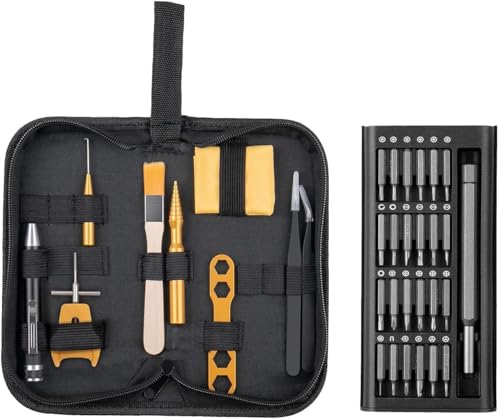
QUA'ANNYU Fishing Reel Maintenance Kit, Professional Fishing Reel Care & Repair Tool Set with 24/30/38-in-1 Screwdriver Set (Gold+Manual Screwdriver)
- Reel Compatibility, Covers Mainstream Maintenance:This professional fishing reel repair kit and reel cleaning kit fits baitcasting…
- High-Quality Metal, Durable Fishing Tool Kit:The kit is forged from high-quality metal, with excellent wear, high strength, corros…
- Uniform Color for Anti-Loss, More Convenient Tool Management:This fishing reel cleaning kit adopts standardized factory production…
I’ve been servicing spinning reels for over a decade, and I’ve seen the same mistakes repeated. Most are easy to prevent. A few require patience. All of them are fixable.
Before you start, you’ll need the right tools. A QUA’ANNYU Fishing Reel Maintenance Kit covers the basics: screwdrivers for every screw on a Daiwa, Shimano, or ABU reel, plus a pin remover that handles over 95% of baitcasting reels. It’s not flashy, but it’s the kind of kit that makes the job easier instead of fighting with mismatched screwdrivers.

Before You Start: Tools and Safety for Reel Repair
You don’t need a full machine shop to service a spinning reel. But you do need the right screwdrivers. Phillips and flathead sizes vary, and using the wrong one strips screw heads. A decent kit like the QUA’ANNYU set includes a 24-in-1 S2 screwdriver with all the bits you’ll need. It’s worth the money compared to buying individual tools.
Work on a clean, bright surface. A white towel or a magnetic tray prevents tiny springs and washers from vanishing. I’ve lost more parts to carpet than to actual failures.
Safety first: keep solvents away from your eyes and skin. Use isopropyl alcohol for cleaning, and apply lubricants sparingly. Over-oiling attracts dirt and creates grinding paste inside the reel.
Diagnostic Guide: Identify Your Spinning Reel Problem Fast
Don’t start tearing the reel apart until you know what you’re chasing. Use this flow:
- Is the reel noisy? Clicking sounds usually mean the anti-reverse bearing or a worn gear. Grinding means grit inside or a bent shaft.
- Is the line twisting or tangling? That points to the line roller, bail arm, or spool oscillation. Check the line roller first.
- Does the drag slip? Drag issues come from worn washers, incorrect stack order, or grease that’s too thick.
- Is the handle hard to turn? That’s often a seized bearing or a bent main gear. Corrosion is the usual culprit.
- Does the bail fail to close? The trip spring is likely broken or slipped off its post.
Here’s a quick comparison table for the most common issues:
| Symptom | Likely Cause | Difficulty | Time to Fix |
|---|---|---|---|
| Line twist | Line roller stuck or damaged | Easy | 10 minutes |
| Bail won’t close | Broken trip spring | Moderate | 20 minutes |
| Drag slips | Worn drag washers | Moderate | 30 minutes |
| Grinding noise | Grit in bearings or gears | Hard | 1 hour |
| Handle wobble | Loose handle nut | Easy | 5 minutes |
Once you’ve matched the symptom, move to the specific fix below. Don’t skip steps.
Line Slipping on the Spool? Fix the Arbor and Backing
Braided line is notorious for slipping on a smooth spool, especially under heavy drag. The line spins freely, and you lose the fish. The fix is simple: add backing tape or a mono arbor.
Here’s how to do it right:
- Cut a strip of electrical tape or use a purpose-made arbor tape. Wrap it around the spool arbor in a spiral, covering the entire surface.
- Alternatively, tie a few wraps of monofilament (10-15 lb test) around the arbor before spooling the braid. This gives the braid something to bite into.
- Spool the line under tension. Use a line-winder or a pencil through the spool of new line. The line should go on tight, with no loose loops.
Pro tip: fill the spool to within 1/8 inch of the lip. Overfilling causes wind knots. Underfilling reduces casting distance.
Reel Locked Up or Hard to Turn? Check the Anti-Reverse and Bearings
If the handle won’t turn forward, or it’s rough and gritty, you’ve got a bearing or gear problem. Start with the anti-reverse bearing. It’s a one-way clutch that allows forward rotation only. When it fails, the handle spins backward or locks up entirely.
To test it: remove the side plate and inspect the bearing. It should spin freely in one direction and lock in the other. If it’s gritty or rusted, clean it with solvent and relubricate with a light oil. If it still doesn’t work, replace it.
Bearings, on the other hand, need a light touch. Over-oiling attracts dirt. Use a single drop of reel oil per bearing, spin it, and wipe off any excess. If a bearing feels rough even after cleaning, it’s time for a new one.
Line Twist and Tangles: The Bail Arm and Roller Fix
Line twist is the #1 killer of casting distance and the main cause of wind knots. The line roller is the usual suspect. It’s the small wheel on the bail arm that the line passes over. If it doesn’t spin freely, the line twists every time you reel.
Here’s the fix:
- Open the bail arm and locate the line roller. It’s held by a screw or a clip.
- Remove the roller and its bearing. Clean them with solvent to remove old grease and grime.
- Apply a drop of reel oil to the bearing, then reassemble.
- Test by spinning the roller with your finger. It should spin easily and smoothly.
If the roller is damaged or grooved, replace it. A worn roller will always cause twist, no matter how much you oil it.
Bail Won’t Close or Stay Open? Adjust the Trip Spring
The bail trip spring is a small coil that snaps the bail closed when you start reeling. It’s a common failure point. Symptoms: the bail stays open when you turn the handle, or it closes halfway and stops.
To fix:
- Remove the rotor (the part that spins). It’s usually held by a single screw or nut at the top.
- Look for the trip spring. It sits on a post near the bail arm mechanism.
- If the spring is broken, replace it. If it’s just slipped off, reposition it.
- Reassemble and test the bail action.
Pro tip: always check the spring’s tension. Some reels have an adjustable tension screw. If the bail closes too softly, tighten it slightly. Too stiff, loosen it.
Noisy Reel? Grinding vs. Clicking Sounds Explained
Not all noises are equal. A clicking sound is often the anti-reverse bearing or a worn gear tooth. A grinding sound is usually grit inside the body, or a bent shaft scraping against the housing.
Here’s how to diagnose:
- Clicking: Remove the rotor and test the main gear. If it clicks consistently every rotation, inspect the gear teeth for wear or a missing tooth. If the click is random, check the anti-reverse bearing.
- Grinding: Disassemble the reel and check for sand or dirt in the gears. Clean and relubricate. If the sound persists, the shaft may be bent. That’s a professional repair.
Don’t ignore noises. A small issue becomes a major one fast.
Drag Not Working? Rebuild the Drag Washers
A smooth drag is crucial for fighting big fish. If your drag sticks, slips, or jerks, the washers are worn or contaminated. Most reels use a stack of fiber and metal washers.
To rebuild:
- Remove the spool and the drag star or knob.
- Take out the washers in order. Note their sequence and orientation.
- Clean each washer with solvent. Inspect for cracks, glazing, or wear.
- Apply a thin layer of drag grease (not regular grease) to the fiber washers. Reassemble in the exact same order.
If the washers are badly worn, replace the whole set. It’s cheap insurance compared to losing a trophy fish.
Handle Falling Off or Wobbling? Tighten the Nut Correctly
A wobbly handle is annoying and dangerous. The handle nut works loose over time. The fix is simple, but the technique matters.
Use the correct size wrench or socket. Tighten the nut snugly, then give it a quarter turn more. Don’t crank it down like a lug nut — you’ll strip the threads or crack the handle.
Pro tip: apply a drop of thread-locker (blue, not red) to the nut before reinstalling. It prevents loosening without making it impossible to remove later.
Preventative Maintenance: Seasonal Service Schedule
Regular maintenance prevents 90% of reel problems. Here’s a realistic schedule:
- After every trip: Rinse the reel with fresh water (if used in salt), dry it, and wipe down the exterior.
- Monthly: Oil the line roller and handle knob. Check for loose screws.
- Every 3 months (or 20 trips): Clean the exterior and re-lubricate the main shaft and gears.
- Annually: Full teardown, clean, and re-grease. Replace worn washers and bearings.
If you fish in saltwater, double the frequency. Salt corrodes fast.
When to DIY vs. When to See a Professional
Not every repair is a DIY job. You can handle line roller, bail spring, drag washers, and handle nuts. You should probably hand it to a pro for:
- Bent rotor or bail arm (needs alignment tools)
- Broken internal gears or shaft
- Water damage inside the body
- Reels under warranty (opening it voids the warranty)
Pro shops charge $30-50 for a full service. That’s worth it for a high-end reel.
Frequently Asked Questions
Why does my spinning reel keep getting line twist?
Most line twist comes from a frozen line roller. Check it first. Also, make sure you’re spooling the line correctly — line should come off the spool in the same direction it goes on. If you’re using a spinning reel, never let the line twist while casting. That’s a common mistake.
How often should I grease my spinning reel?
Once a year for freshwater, or every 3-6 months for saltwater. Grease the gears and the drag washers. Use a light oil for bearings. Over-greasing attracts dirt and makes the reel feel sluggish.
Can I use WD-40 on my reel?
No. WD-40 is a solvent, not a lubricant. It will wash away the factory grease and leave your reel dry. Use a proper reel oil and grease.
Why is my bail arm bent?
A bent bail arm usually comes from dropping the reel or hitting it against something. It can also happen if you close the bail by hand too forcefully. A slight bend can be straightened, but a severe bend requires replacement.
Why does my drag make a clicking sound when I pull line out?
A clicking drag is normal on many reels — it’s the ratchet mechanism. But if it’s a new sound, check the drag washers. They might be worn or dry.
Final Thoughts: Keep It Simple, Keep It Clean
Most spinning reel problems come down to a few common causes: dirt, lack of lube, and wear. You can fix most of them yourself with a basic kit and a little patience.
- Always rinse your reel after saltwater use.
- Oil the line roller and handle knob monthly.
- Check the drag and bail spring before each season.
- Tighten the handle nut correctly — don’t overdo it.
- Replace worn washers and bearings rather than forcing them.
- When in doubt, see a professional.
- Keep a maintenance kit like the QUA’ANNYU on hand — you’ll use it more than you think.
Take care of your reel, and it’ll take care of you.