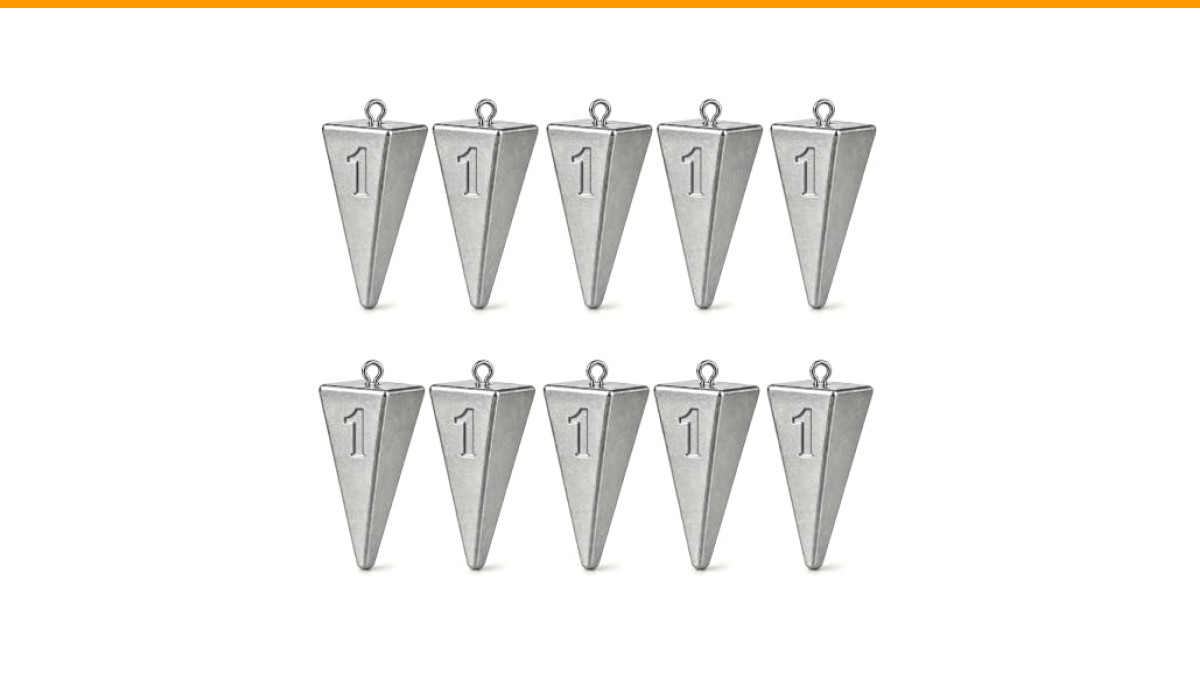
The first time I watched a guy on the beach outcast everyone by thirty yards and hook a striper on a cast that looked like zero effort, I knew the diamond jig was different. He wasn’t working a plug with a rhythmic twitch. He was just letting the thing sink, then sweeping his rod tip, and the fish were coming from nowhere to hit it.
That’s the real appeal of the diamond jig. It’s not a finesse bait. It’s a dense piece of metal that gets down fast, casts like a bullet, and puts on a flash show that triggers reaction strikes from fish that aren’t even actively feeding. This guide covers the exact system I use: reading the water to find the fish, setting up a rod that can handle heavy jigs, and controlling the jig’s fall to dial in the depth where fish are holding.

VMSIXVM
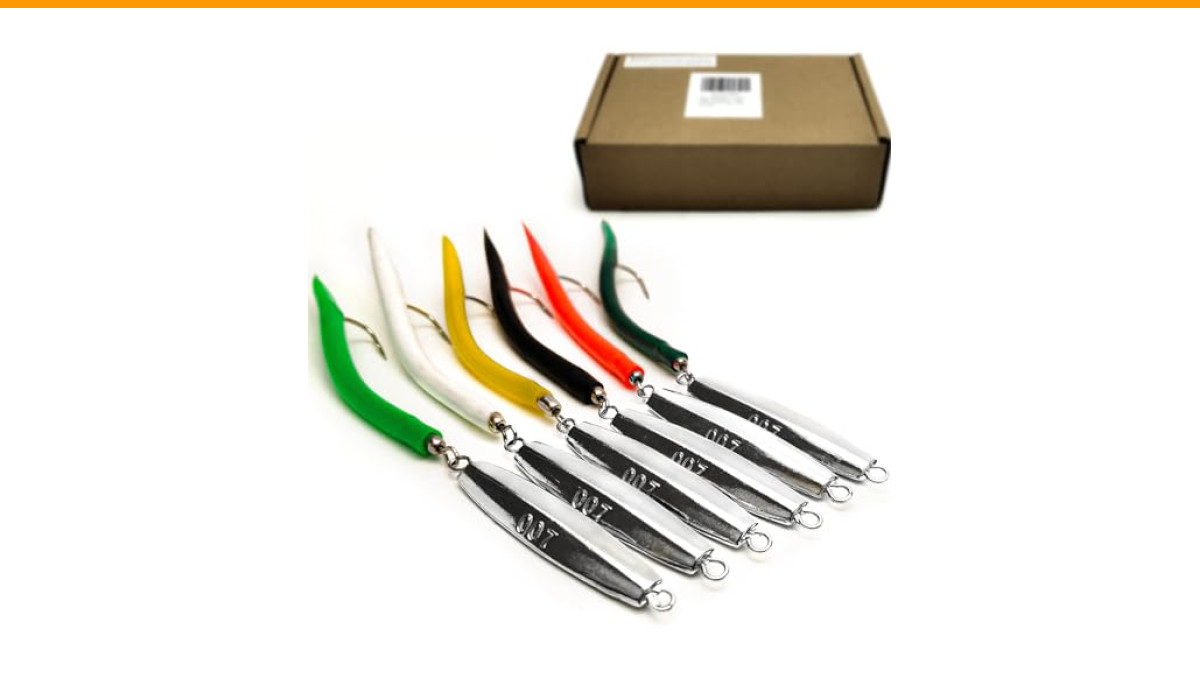
VMSIXVM Diamond Jigs Saltwater Fishing Lures for Striped Bass, Tuna, 1oz | High Carbon Steel Jig, Flashing Shine Body, Fast Sinking, Target Big Fish, Natural Wobbling Split Tube, Proven Performance
- 【Deadly Shine Diamond Jig Saltwater Fishing Jigging Lure】VMSIXVM diamond jigs include 6pcs casting saltwater jigs with 6 color. Ea…
- 【Deadly Attraction Saltwater Fishing Jigs】VMSIXVM diamond jigs lure crafted from high quality materials provide brilliant flash in…
- 【Premium Sharp Hook with Split Tube】VMSIXVM flat metal Jigs equipped with a super sharp hook, designed with high carbon steel whic…
You’ll leave with a clear plan for your next session, including how to fish structure without donating your tackle box to the rocks.
If you’re building a kit and want a solid starting point, the VMSIXVM Diamond Jigs Saltwater Fishing Lures kit gives you six colors in the standard 1-ounce size. That’s enough variety to match conditions and find what the fish want on any given day, and the split tube adds a subtle eel-like action that often seals the deal.
The Diamond Jig’s Deadly Advantage in the Surf
Most surf lures are designed to move water. Poppers push a wake, swimmers wiggle side to side. The diamond jig does the opposite. It’s a vertical presentation that mimics a baitfish dying and fluttering down through the water column. In the surf zone, where sand eels and spearing get battered by waves, that fluttering action is an easy meal for a predator.
The physics matter here. A diamond jig is thin and heavy for its size. That means it sinks fast, cuts through wind on the cast, and gets down to the strike zone quickly. A 1-ounce jig will reach the bottom in a rip current in the time it takes a 3/4-ounce plug to get halfway down. This speed is the primary advantage when fish are holding deep in a trough or behind a sandbar.
You are not casting this lure to work it slowly across the surface. You’re casting it to let it fall. The retrieve is secondary. The fall is the bait. If you master nothing else, master letting the jig drop on a semi-slack line and watching your line for the tick that means a fish grabbed it on the way down.
Essential Gear: Rod, Reel, and Line for Heavy Jigs
You can throw a diamond jig on a medium surf rod, but you will fight the lure the whole time. The weight and the resistance of the water against a flat metal bar make casting a chore on a soft rod. You want a rod with enough backbone to load up and launch the weight, but with a tip sensitive enough to feel the jig ticking bottom.
A 9-foot rod rated for 1 to 4 ounces is the sweet spot for most beach fishing. The length gives you casting distance, and the power rating matches the 1-ounce jig perfectly. If you fish mostly from jetties or in tight spots, a 7-foot rod rated for 3/4 to 2 ounces works well. You trade casting distance for control.
Pair that rod with a reel in the 4000 to 5000 size. You need a drag system that can handle a big striper or bluefish making a hard run, and you need line capacity. A 5000-size reel spooled with 30-pound braided line is the standard for a reason. Braid has no stretch, so you feel every tick of the jig on the bottom, and it casts farther than mono of the same diameter.
Here’s the trade-off: braid is visible in clear water. Many surf veterans tie on a 3-foot leader of 30 to 40-pound fluorocarbon to solve this. The fluorocarbon is nearly invisible underwater and adds a bit of abrasion resistance when the fish rubs you through rocks. Use a simple uni-to-uni knot to connect the two lines.
Your rod action matters more than you might think. A fast-action rod (one that bends mostly near the tip) gives you a quick, sharp lift that makes the jig dart aggressively. A moderate-action rod (bends more toward the middle) gives a slower, wider sweep that makes the jig flutter more gently. Match the action to the conditions. Fast for rough water and aggressive fish, moderate for calm days and finicky bites.
Reading the Beach: Locating Rips, Sloughs, and Bait
Casting a diamond jig into flat, featureless water is a waste of time. You need to find where the fish are feeding, and that means reading the water. The most productive spots are rip currents, sloughs, and the edges of sandbars.
A rip current looks like a river of water flowing out to sea. It shows up as a darker, choppier patch of water between waves, often with a muddy or sandy color. The rip itself is a conveyor belt for baitfish. They get sucked out, and the predators line up at the mouth of the rip where the current slows down and disorients the bait. Cast your jig to the edge of the rip, let it sink, and work it back through that zone.
A slough is a deeper trough of water that runs parallel to the beach, usually between the shore and a sandbar. Fish use these as highways. They cruise the deeper water waiting for bait to wash over the bar. Cast beyond the slough, let your jig sink to the bottom, and retrieve it up the slope. The change in depth is where the strikes happen.
Look for birds. Terns and gulls hovering over a specific patch of water are telling you exactly where the bait is. If you see birds working, you don’t need to read the water. Just cast to the birds and work your jig through the chaos. The flash of the diamond jig in a feeding frenzy is often the trigger that pulls a fish away from the real bait.
The Core Technique: Mastering the Lift-and-Drop
The lift-and-drop is the bread and butter of diamond jig fishing. It’s simple in theory but takes practice to execute well. The goal is to make the jig rise quickly and then flutter down slowly, mimicking a wounded baitfish.
Start with your rod tip low, pointed at the water. Reel in the slack until you feel the jig. Now sweep the rod tip up sharply, from the 9 o’clock position to the 12 o’clock position. This quick lift makes the jig dart upward. As you lower the rod tip back down, reel in the slack line at the same pace. The jig falls, and the flash from the spinning, fluttering metal is what triggers the strike.
The mistake most beginners make is reeling too fast. You want the fall to be slow and controlled. The jig should flutter, not sink like a rock. You control the fall speed with the rod tip. Keep the rod tip high and the line slightly tight, and the jig will fall with more resistance. Drop the rod tip and give slack, and it falls faster.
Adjusting Cadence for Water Temperature
Water temperature changes how fish react. In cold water (below 50°F), fish are sluggish and won’t chase a fast-moving lure. Slow your cadence down. Make your lift slower, and let the jig fall for a longer pause. In warm water (above 60°F), fish are more aggressive. You can speed up the lift and shorten the pause.
Think of it this way: the jig is a dying baitfish. In cold water, that baitfish is moving slow and barely getting away. In warm water, it’s darting around with more energy. Match the energy of the bait to the energy of the water.
The “Kill Switch” Pause
Here’s a trick that catches fish when nothing else works. After a few lift-and-drop cycles, let the jig sink all the way to the bottom. Then do nothing for a full five seconds. Let the jig sit there. Then give it one sharp, aggressive lift and start the retrieve again.
This pause is the “kill switch.” It mimics a baitfish that has given up and is resting on the bottom. A predator watching the action will often strike at that moment of inactivity, thinking the prey is vulnerable. It’s a counter-intuitive technique, but it’s deadly for stripers and blues that have seen every other presentation.
Avoiding the Bottom: How to Fish Structure Without Snagging
Snags are the number one reason people give up on diamond jigs. The jig is heavy and sinks fast, and if it gets wedged between rocks, it’s gone. But you can fish structure effectively if you change how you work the bottom.
The key is to never let the jig rest on the bottom. Instead of letting it sink until it hits, you want to slow the fall just before it reaches the rocks. You do this by feathering the line with your finger as the jig drops. You’ll feel the jig ticking the tops of the rocks, not thudding into them. When you feel that tick, immediately lift the rod tip. The jig bounces off the rock and stays in the strike zone.
This is called “walking” the jig. You’re moving it along the bottom, bouncing it over the rocks, keeping it in front of the fish that are holding in the structure. It takes a light touch and a lot of concentration, but it’s the difference between catching fish and losing tackle.
If you do get snagged, don’t just yank the rod back. That buries the hook deeper. Instead, point the rod tip at the snag, reel in the slack until the line is tight, then pull straight back with steady pressure. Often the hook will pull free or bend out. If that doesn’t work, walk down the beach and change your angle. Pulling from a different direction often pops the jig loose.
The Teaser Rig: Adding a Deadly Trailer
Sometimes the fish are short-striking the diamond jig. They’re hitting it, but they’re not getting hooked. That’s usually because the jig is too big for their mouths, or they’re swiping at it rather than eating it. A teaser rig solves this problem.
A teaser is a small fly or soft plastic tied on a short leader, attached to the line about 18 inches above the jig. You tie a dropper loop in your main line, attach a 6-inch piece of fluorocarbon, and tie on a small sand eel imitation or a white bucktail fly.
The teaser rides just above the jig and gets hit first. The fish sees the big jig, then sees the smaller, easier target behind it, and hits the teaser. It’s a deadly combo. The jig acts as the attractor, and the teaser is the meal.
You can also use a teaser to slow down the presentation. The teaser adds drag, which slows the fall of the jig, giving the fish more time to react. If you’re fishing a fast current, this can be the difference between a hit and a miss.
Color and Flash: Matching the Hatch vs. Triggering Strikes
The standard diamond jig is polished silver. It’s meant to imitate a sand eel, and it does that job well. But sometimes the fish want something different. That’s where color comes in.
On bright, sunny days with clear water, stick with silver or chrome. It matches the flash of a real baitfish. On cloudy days or in stained water, switch to a gold or brass finish. The darker metal is easier to see in low light. At dawn and dusk, a jig with a chartreuse or glow finish can be the ticket, as it stands out against the dark water.
Don’t overthink color. The action of the jig is more important than the color. A silver jig with a perfect flutter will outfish a chartreuse jig with a poor action every time. Use color to match the conditions, but focus your energy on the retrieve.
That said, the VMSIXVM kit’s range of colors covers the bases. Having a few options in your bag lets you switch quickly when the fish show a preference, without needing to retie a whole new setup.
Tides, Light, and Wind: When to Throw the Diamond
The diamond jig is not a lure you throw all day. It has a window of effectiveness, and knowing that window is half the battle.
The best time is the last two hours of the incoming tide and the first two hours of the outgoing tide. This is when the water is moving, and moving water pushes bait. Fish position themselves in the current and wait for the bait to come to them. The diamond jig, with its fast sink rate, is perfect for getting down into that current and holding in the strike zone.
Low light is your friend. Dawn and dusk are prime time. The low angle of the sun makes the flash of the jig more visible, and the fish are more willing to move out of deep water to chase. Overcast days are almost as good as dawn and dusk.
Wind is a double-edged sword. A strong wind creates chop, which breaks up the surface and gives the fish cover. It also makes casting difficult. If you’re fighting a headwind, you’ll struggle to get the jig out to the fish. If the wind is at your back, you can outcast everyone on the beach.
If you’re fishing a falling tide, focus on the deeper holes and the ends of sandbars. The fish pull off the flats and stack up in these deeper spots. If you’re fishing a rising tide, the fish move up onto the flats to feed. Cast shallower and work the jig faster to keep it out of the weeds.
Troubleshooting Common Mistakes (Short Strikes, Missed Hits)
You feel a thump, you set the hook, and nothing. It happens to everyone. Here’s how to fix the most common problems.
Short strikes: If fish are hitting but not getting hooked, they’re likely swiping at the tail of the jig. The fix is to slow down your retrieve. A slower fall gives the fish more time to turn and eat the jig head-first. Adding a teaser rig also helps, as the fish will often hit the smaller, easier target.
Missed hits on the drop: If you’re getting hits while the jig is falling but missing them, you’re likely holding the rod too loosely. The line needs to be tight enough to feel the bite but loose enough to let the jig fall naturally. Watch your line as it enters the water. If you see it twitch or hesitate, that’s a fish. Set the hook immediately.
Feeling rocks but no fish: You’re probably fishing too deep. The fish might be suspended higher in the water column, chasing bait that’s being pushed over the top of the bar. Try counting down your jig. Let it sink for a count of five, then start your retrieve. If no hits, try a count of ten. Keep adjusting until you find the depth where the fish are.
Fouled hooks: The treble hook on a diamond jig can easily pick up seaweed or grass, ruining the action. If you’re constantly clearing weeds, try a jig with a single hook. It doesn’t cast as well, but it stays clean. I’ve also found that using a faster retrieve keeps the jig higher in the water column, away from the bottom where the weeds are.
Final Cast: The Patience Factor
The diamond jig is a simple lure, but it demands your attention. You can’t cast it out and reel it in on autopilot. You have to feel the fall, watch your line, and react to the subtle changes that indicate a fish is interested.
Here are the rules I fish by:
- Cast to structure, not open water. Target rips, sloughs, and the edges of sandbars.
- Let the jig do the work. The fall is the bait. Don’t reel so fast that the jig never gets a chance to flutter.
- Feather the line to slow the fall and avoid bottom snags.
- Use a teaser rig when fish are short-striking.
- Match your retrieve speed to the water temperature. Slow in cold, fast in warm.
- Fish the moving tide. The last two hours of the incoming and the first two of the outgoing are prime.
- Don’t be afraid to try the “kill switch” pause when nothing else works.
Mastering the diamond jig isn’t about buying the most expensive gear or having the best rod. It’s about understanding how the lure falls and learning to control that fall with your rod tip. Spend a session just practicing the lift-and-drop, feeling the jig tick the bottom, and learning how it reacts to different rod movements. That time on the water is worth more than any new reel.