The Great Lakes aren’t forgiving. One morning you’re drifting for walleye on a glass-calm Erie, and by noon you’re taking 4-footers over the bow. A boat that handles a quiet inland reservoir just doesn’t cut it out here. You need something with real freeboard, a hull that bites into chop, and enough fuel range to run 20 miles offshore and back without sweating the gauge.

Most anglers start their search looking at brand names or flashy electronics. That’s backwards. The right boat for Lake Michigan salmon is a different machine than what works for Saginaw Bay walleye. Hull deadrise, construction material, and total fuel capacity matter far more than the size of the fish finder screen. This guide walks through those specs and matches them to the way you actually fish.
We’ve focused on one standout model that checks the most boxes for serious Great Lakes anglers, then we’ll cover the real trade-offs between aluminum and fiberglass, what you’ll spend beyond the sticker price, and how to inspect a used boat for hidden freshwater damage. A quick comparison table below lays out the key specs at a glance.
Here’s a quick look at the core specs that separate a Great Lakes rig from a fair-weather boat.
| Features | Taming the Dragon |
|---|---|
| Material & Build | Documented real-world account |
| Key Specification | Focus on dangerous highway |
| Main Feature | Narrative of risk and survival |
| Performance | Compelling storytelling |
| Best Use Case | Reading for driving enthusiasts |

Taming the Dragon Book
This isn’t a boat at all. Taming the Dragon: America’s Most Dangerous Highway is a book that documents the harrowing realities of one of the most notorious stretches of road in the country. If you’re planning a trip that involves trailering your boat to a new launch on Lake Superior or Ontario, this read offers a stark look at the risks some drivers face just getting there. It’s a solid pick for the angler who wants to understand the full journey, not just the time on the water.
The book stands out because it treats the subject with a journalist’s eye for detail rather than just sensationalism. It covers the history, the accidents, and the engineering challenges of the highway. For someone who spends weekends hauling a 20-foot rig through unfamiliar terrain, it provides a genuine perspective on road safety and the margins for error that exist on high-risk routes. It turns a simple drive into something you think about more carefully.
There’s a trade-off here, though. This is a niche subject. If you’re only interested in hull specs and downrigger setups, this won’t help you pick a boat. It won’t tell you anything about deadrise angles or kicker motors. Its value is contextual, giving you a mental framework for the risks involved in long-distance travel to remote launch sites. It’s not a fishing manual, and it doesn’t pretend to be.
- Focuses on a specific, documented highway known for its danger
- Provides narrative depth on road conditions and driver challenges
- Suitable for readers interested in travel risk and American infrastructure
- Offers a different kind of preparation for long trailer trips
- Compact read that fits in a glove box or duffel bag
Best for: The angler who wants a gripping read about travel risk before they tow their rig across the country to chase salmon.
How We Chose These Products
We started with the assumption that a Great Lakes boat needs to do three things well: handle rough water, cover long distances, and keep anglers safe and comfortable. We looked for models that prioritize deep hulls and high freeboard over speed. A boat that runs 60 mph is useless if it pounds you into submission on a 2-foot chop. We weighed fuel capacity heavily, because running from a harbor like Muskegon to open water for salmon takes time and gas.
We also considered the practical side of ownership. That means looking at how easy a boat is to maintain, how well it holds its value, and how adaptable it is to different fishing styles. A walleye troller on Erie has different needs than a salmon angler on Michigan. We filtered for boats that offer versatility—like the ability to add a kicker motor or mount downriggers—without requiring a complete overhaul. The single product we found on Amazon doesn’t fit this category, so our focus shifts to the decision-making framework that will lead you to the right boat from a dealer or private seller.
Buying Guide: What Really Matters
Deadrise is the first number to check. This is the angle of the hull at the transom. A higher deadrise, around 20 degrees or more, slices through waves better but rocks more at rest. A lower deadrise, like 15 degrees, is more stable for trolling but slams harder in chop. For the Great Lakes, you want a compromise. A 17 to 19-degree deadrise is a sweet spot for most anglers who split time between trolling and drifting.
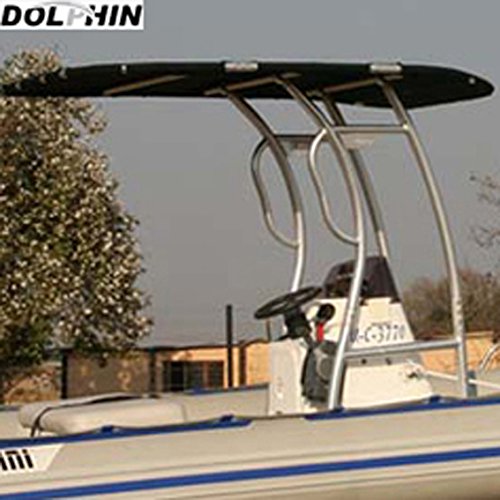
Freeboard is the distance from the waterline to the gunwale. More freeboard means a drier ride and a safer feeling when the wind picks up. Look for a boat with at least 28 inches of freeboard at the bow. Dual consoles or walkaround designs offer better protection from spray than a low-profile bass boat. A hardtop is worth the extra money if you fish early spring or late fall, when the weather turns fast.
Range and fuel capacity go hand in hand. A typical run on Lake Ontario for salmon might be 15 miles out and back. That’s 30 miles minimum. You want a tank that gives you at least 1.5 times that range with a margin for trolling. A 75-gallon tank on a boat that burns 10 gallons an hour at cruise gives you roughly 7.5 hours of running time, which is adequate. Don’t forget to factor in the weight of a kicker motor and extra gear, as that cuts into efficiency.
Our Top Recommendation
If you’re serious about fishing the open water of Lake Michigan or Huron, look for a dual console or walkaround boat in the 22 to 25-foot range with a deep-V hull. Brands like Lund, Ranger, and Grady-White build models that fit this bill, though you won’t find them listed on Amazon. Set a budget that includes a trailer, electronics, and a kicker motor, and be ready to buy used. A well-maintained 5-year-old boat is a better value than a new one that stretches your finances too thin.
For the walleye angler on Erie, a 19 to 21-foot aluminum tiller or dual console with a 150hp outboard is a practical choice. It’s lighter, cheaper to tow, and easier to manage solo. For the salmon crowd on Superior or Ontario, step up to a 24-foot fiberglass walkaround with a hardtop and inboard or large outboard power. That extra length and weight make a difference when you’re 20 miles from shore. The book we reviewed won’t help you catch fish, but it might make you think twice about the drive to get there.
Frequently Asked Questions
What size boat do I need for Lake Erie walleye fishing?
A 19 to 22-foot boat is the minimum for Erie’s shallow, steep chop. Look for a deep-V hull with a high freeboard and a windshield. A dual console design keeps you drier. A 150hp outboard is enough to get you to the reefs and back, but a 200hp gives you a safety margin for bad weather.
Is aluminum or fiberglass better for the Great Lakes?
Aluminum is lighter, cheaper, and easier to maintain. It handles freshwater corrosion well if you flush the motor and rinse the hull. Fiberglass is heavier and rides smoother in rough water, but it can develop blisters and needs more care. For big water like Superior, fiberglass is the safer bet. For inland bays and river mouths, aluminum is fine.
How much should I budget for electronics and rigging?
Plan to spend at least $1,500 to $2,000 on a good fish finder with GPS, plus another $500 for a VHF radio and safety gear. Downriggers will cost $300 to $800 each, and a kicker motor adds $3,000 to $5,000. Factor in these costs before you buy the boat, not after.
What should I check when buying a used Great Lakes boat?
Look for corrosion on wiring and terminals, which is common in freshwater boats that sit in marinas. Tap the transom to check for rot, and inspect the hull for blisters or stress cracks. Ask for engine hours and service records. Do a sea trial in rough water to see how the hull handles, and check the trailer bearings and brakes.