
You’ve booked the trip, tied the flies, and checked the weather. Then it hits you: the airline just sent a notification about baggage fees, and you’re staring at your $400 reel. The thought of that precision drag system bouncing around in the cargo hold with the golf clubs and the unsecured suitcases makes your stomach drop. You’ve heard horror stories about bent spools and sand in the gears.
This guide is about protecting your gear, not just getting it past security. We’ll cover the exact TSA rules for reels, the best packing methods for carry-on, the lithium battery exception that trips up many anglers, and how international rules differ. You’ll also learn what happens at the X-ray machine, how to insure your gear, and get a practical packing checklist. By the end, you’ll know precisely how to get your reel to the water in one piece.

fishpond
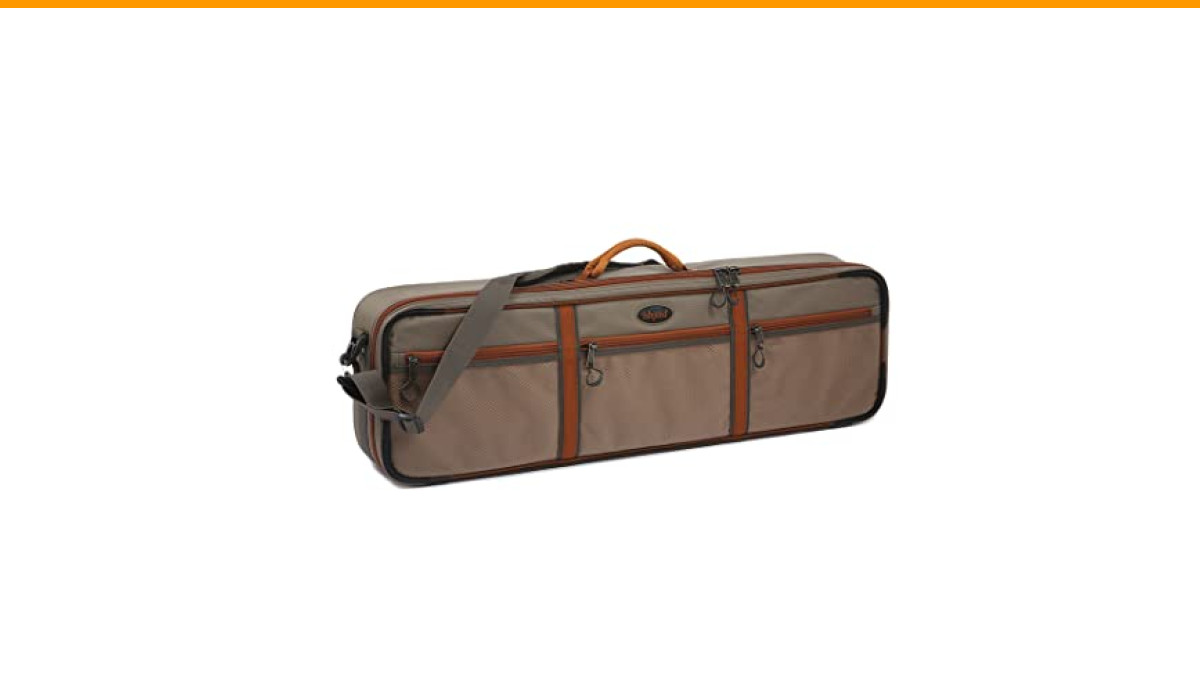
Fishpond Dakota Carry-On Rod & Reel Case, 31", Granite
- Holds up to 4 - 4 piece, 9' fly rods and multiple fly reels - the ultimate fishing rod travel case
- Exterior Dimensions: 31" x 10" x 5" | Interior Dimensions: 30" x 8.5" x 3.5" | Specs: 5.2 lbs | 1,390 cu. in.
- Adjustable, padded, removable interior dividers make the Dakota a great fishing reel case for travel
If you’re traveling with a full rod setup, a dedicated case makes the whole process easier. The Fishpond Dakota Carry-On Rod & Reel Case is a solid option for this. It holds up to four 4-piece, 9-foot fly rods and multiple reels, with adjustable padded dividers. The exterior dimensions (31 x 10 x 5 inches) fit most airline overhead bins, and the padded compartment protects rods in their socks. It also has see-through mesh pockets for your phone, passport, and boarding pass, which speeds up the security line.
The Short Answer: Yes, But Here’s the Catch
Yes, you can carry fishing reels in your hand luggage. The TSA allows them, and they are not on any prohibited list. The catch is that a reel is a dense, complex piece of metal. It looks suspicious on an X-ray screen. A solid block of metal with springs, bearings, and gears can trigger a bag search. This is normal. It doesn’t mean you’ve done anything wrong, but it does mean you need to pack smart so the inspection goes smoothly.
The bigger issue is physical damage. A reel tossed into a checked bag with your boots and rain jacket will get knocked around. The drag system, which relies on precise friction washers, can be jarred. The spool can bend if enough weight lands on it. The anti-reverse bearing can fail. Carrying it on is the safest way to protect the mechanics, and it keeps the reel away from the baggage handlers who treat bags like soccer balls.
TSA Rules for Fishing Reels: Carry-On vs. Checked
The TSA has no specific rule against fishing reels in carry-on bags. They fall under the general category of sporting equipment. Hooks and lures are allowed, but they must be properly sheathed or wrapped to prevent injury to the screening officers. Terminal tackle like split shot and swivels are fine. The main restriction you’ll run into is size: your reel must fit inside your carry-on bag, which typically maxes out around 22 x 14 x 9 inches, though this varies by airline.
Checked baggage is a different story. There’s no rule against reels in checked bags, but there is a real risk of damage. Baggage handlers are not gentle. Bags get thrown, stacked, and compressed. A reel in a soft-sided duffel is vulnerable. If you must check it, wrap the reel in a padded case and place it in the center of your bag, surrounded by clothing. But honestly, if you can avoid checking it, do. You can’t fish if your reel is broken before you land.
Why Carry-On is Safer for Your Reel’s Drag System
The drag system on a modern reel is a marvel of engineering, but it’s also delicate. The washers, whether they’re carbon fiber or cork, are designed to compress evenly. A sharp impact can cause them to seat unevenly, leading to a jerky drag or a seized spool. The spool itself is often made of machined aluminum, which is light but can bend under the right pressure. A bent spool means your line will wind unevenly, and casting distance suffers.
Temperature changes in the cargo hold are another factor. A checked bag sits in a non-pressurized, unheated compartment for hours. Extreme cold can thicken the grease in the bearings, making the reel feel stiff. Rapid temperature swings can also cause condensation inside the reel, which is bad news for internal components. Carry-on keeps the reel at cabin temperature, so it’s ready to fish as soon as you land.
How to Pack a Reel for Carry-On (The “Reel-Only” Method)
Many anglers travel with just a reel, not the rod. This is a smart move if you’re borrowing a rod at your destination or renting one from a guide. A reel alone is small enough to fit in a backpack or a personal item. You don’t need a huge case. You need a method that protects the reel and keeps it accessible for inspection.
Start with a hard case. A Pelican-style micro case or a dedicated reel pouch with rigid sides works best. Soft pouches offer minimal protection. Wrap the reel in a microfiber cloth before placing it in the case. This prevents scratches and cushions it against minor impacts. If you don’t have a hard case, use a small plastic container, like a Tupperware, and pad it with foam or a sock.
Securing the Line and Drag
Before packing, you need to do two things: remove the spool or secure it, and back off the drag. If you leave the spool on, the line can loosen and tangle. Wind the line tight, then use a piece of tape or a rubber band to hold the line against the spool. This prevents it from unraveling during the flight. If your reel has a removable spool, consider taking it out and wrapping it separately in a cloth. This reduces the risk of the spool bending.
Set the drag to its loosest setting. This is counterintuitive for many anglers, but it’s critical. If the drag is tight, any impact on the reel can transfer force directly to the internal gears. A loose drag allows the spool to spin freely, absorbing shock. Turn the drag knob counterclockwise until it clicks or stops. Do the same for the anti-reverse switch if your reel has one. This small step can save your gears.
The Electric Reel and Lithium Battery Exception
Electric reels, common in deep-sea fishing, change the game. These reels have internal lithium-ion batteries. The TSA and FAA have strict rules about lithium batteries in carry-on baggage. The key number is 100 watt-hours (Wh). Batteries under 100 Wh are allowed in carry-on. Batteries between 100 and 160 Wh are allowed, but only with airline approval. Batteries over 160 Wh are banned from both carry-on and checked bags.
You need to know the watt-hour rating of your electric reel. It’s usually printed on the battery or in the manual. If you can’t find it, check the voltage and amp-hours. Multiply them together to get watt-hours. For example, a 12V battery with 8 amp-hours is 96 Wh. That’s under the limit. A 12V battery with 15 amp-hours is 180 Wh, which is too large. Don’t guess. Look it up before you pack.
Watt-Hour Limits and Spare Batteries
Spare batteries have their own rules. Loose lithium-ion batteries are prohibited in checked baggage. They must go in carry-on. The terminals must be protected from short circuits. Tape over the terminals or put each battery in a separate plastic bag. This is a safety measure, not a suggestion. A shorted battery can catch fire.
If your electric reel has a removable battery, take it out and carry it separately. This makes the inspection easier and complies with the rules. If the battery is internal, you’ll need to show the officer the watt-hour rating. Keep the manual or a photo of the spec sheet handy. Some airlines have stricter policies than the TSA. Check with your specific airline before you fly, especially if your battery is near the 100 Wh limit.
International Rules: Beyond the TSA (EU, UK, Australia)
The TSA only governs flights departing from the US. Once you land in another country, you’re subject to their rules. The European Union, the UK, and Australia all have their own regulations for carry-on baggage and lithium batteries. The general rules are similar: reels are allowed, lithium batteries under 100 Wh are allowed, and sharp objects like hooks must be sheathed. But there are differences.
In the EU, the liquid restrictions are stricter. If you have reel oil or grease in your carry-on, it must be in containers of 100 ml or less, and all liquids must fit in a single transparent plastic bag. This catches many anglers off guard. A 250 ml bottle of reel oil will be confiscated. Transfer your oil into small travel bottles before you go. The UK has the same liquid rules as the EU, despite leaving the union. Australia’s biosecurity is notoriously strict. You must declare any fishing gear that has been used in freshwater. They’ll inspect it for mud, seeds, and organic matter. A dirty reel can be confiscated and destroyed.
Customs declarations are another layer. In many countries, you must declare fishing gear on arrival. This is not a big deal, but it can hold you up if you don’t declare it. Be honest. If you’re unsure, declare it. The penalty for not declaring is usually worse than the inconvenience of a quick inspection.
The Real Threat: Baggage Handlers and X-Ray Inspections
Baggage handlers are the biggest threat to your reel. They work in a high-pressure environment where speed matters more than care. Bags are thrown from the conveyor into the cart. Carts are driven over rough tarmac. Bags are stacked with heavy items on top. A hard-sided case is your only defense. A soft bag offers almost no protection against a 50-pound suitcase landing on it.
X-ray inspections are less of a threat to the reel itself, but they can be a hassle. When a dense object like a reel passes through the X-ray, it appears as a solid block. The TSA officer may not be able to see the internal components clearly. They’ll flag the bag for a manual search. This means you’ll be pulled aside, and the officer will open your bag and inspect the reel. They’ll likely swab it for explosive residue. This is routine, but it takes time.
You can request a hand-check. This is where you ask the officer to inspect your reel without putting it through the X-ray. This is common for camera film and medical devices. It’s less common for fishing gear, but you can ask. The officer is not required to grant the request, but they often will if you’re polite and explain that the reel is sensitive to X-rays. Some anglers claim X-rays can damage reel magnets, though there’s no solid evidence for this. Still, if you’re worried, a hand-check is a reasonable request.
To speed up the inspection, pack your reel at the top of your bag. Don’t bury it. If the officer can see it easily, they’ll be in and out. Also, remove the reel from its padded case before you get to security. Put it in a clear plastic bag. This shows the officer exactly what it is and makes the swabbing process faster.
Insurance, Valuation, and Lost Gear Claims
Your reel is an investment. If it’s lost, stolen, or damaged, you need to be compensated. Most standard travel insurance policies have limits on sporting equipment. The limit is often around $500 to $1,000. If your reel is worth more, you need a separate policy or a rider on your homeowner’s insurance. Check your policy before you travel. Don’t assume you’re covered.
Document everything. Take photos of your reel before you fly. Keep the receipt and any appraisals. If you’re traveling with a rare or vintage reel, get a written appraisal from a dealer. This documentation is essential for a claim. Without it, the insurance company will only offer the depreciated value, which is often a fraction of what you paid.
If your reel is lost, file a claim with the airline immediately. The airline’s liability is limited by international treaties. For domestic flights, it’s often around $3,500. For international flights, it’s around $1,800. This is per passenger, not per bag. If your gear is worth more, you can purchase excess valuation from the airline at check-in. This is cheap insurance for expensive gear. It typically costs a small percentage of the declared value.
One practical tip: put an AirTag or similar tracker inside your reel case. This won’t prevent loss, but it gives you a way to locate your bag if it goes astray. It also gives you evidence of where the bag was last scanned, which can be useful in a claim.
Packing Checklist: Your Night-Before Flight Plan
Here’s a simple, repeatable process for packing your reel for carry-on. Do this the night before, not at the airport.
- Back off the drag completely.
- Secure the line with a piece of tape or a rubber band.
- Remove the spool if possible and wrap it in a microfiber cloth.
- Place the reel in a rigid case. Wrap the case in a t-shirt or a sock for extra cushioning.
- Put the reel case at the top of your backpack or carry-on, where it’s easy to access.
- Transfer reel oil and grease into 100 ml travel bottles. Place them in your clear liquids bag.
- Pack hooks and lures in a small tackle box with a secure latch. Make sure hooks are sheathed or in a plastic case.
- Print or save a photo of your reel’s watt-hour rating if it’s electric.
- Take a photo of your reel and note the serial number.
- Pack a spare spool of line in your carry-on, not your checked bag.
This checklist takes about ten minutes. It saves you from a headache at security and a broken reel on the water.
Frequently Asked Questions
Can I bring a fishing reel in my personal item, like a backpack?
Yes. A reel is small enough to fit in a personal item. The TSA doesn’t distinguish between a carry-on and a personal item for this purpose. As long as the reel fits and your personal item meets your airline’s size requirements, you’re fine. Use the packing method above to protect it.
Do I need to take the fishing line off the spool before flying?
No, you don’t need to remove the line. But you should secure it. Loose line can tangle and cause a mess. Use a piece of tape or a rubber band to hold the line against the spool. This keeps it tight and prevents it from unraveling during the flight.
Are fishing hooks allowed in carry-on luggage?
Yes, fishing hooks are allowed in carry-on luggage by the TSA. They must be securely wrapped or sheathed to prevent injury to officers. A small tackle box with a latch is ideal. Loose hooks in a bag will be confiscated.
What happens if my reel triggers an alarm at security?
The officer will pull your bag aside for a manual search. They’ll inspect the reel, likely swab it for explosive residue, and then let you go. This is routine. To speed it up, pack the reel at the top of your bag and be ready to explain what it is. Stay calm and cooperative.
Can I bring reel oil in my carry-on?
Yes, but only in containers of 100 ml or less. All liquids must fit in a single, clear, quart-sized plastic bag. If your reel oil is in a larger bottle, transfer it to a travel-sized container. Checked baggage has no such liquid limit, but a spill in your checked bag is a mess.
The Bottom Line
Carrying your reel in hand luggage is the right call. It protects the mechanics, keeps it at a safe temperature, and avoids the risk of loss in the cargo hold. The rules are straightforward, but the packing details matter.
- Always back off the drag before packing.
- Use a rigid case, not a soft pouch.
- Secure the line to prevent tangles.
- Know your electric reel’s watt-hour rating. Under 100 Wh is fine.
- Keep spare lithium batteries in carry-on with taped terminals.
- Transfer reel oil into 100 ml bottles for international flights.
- Document your reel’s value with photos and receipts before you fly.
Follow these steps, and your reel will arrive ready to fish. The only thing you’ll have to worry about is the size of the fish.
