Your HDS Live unit is only as good as the transducer bolted to your hull. A premium head unit paired with a weak transducer is like putting cheap tires on a sports car — it will get you there, but you’ll miss every opportunity to perform. You’ve probably stared at a fuzzy bottom or watched arches that never turn into fish. The problem is rarely the unit itself. It’s the transducer sending it bad data.
| 1st Pick | 2nd Pick |
|

|
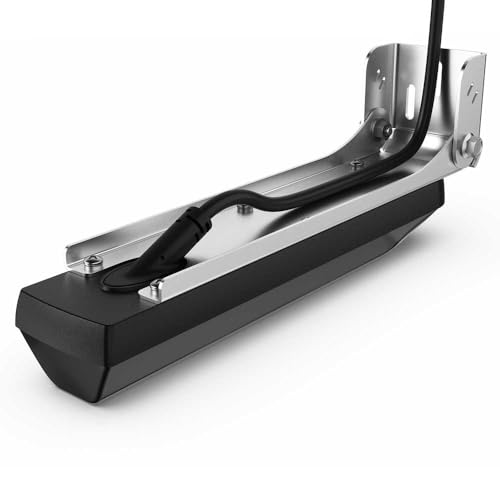
| Lowrance 3-in-1 HD Transducer by Lowrance | Lowrance Lowrance Eagle 5 SplitShot HD Fish Finder with C-MAP Discover OnBoard |
| Buy on Amazon | Buy on Amazon |
Most anglers stick with the stock skimmer transducer that came in the box. That’s fine for basic depth and temperature. But the HDS Live platform has more to give. The right transducer unlocks cleaner CHIRP returns, sharper SideScan, and DownScan images that show structure and fish hiding in the weeds. The difference is obvious the first time you mark a brush pile and see the individual branches.
We tested two transducers that pair well with HDS Live units. The 3-in-1 HD is a solid all-rounder that brings imaging and CHIRP into one housing. The Eagle 5’s SplitShot HD is a newer design with a twist-lock connector and autotuning sonar that takes the guesswork out of setup. Both solve real problems, but they serve different anglers. Here’s how they compare.
Here is a quick look at the key specs that separate these two options.
| Features | 3-in-1 HD Transducer | Eagle 5 SplitShot HD |
|---|---|---|
| Imaging Type | SideScan and DownScan | DownScan only |
| CHIRP Support | 83/200kHz, 455/800kHz, 455/1.2MHz | CHIRP with FishReveal |
| Best Use Case | Structure and fish imaging | Easy fish finding in weeds |
| Connector Type | Smart transducer design | Twist-lock connector |
| Unit Compatibility | HDS Live and similar | Eagle 5 head unit |
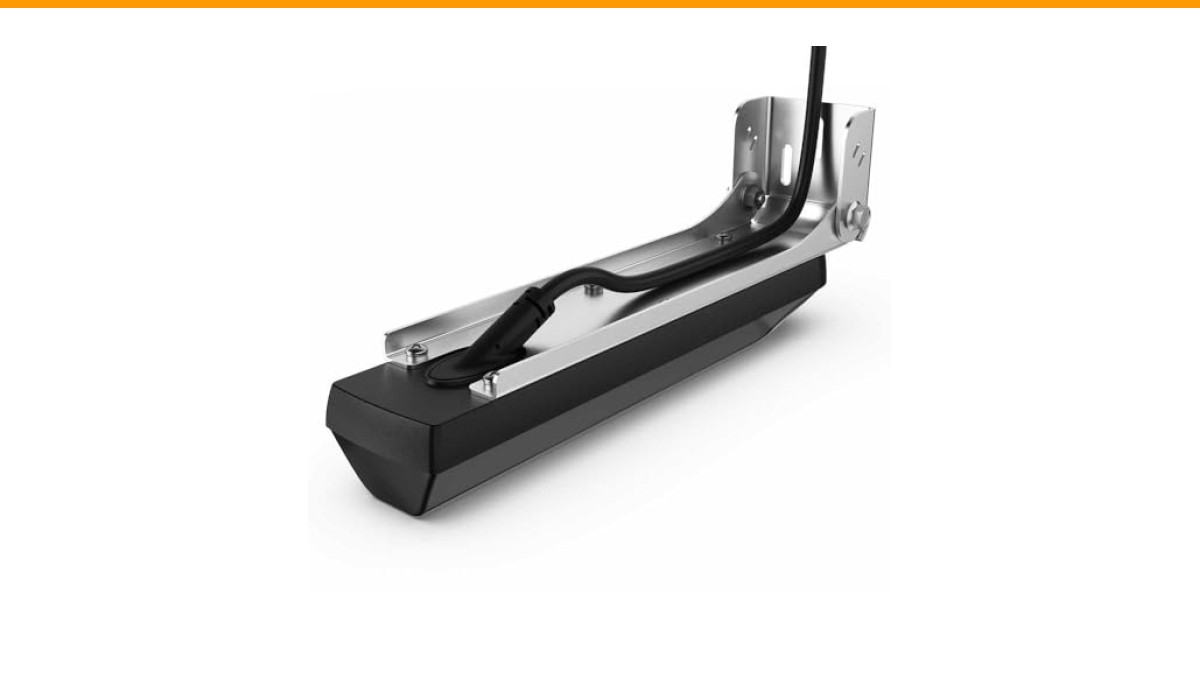
3-in-1 HD Transducer by Lowrance
Lowrance
3-in-1 HD Transducer by Lowrance
- High-definition SideScan and DownScan Imaging: Crystal-clear fish and structure images
- Lowrance CHIRP: Exceptional clarity and target distinction
- FishReveal: Simplifies fish identification
This is the transducer you buy when you want the full suite of sonar data without buying a separate unit. It’s a 3-in-1 design that combines high-definition SideScan, DownScan, and CHIRP into a single housing. That means one transducer on your transom gives you a complete picture of what’s below and beside your boat.
It’s best for anglers who fish a mix of cover and open water. You can run SideScan to find a submerged hump, then switch to DownScan to see the exact brush pile on top of it. The FishReveal feature layers CHIRP returns over DownScan images, so fish show up as clear arches instead of blurry blobs. That makes it easier to tell a bass from a log.
The imaging quality at 455/800kHz and 455/1.2MHz is genuinely sharp. You’ll see individual rocks and the gaps between branches. The CHIRP frequencies at 83/200kHz give you solid target separation in water up to 100 feet deep. In shallower water under 30 feet, the high-frequency imaging really shines.
There are a couple of trade-offs. This transducer is a bit larger than a standard skimmer, so mounting position matters more. If you mount it in turbulent water, you’ll get noise at speed. And while it supports multiple frequencies, you can’t run SideScan and CHIRP simultaneously on a single HDS Live port — you’ll need to switch between modes. It’s not a dealbreaker, but it’s worth knowing before you install it.
- High-definition SideScan and DownScan imaging for clear structure views
- Lowrance CHIRP with multiple frequencies (83/200kHz, 455/800kHz, 455/1.2MHz)
- FishReveal technology simplifies identifying fish from structure
- Smart transducer design enhances signal clarity
- Single housing for a clean transom installation
Best for: The angler who wants SideScan, DownScan, and CHIRP in one package and fishes water depths from 10 to 100 feet.
Lowrance Eagle 5 FishFinder
Lowrance
Lowrance Eagle 5 SplitShot HD Fish Finder with C-MAP Discover OnBoard
- COMPACT, CAPABLE FISH FINDING: The 5-inch IPS display brings CHIRP sonar, DownScan Imaging, and charting to space-conscious boats.
- SEE WHAT IS BELOW: SplitShot HD provides CHIRP fish targets and detailed DownScan views of structure and bottom composition.
- FIND FISH AROUND COVER: FishReveal combines CHIRP and DownScan to help fish stand out from weeds, structure, and the bottom.
The Eagle 5 is a complete fish finder and chartplotter package, but the real story is the newly designed SplitShot HD transducer. It’s a step up from older SplitShot models, with improved clarity, range, and performance. The transducer itself is the reason to consider this bundle if you’re starting fresh or upgrading from a very old unit.
This setup is ideal for kayak anglers and small boat owners. The twist-lock connector system makes installation straightforward — no tools beyond a screwdriver for the mount. The autotuning sonar means you don’t have to fiddle with gain and sensitivity settings. Turn it on, and it adjusts itself to give you a clean picture. That’s a huge help if you’re new to sonar or just want to spend more time fishing and less time tweaking menus.
The SplitShot HD delivers solid DownScan with FishReveal, which layers CHIRP data over the DownScan image. That combination makes it easier to see fish sitting in weeds or tight to cover. The 5-inch IPS screen is bright enough to read in direct sunlight, even with polarized sunglasses on. The pre-loaded C-MAP DISCOVER charts for the US and Canada are a nice bonus — you get high-resolution detail right out of the box.
The limitation here is that you don’t get SideScan. This is a DownScan-only transducer. If you need to cover wide areas to find structure, you’ll want the 3-in-1 instead. Also, this transducer is designed for the Eagle 5 head unit. It uses a different connector than the HDS Live series, so you can’t just swap it onto your existing HDS Live unit without an adapter. It’s a complete system, not just a standalone transducer.
- New twist-lock connector for easy, reliable installation
- SplitShot HD with improved clarity, range, and performance
- FishReveal on DownScan and CHIRP for easier fish identification
- Autotuning sonar simplifies setup
- Pre-loaded C-MAP DISCOVER charts for US and Canada
Best for: Kayak and small boat anglers who want a simple, plug-and-play sonar with clear DownScan and accurate charts, without needing SideScan.
How We Chose These Products
We started with the HDS Live platform and worked backward. The goal was to find transducers that solve specific problems: poor target separation, weak imaging in shallow water, and complicated installation. We looked at what frequencies each unit supports, how they handle CHIRP, and whether the connector type matches common Lowrance head units.
We also considered the real-world trade-offs. A transducer that requires a thru-hull mount isn’t practical for a kayak angler. A budget option that lacks SideScan might be perfect for someone fishing small lakes. We weighed the cost per feature against the actual fishing scenarios each product handles best. The 3-in-1 HD wins for versatility. The Eagle 5 SplitShot HD wins for simplicity and ease of use.
Buying Guide: What Really Matters
Before you buy any transducer, think about the water you fish most. If you’re on shallow rivers or reservoirs under 30 feet, high-frequency imaging like 455/800kHz or 455/1.2MHz gives you the best picture. For deeper water over 100 feet, you need a transducer that handles 83kHz or lower CHIRP frequencies for better depth penetration. Don’t buy a transducer that excels at one depth range if you fish the other.
Mounting position is the second biggest factor. A transom mount transducer needs to sit in clean water flow. If it’s mounted too high, it will cavitate at speed and lose bottom. If it’s too low, it can hit debris or create drag. For kayaks, a transducer that mounts inside the hull or on the trolling motor is often easier. The twist-lock connector on the Eagle 5 is a genuine improvement here — it’s more secure than the old friction-fit designs.
Finally, check your head unit’s port compatibility. The HDS Live series uses specific connectors for different transducer types. A 3-in-1 transducer plugs into the SonarHub port, but you might need a Y-cable to run it alongside another transducer. The Eagle 5’s SplitShot HD is designed for the Eagle series, so verify it matches your unit before you buy. Getting this wrong means buying adapters or sending the unit back.
Our Top Recommendation
The 3-in-1 HD Transducer is the clear winner for most HDS Live owners. It gives you SideScan, DownScan, and CHIRP in one unit, which covers the widest range of fishing scenarios. You can find structure with SideScan, confirm it with DownScan, and identify fish with FishReveal. It’s the most versatile single-transducer upgrade you can make.
If you’re on a budget or you fish from a kayak, the Eagle 5 with SplitShot HD is a strong runner-up. It’s simpler, easier to install, and the autotuning sonar takes the hassle out of setup. You just lose SideScan and the ability to connect it to an HDS Live unit directly. For a small boat angler who wants a complete, ready-to-go package, it’s the smarter buy.
Frequently Asked Questions
Will the 3-in-1 HD transducer work with my HDS Live 7?
Yes, the 3-in-1 HD is compatible with HDS Live units. It connects to the SonarHub port on the back of the unit. You may need to update your unit’s software to the latest version to unlock all the CHIRP frequencies and imaging modes. Check Lowrance’s website for the specific software version for your model.
Can I use the Eagle 5’s SplitShot HD transducer on my HDS Live 9?
No, the SplitShot HD transducer from the Eagle 5 uses a different connector and is designed for the Eagle series head units. It won’t plug directly into an HDS Live port. If you want a similar transducer for HDS Live, look for a 3-in-1 or TotalScan model that uses the compatible connector.
What’s the difference between CHIRP and regular sonar on these transducers?
CHIRP sends a sweep of frequencies ranging from low to high, rather than a single frequency pulse. This gives you better target separation and clearer returns. The 3-in-1 HD supports CHIRP at 83/200kHz, which is great for seeing fish close to the bottom. The Eagle 5’s SplitShot HD also uses CHIRP, but it’s paired with DownScan for imaging.
How do I avoid noise on the SideScan image at higher speeds?
Noise usually comes from a poorly mounted transducer. Make sure the transducer sits slightly below the hull line and in a spot where water flows smoothly. If you still see streaks or blur, check that the transducer is level with the water surface. Adjusting the tilt by a degree or two often clears up the image.