The first time a 40-pound yellowtail ripped line off a star drag reel, I understood why conventional gear dominates offshore fishing. Spinning reels have their place, but when you need raw cranking power and precise drag control, nothing else compares. The problem is that the conventional reel market is crowded with options that look identical but perform completely differently.
Most anglers make a mistake when they shop for a conventional reel. They focus on the maximum drag number or the gear ratio, ignoring how the reel will actually be used. Trolling, casting bait, and vertical jigging demand different reel characteristics. A reel that shines for chunking bait from a drifting boat will feel clumsy when you are trying to cast a live bait into the surf.
This guide cuts through the noise. We evaluate reels based on the job they need to do, not just the specs on the box. We look at frame strength, drag systems, and real-world durability in saltwater. After testing and comparing, we have one standout pick that handles most saltwater situations with confidence, plus a clear breakdown of what to look for so you can make an informed choice.
Here is a quick look at how our top pick compares to what you should expect from a quality saltwater conventional reel.
| Features | Dr.Fish Saltiger |
|---|---|
| Build Material | Full aluminum body |
| Bearings | 13+1 sealed stainless steel |
| Max Drag | 45 lbs (10000 model) |
| Gear Ratio | 4.4:1 high speed |
| Best Use | Surf casting, offshore trolling |

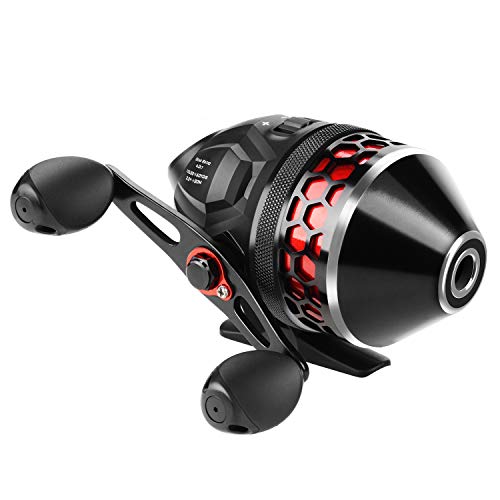
Dr.Fish Saltiger Reel

Dr.Fish
Dr.Fish Saltwater Spinning Reels, Full Metal Surf Fishing Reel, 13 +1 BB, 45 LB Max Drag Ocean Sea Fishing Reel, Heavy Duty Long Cast Offshore Trolling Reel Beach Casting
- Upgraded from Our Best: The valuable experience in saltwater fishing and the voices of our customers gave us a direction on how to…
- Sealed Bearing System: 13+1 upgraded sealed stainless steel ball bearings offer smooth action in both casting and retrieving, givi…
- 15% Higher Line Capacity: Upgraded aluminum spool can reduce the friction between the fishing line and spool when casting or retri…
The Dr.Fish Saltiger is a full-metal conventional reel built for anglers who need serious stopping power without spending a fortune. It is a direct upgrade from their popular Long Shot series, with better saltwater resistance and a beefed-up drag system. This reel suits surf casters chasing striped bass, fluke, or bluefish, as well as boat anglers targeting medium-sized tuna, amberjack, or grouper up to 50 pounds.
The standout feature is the 45-pound max drag on the 10000 model. That kind of stopping power comes from carbon fiber drag washers and an oversized stainless steel main shaft. The 4.4:1 gear ratio is not the fastest on the market, but it provides excellent torque for winching fish away from structure. The full aluminum body keeps everything rigid under heavy loads, so the gears stay aligned when a big fish makes a sudden run. The sealed bearing system is the real selling point here. Saltwater destroys cheap bearings, but the 13+1 sealed stainless steel bearings hold up trip after trip, keeping the retrieve smooth even after repeated salt exposure.
There are trade-offs at this price point. The reel is heavy, which is fine for a rod holder or surf casting, but it will tire your arm out after a long day of jigging. The 4.4:1 ratio also means slower line retrieval compared to high-speed reels, so it is not ideal for techniques that require fast lure presentations like speed jigging or butterfly jigging. The line capacity is generous, but the spool is not designed for extreme long-distance casting with light lures. It prefers heavier line classes.
- Drag System: Carbon fiber washers deliver up to 45 lbs of smooth, consistent pressure
- Frame: One-piece CNC aluminum body resists flex and corrosion
- Bearings: 13+1 sealed stainless steel ball bearings for long-term smoothness
- Spool: CNC aluminum spool reduces line friction and improves casting distance
- Handle: Oversized CNC aluminum handle provides extra cranking leverage
Best for: The angler who needs a durable, high-drag conventional reel for surf casting or offshore trolling without paying premium brand prices.
Why Conventional Reels Dominate Saltwater
Conventional reels have been the backbone of big game fishing for decades. The design places the spool perpendicular to the rod, which allows for a larger, heavier line capacity and a stronger drag system than most spinning reels. When a 100-pound tuna runs, you need a drag that can apply consistent pressure without overheating. Lever drag and star drag conventional reels handle this job better than any spinning reel.
The geometry of a conventional reel also provides better cranking power. The handle is positioned closer to the rod, giving you more leverage to turn the handle against a heavy drag setting. This is critical when you are trying to lift a fish from deep water or turn its head before it reaches a wreck. Spinning reels have a narrower spool and a different angle, which makes high-pressure cranking less efficient.
Another advantage is line management. Conventional reels with level wind systems lay line evenly across the spool, which prevents line dig and reduces friction during long runs. For trolling, this means less wear on the line and fewer tangles. For casting, a properly tuned conventional reel can launch a bait a surprising distance, though it takes practice to avoid backlash.
Star Drag vs. Lever Drag: Which is Right for You?
This is the first decision you will face. Star drag reels use a star-shaped wheel located next to the handle to adjust drag pressure. They are simpler, generally less expensive, and easier to maintain. The drag range is adjustable, but making precise changes during a fight is tricky because you have to take your hand off the handle to turn the star.
Lever drag reels have a lever on the side plate that moves through a preset range, from freespool to strike to full. The advantage is that you can adjust drag pressure while fighting a fish without changing your grip. You can also set the strike drag to a specific percentage of the line’s breaking strength, which is a huge benefit when targeting line-shy fish. Lever drags are typically found on premium reels from brands like Penn, Shimano, and Avet, and they cost more.
For most inshore and nearshore applications, a star drag reel is perfectly adequate and offers better value. If you are planning to target big tuna, marlin, or giant trevally, the precise control of a lever drag is worth the extra money. The Dr.Fish Saltiger uses a star drag system, which keeps the price down while still offering a strong, reliable drag.
Key Specs Decoded: Gear Ratio, IPR, and Drag Max
Gear ratio is the number of times the spool rotates per turn of the handle. A 4.4:1 ratio means the spool turns 4.4 times for every handle rotation. This is considered a low to medium ratio, which is good for heavy lures and deep cranking. High-speed reels (6:1 and above) are better for lures that need a fast retrieve, like surface poppers or swimbaits.
Inches Per Retrieve (IPR) is more important than the raw gear ratio. IPR tells you how many inches of line come in per handle turn. A reel with a large spool diameter can have a higher IPR than a small-spool reel even with the same gear ratio. For trolling, you want a high IPR to get the lure up to speed quickly. For vertical jigging, a moderate IPR gives you better control over the jig’s action.
Maximum drag is the most quoted spec, but it is also the most misleading. A reel can have a 45-pound max drag, but if the drag is not smooth, you will break your line before you reach that number. Look for reels with carbon fiber or HT-100 drag washers, which provide a smooth, consistent pressure curve. Also, consider the frame strength. A full metal frame will handle high drag settings without flexing, whereas a graphite frame will bend and cause gear misalignment.
The Best Conventional Reels for Trolling & Big Game
Trolling reels need to handle sustained pressure for hours. The drag must be smooth, the frame must be rigid, and the line capacity must match the line class you are using. For 30-pound test line, you want a reel that holds at least 300 yards. For 80-pound line, you need a larger spool. Brands like Penn and Shimano dominate this category with models like the International and Tiagra, but these come with a premium price tag.
Premium Heavyweights
Reels like the Penn International and Shimano Tiagra are the gold standard for big game. They feature two-speed gears, lever drag systems, and frames machined from marine-grade bronze or aluminum. These reels cost thousands of dollars and are designed for fish over 100 pounds. Unless you are fishing for blue marlin or giant bluefin, you do not need this level of hardware.
Mid-Range Workhorses
The Shimano Talica and Penn Fathom offer a good balance of performance and price. They use carbon fiber drags and sturdy aluminum frames, and they are reliable for tuna up to 100 pounds. For a budget-friendly alternative, the Dr.Fish Saltiger offers a similar drag capacity and full metal construction at a fraction of the cost, making it a strong contender for nearshore wrecks and reefs.
The Best Conventional Reels for Casting & Jigging
Casting reels need to be lightweight and have a spool that starts easily to avoid backlash. The thumb bar placement is critical for comfortable casting. Reels like the Avet MXJ and Daiwa Saltiga are popular for this role. They feature magnetic or centrifugal brakes to control spool speed during the cast.
For jigging, you need a reel with a high gear ratio (at least 6:1) to keep up with the fast fall and retrieve of a jig. The Dr.Fish Saltiger’s 4.4:1 ratio is not ideal for this. You would be better served by a dedicated jigging reel. However, for casting live bait or chunks, the lower ratio provides the torque needed to fight a fish once it is hooked.
The Best Budget Conventional Reels for Inshore
Not everyone needs a $500 reel. For inshore species like redfish, snook, and striped bass, a simpler star drag reel is sufficient. The key is to avoid the cheapest options on the market. A $30 reel with unsealed bearings will seize up after a few saltwater trips.
Entry-Level Options
Reels like the Penn Squall and Okuma Magda are good entry points. They offer sealed drags and corrosion-resistant bodies. The Dr.Fish Saltiger sits in this category as well, but with a higher drag rating and a full aluminum body, it bridges the gap between budget and mid-range performance. It is a smart pick for anglers who want one reel that can handle both surf casting and light offshore trolling.
How to Match Line Capacity to Your Target Species
Line capacity is about more than just how much line you can fit on the spool. It is about having enough backing to survive a long run. A tuna can take 300 yards of line in a single run. If your spool only holds 200 yards of 30-pound test, you will be spooled. Always match your line capacity to the line class you intend to fish.
Here is a simple rule of thumb. For 20-30 lb line, look for a reel that holds at least 250 yards. For 40-50 lb line, aim for 400 yards. For 80 lb and above, you need at least 600 yards. The Dr.Fish Saltiger’s upgraded spool offers 15% higher line capacity than its predecessor, which means you can fit heavier line for bigger fights without sacrificing backing.
Also, consider the line type. Braided line is thinner than monofilament, so you can fit more of it on the same spool. If you are using braid, you can get away with a smaller reel. If you are using mono, you need a larger spool to hold the same length.
Saltwater Maintenance: A Realistic Care Schedule
Saltwater is brutal on fishing reels. The salt crystals get into the bearings and corrode the internal gears. A proper maintenance schedule is not optional. It is the difference between a reel that lasts ten years and one that dies in a single season.
After every trip, rinse your reel with fresh water. Use a gentle spray from a hose, but do not aim directly at the drag or bearings. Dry the reel with a soft cloth. Once a month, remove the spool and wipe down the inside of the frame. Apply a light coat of reel oil to the bearings and a small amount of grease to the gears.
Once a year, do a full teardown. Disassemble the reel, clean all parts with a solvent, and re-grease everything. If you fish in the surf where sand is present, you may need to do this more often. The sealed bearings on the Dr.Fish Saltiger reduce the frequency of this maintenance, but they do not eliminate the need for regular care.
Final Verdict: The Best Reel for Every Angler Type
After comparing specs and considering real-world use, the Dr.Fish Saltiger is our top recommendation for most anglers. It offers a rare combination of a full aluminum frame, sealed bearings, and a 45-pound drag at a price that is accessible. It is not perfect for every technique, but it excels at the two most common saltwater jobs: casting from the surf and trolling near the shore.
For the dedicated big game angler chasing 200-pound tuna, a lever drag reel like the Penn International is worth the investment. For the inshore angler targeting smaller species, a lighter star drag reel might be more comfortable. But if you want one reel that can handle a variety of saltwater situations without breaking the bank, the Dr.Fish Saltiger is the clear winner.
Frequently Asked Questions
What is the difference between a conventional reel and a spinning reel? A conventional reel has a rotating spool that is perpendicular to the rod, which allows for higher line capacity and stronger drags. Spinning reels have a fixed spool and a bail that wraps the line, which is easier to cast but less powerful for big game.
How much drag do I really need? A good rule is to set your drag at about 20-25% of your line’s breaking strength. If you are using 30 lb line, you need about 6-7 lbs of drag at strike. A reel with a 45 lb max drag gives you plenty of headroom for those situations where a fish makes a sudden surge.
Can I use a conventional reel for surf casting? Yes, but it takes practice. Conventional reels are prone to backlash if you do not control the spool speed with your thumb. Once you master the cast, conventional reels offer longer distances and better line management than spinning reels in the surf.
How often should I service my reel? Rinse it after every saltwater trip. Do a light oiling once a month. Do a full teardown and re-grease at least once a year, or more often if you fish heavily or in sandy conditions. Sealed bearings help, but they are not a substitute for regular maintenance.