Why Carbon Spearguns Are Worth the Upgrade
You’re hovering at 15 meters, a big amberjack is circling just outside your range. Your arms are shaking from the weight of a fiberglass gun, and you know that if you miss this shot, the fish is gone. That’s the moment you wish you’d listened to everyone who told you to switch to carbon.
Carbon spearguns are lighter, stiffer, and more responsive than their fiberglass or wood counterparts. They track faster, reduce fatigue on long dives, and transmit every bit of your aim without flex. This article breaks down the top 5 carbon spearguns that will change your underwater experience, covering key specs, real-world trade-offs, and a comparison table to help you decide. You’ll walk away knowing exactly what to look for and which gun fits your style.

Pathos
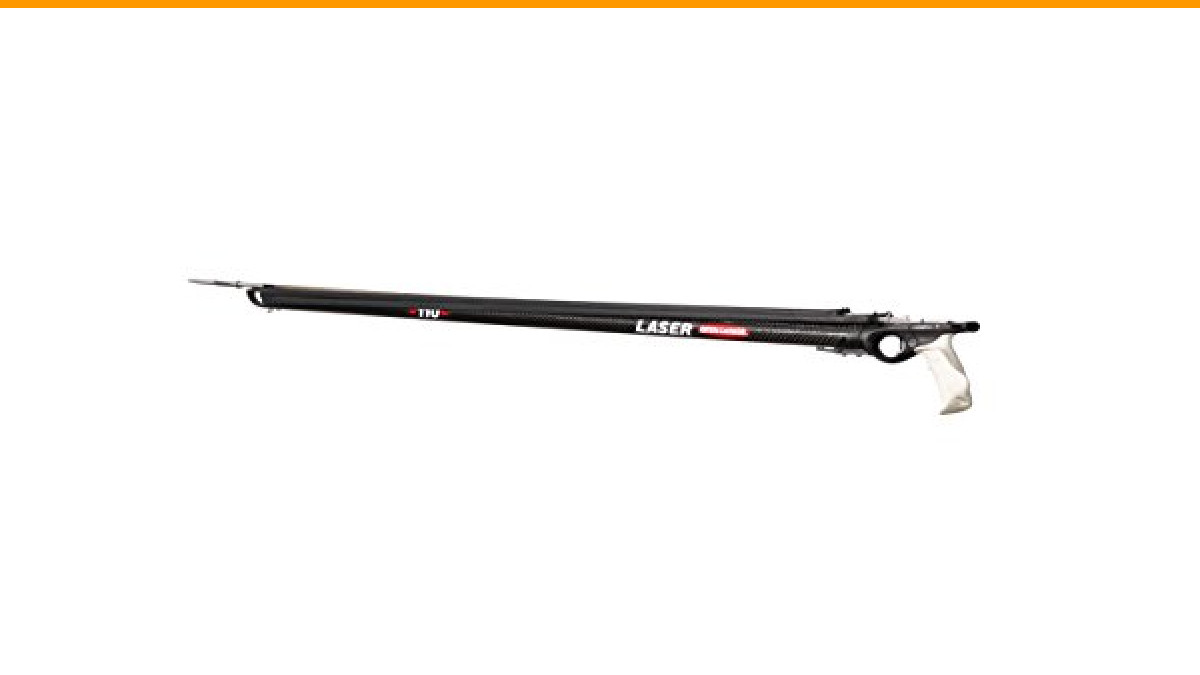
Pathos Laser Open Carbon Speargun, 82 cm
- Low profile D'Angelo II handle
- 100% Carbon barrel
- Open muzzle
Getting Your Hands on the Right Gun
One model that keeps coming up in conversations with experienced divers is the Pathos Laser Open Carbon Speargun, 82 cm. It’s a compact, low-profile gun with a 100% carbon barrel and an open muzzle. The package weighs just 1.642 kilograms, which makes it a joy to carry on long swims. If you’re hunting in caves, around reefs, or in moderate visibility, this size gives you quick maneuverability without sacrificing power.
What Makes a Carbon Speargun Different
Carbon fiber isn’t just a marketing buzzword. The material’s high stiffness-to-weight ratio means the barrel bends less when you load it. Less flex equals more accurate shots, especially at longer distances. A stiff barrel also absorbs recoil better, so your follow-up shots stay on target.
Weight matters more than most beginners think. A typical fiberglass gun in the 110 cm range weighs around 2.5 kilograms. A comparable carbon gun often weighs less than 1.8 kilograms. That difference doesn’t sound huge until you’re swimming against a current for an hour. Your shoulders feel it. Your dive time improves because you use less energy just holding the gun.
Carbon guns also tend to have a slimmer profile. That reduces drag when you swing the gun sideways to track a moving fish. The trade-off is that carbon is more brittle than fiberglass. A hard knock against a rock can crack the barrel. You’ll need to treat it with care, especially when traveling or storing gear.
Key Features to Compare Before Buying
Not all carbon spearguns are built the same. Here are the specs that actually matter when you’re comparing models.
Barrel Length and Band Power
Longer barrels give you more range and accuracy but are harder to swing in tight spaces. A 90 cm gun is a good all-rounder for most reef and pelagic hunting. A 110 cm or 120 cm gun suits open water and bigger fish. The number of bands and their thickness determine the power. Two 14 mm bands are common for medium guns. Some models use 16 mm bands for extra punch.
Handle and Trigger Mechanism
The handle shape affects how naturally the gun points. A low-profile handle, like the D’Angelo II on the Pathos Laser, lets you wrap your hand around it comfortably and keeps your wrist in a neutral position. The trigger mechanism should be crisp and reliable. Look for stainless steel or titanium parts that won’t corrode after repeated saltwater exposure.
Muzzle Type
Open muzzles are simpler and easier to load. They also allow the spear to exit with less friction, which increases speed. Closed muzzles protect the spear tip but can add slight drag. For most spearfishers, an open muzzle is the practical choice.
Spear Shaft and Line Attachment
The spear shaft diameter affects penetration and flight. A 7 mm shaft is standard for medium game. A 7.5 mm or 8 mm shaft is heavier and better for large fish but slows down the shot. The line attachment point should be low-profile to avoid snagging on kelp or reef.
Top 5 Carbon Spearguns Compared
Here are five models that consistently perform well in the water. I’ve included a mix of sizes and price points so you can find something that fits your hunting style.
| Model | Barrel Length | Weight | Muzzle Type | Best For |
|---|---|---|---|---|
| Pathos Laser Open Carbon | 82 cm | 1.64 kg | Open | Reef hunting, caves, quick shots |
| Omer XXV Carbon | 90 cm | 1.80 kg | Open | All-round medium game |
| Cressi Comanche Carbon | 100 cm | 2.10 kg | Open | Longer range, pelagic fish |
| Mares Carbon Ghost | 110 cm | 2.30 kg | Closed | Big game, open water |
| Rob Allen Carbon 1300 | 130 cm | 2.80 kg | Open | Large pelagics, long shots |
That table gives you a quick snapshot, but the real difference shows up in the water. Let’s break down each one.
Pathos Laser Open Carbon (82 cm)
This is the gun I’d pick for hunting in tight spots. The short barrel makes it incredibly easy to swing, and the low-profile handle keeps your wrist straight. It’s light enough to hold on target for extended periods without shaking. The open muzzle loads easily and the trigger is smooth out of the box.
The only downside is the limited range. You’ll need to get close, which means more freediving skill and patience. But for reef hunting, it’s a joy to use.
Omer XXV Carbon (90 cm)
The Omer XXV is a classic. It has a slightly longer barrel than the Pathos, so you get a bit more reach. The handle is ergonomic and the trigger mechanism is robust. Many divers consider this the gold standard for a first carbon gun.
It’s not the lightest in its class, but the balance is excellent. You’ll forget you’re holding it after a few dives.
Cressi Comanche Carbon (100 cm)
This gun hits a sweet spot between power and maneuverability. The 100 cm barrel gives you enough range for most situations, and the carbon barrel keeps the weight down. The open muzzle is simple and reliable.
One thing I noticed is that the handle is slightly larger, which might not suit smaller hands. Try it before you buy if you can.
Mares Carbon Ghost (110 cm)
The Mares Carbon Ghost is a serious tool for serious divers. The 110 cm barrel delivers real power, and the closed muzzle protects the spear tip during transport. The trigger is crisp, and the carbon layup feels premium.
It’s heavier than the others, so you’ll feel it on long swims. But if you’re targeting dogtooth tuna or large groupers, the extra mass helps stabilize the shot.
Rob Allen Carbon 1300 (130 cm)
This is the long-range sniper of the group. The 130 cm barrel is for open water and big fish. You’ll need to be a confident freediver to handle this length, especially in current. The power is immense, and the accuracy at distance is unmatched.
It’s not a beginner gun. The size makes it unwieldy in caves or reefs, and the recoil is significant. But for bluewater hunting, nothing else compares.
How to Choose the Right Carbon Speargun for You
Start with where you hunt most. If you’re mostly in reefs, kelp forests, or caves, a shorter barrel (75-90 cm) is your friend. If you’re chasing pelagics in open water, go longer (100-130 cm).
Next, consider your physical strength. A heavier gun is harder to hold steady, especially when you’re low on air. Pick the lightest gun that still gives you the range you need.
Finally, think about the trigger mechanism. A smooth, reliable trigger is worth paying extra for. You don’t want a gun that jams when a big fish is in front of you.
Common Mistakes to Avoid
Here are three traps I see new carbon gun owners fall into.
- Buying too long of a gun. A 120 cm gun looks cool, but if you’re hunting in 5-meter visibility, you’ll never use its range. You’ll just struggle to swing it.
- Ignoring the shaft size. A thin shaft might be fast, but it can bend on a big fish. Match your shaft diameter to the game you’re after.
- Forgetting to rinse the gun after every dive. Carbon doesn’t rust, but the metal parts do. A quick freshwater rinse and a spray of silicone lube will keep your trigger mechanism working for years.
Frequently Asked Questions
Are carbon spearguns worth the extra cost?
Yes, if you spearfish regularly. The weight savings and accuracy improvements are noticeable immediately. You’ll dive longer and shoot more accurately. If you only go out a few times a year, a fiberglass gun might be enough.
How long does a carbon barrel last?
With proper care, a carbon barrel can last 10 years or more. The key is avoiding impacts. Always use a gun case when traveling, and never throw your gun onto a rocky shore.
Can I use a carbon speargun for shore diving?
Yes, but choose a shorter model. A 90 cm or less is easier to manage in the surf and around rocks. Longer guns are better for boat diving in open water.
What’s the difference between open and closed muzzle?
An open muzzle lets the spear exit without friction, so it’s faster and easier to load. A closed muzzle protects the spear tip and can be safer when handling the gun on land. For most spearfishing, open is preferred.
How do I maintain a carbon speargun?
Rinse it with fresh water after every use. Dry it completely. Lubricate the trigger mechanism and the line release with a silicone spray. Store it in a cool, dry place out of direct sunlight.
What to Do Next
Now that you know what to look for, it’s time to get your hands on a carbon gun. Here are the takeaways to remember:
- Match the barrel length to your hunting environment, not to what looks impressive.
- Prioritize a low-profile handle and a crisp trigger – they matter more than brand name.
- Open muzzles are simpler and faster; closed muzzles offer more protection – choose based on your comfort.
- Check the weight and balance before buying; a heavy gun will tire you out.
- Set a budget, but be willing to spend a little more for a gun that fits you well.
- Always rinse and dry your gun after every dive to protect the metal components.
- Start with a shorter gun if you’re new to carbon – you can always size up later.
For a deeper look at different carbon speargun options, check out collections from Spear America or Nautilus Spearfishing. They have a range of models and can help you compare specs side by side.
Your next dive could be the one where everything clicks. A carbon gun is a big part of that. Choose wisely, take care of it, and it’ll serve you for years.
