You’ve set your traps, marked the buoys, and waited the required soak time. Then you pull the line, and the cage comes up empty. Or worse, it’s full of crabs too small to keep. Every crabber knows the frustration. You’re working blind down there, guessing whether the bottom is rocky, sandy, or covered in kelp. You don’t know if the bait is still intact or if the current has rolled your trap onto its side.
An underwater camera solves that mystery. It lets you see the exact spot where your trap sits before you commit to dropping it. You can check bait condition, observe crab traffic, and confirm the trap landed upright. But not every fishing camera is built for this job. Crabbing demands a few specific things: a long enough cable to reach deep water, a screen you can actually see in daylight, and a battery that survives a full day on the water.
We narrowed the field down to one clear winner for crab trap use. The Anminto Underwater Fishing Camera combines a bright 5-inch IPS monitor, a 65-foot cable, and an 8000mAh battery that runs for 10 to 14 hours. It’s not the cheapest option, but it’s the one that works when you need it most. Let’s look at why it earned the top spot.
Here’s how the key specs stack up against what crabbers actually need:
| Features | Anminto S26 |
|---|---|
| Screen Size | 5-inch IPS |
| Resolution | 1000TVL (1080P) |
| Cable Length | 65 feet |
| Battery Life | 10-14 hours |
| Night Vision | 12 IR lights |
| Waterproof Rating | IP68 |
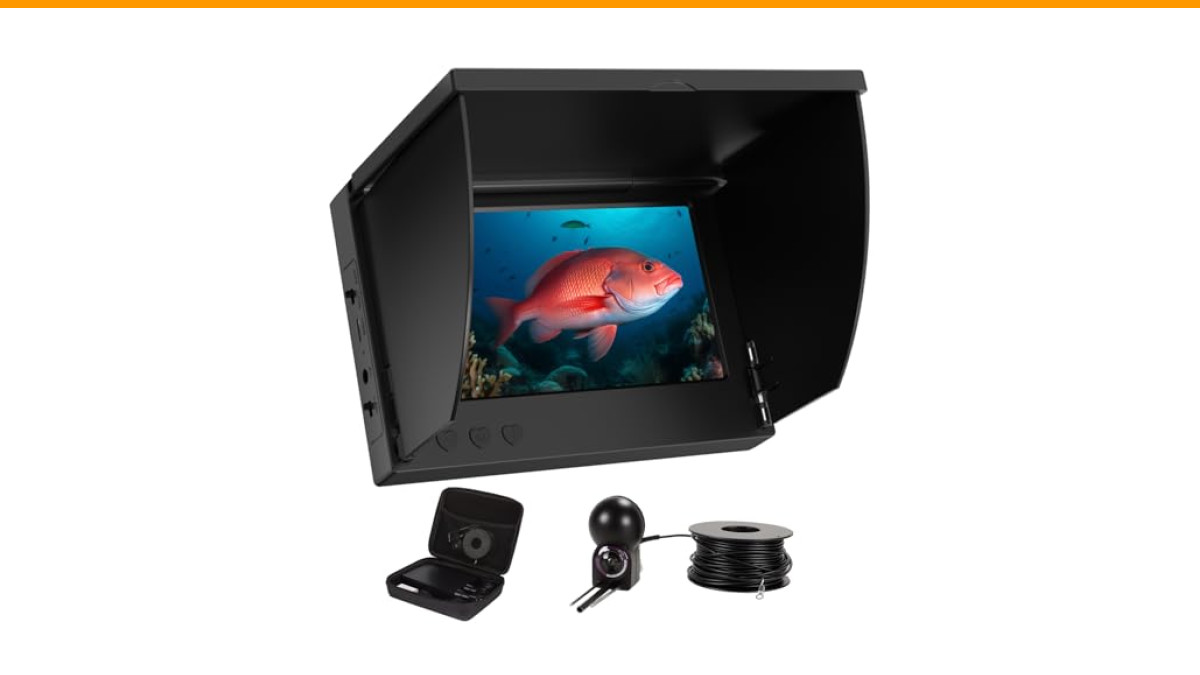
Anminto S26 Review

Anminto
Underwater Fishing Camera 5 Inch, 1000TVL IPS Monitor Fish Finder, Wide Angle IP68 Waterproof, Infrared Night Vision with 65ft Cable for Ice, River and Boat-S26
- CRYSTAL-CLEAR UNDERWATER VIEW: This underwater fishing camera features a 5-inch IPS screen with 1000TVL (1080P) resolution for inc…
- NIGHT VISION & WATERPROOF DESIGN: Equipped with 12 infrared lights, this ice fishing camera has a one-click night mode for crystal…
- EXTENDED BATTERY LIFE: Powered by an 8000mAh battery, this under water camera lasts 10-14 hours on a single charge. Whether you're…
The Anminto S26 is a wired underwater camera system designed for serious anglers and crabbers who need real-time feedback. It’s not a toy or a castable gadget. This is a professional tool for people who want to know what’s happening on the bottom before they commit to a spot. If you run multiple traps or fish deep structure, this camera pays for itself in saved time and lost gear.
The 5-inch IPS screen is the standout feature. Many budget cameras ship with small 3.5-inch displays that are hard to read in direct sunlight. The Anminto’s larger screen with 1000TVL resolution gives you a clear, detailed picture of the seafloor. You can actually see the difference between a sandy bottom and a rocky reef. The 178-degree wide-angle lens captures a broad view, so you’re not just staring at a tiny tunnel of water. For crabbers, this means you can spot the ideal drop zone—flat, stable ground where a trap won’t tip over.
Battery life is where this camera separates from the pack. The 8000mAh internal battery delivers 10 to 14 hours of continuous use. That’s a full day of crabbing without worrying about a dead screen. You can leave the camera on while you check multiple trap locations or turn it on intermittently to conserve power. The IP68 waterproof rating handles the pressure at depth, and the cable is rated to withstand up to 100kg of pull, which gives you confidence when snagging on a rock or pulling the camera back up.
But here’s the honest trade-off. The 65-foot cable is generous, but it’s still a wired system. You can’t cast this camera out to a distant trap without a boat. You’ll need to be close to the drop zone to get an accurate view. The cable also takes time to manage—coiling and uncoiling it adds a few minutes to your routine. And while the infrared night vision is excellent for murky water, it does drain the battery faster, so plan accordingly if you’re fishing after dark.
- 5-inch IPS monitor with 1000TVL (1080P) resolution for a sharp, clear picture in daylight
- 178-degree wide-angle lens gives you a full view of the bottom terrain
- 12 infrared lights with one-click night mode for low-light and murky conditions
- 8000mAh battery provides 10-14 hours of run time on a single charge
- IP68 waterproof housing rated to 9000Pa pressure for deep-water use
Best for: The crabber who runs multiple traps and needs reliable, all-day visibility to identify productive bottom structure before dropping gear.
How We Chose This Camera
We focused on the specific demands of crabbing, not general fishing. That means we prioritized battery life for long soak times, screen visibility in bright sunlight, and cable length for reaching deeper water. A camera that dies after four hours or shows a washed-out image on a sunny day is useless for a full day of trap checking.
We also weighed durability. Crab traps are heavy, and the environment is harsh. Saltwater corrodes cheap electronics, and a snagged line can snap a flimsy cable. The Anminto’s IP68 rating and 100kg cable strength are meaningful specifications that address these real-world risks. We didn’t just look at resolution numbers; we considered how the camera performs under the pressure of a working day on the water.
Key Features to Prioritize for Crab Trap Fishing
Screen size matters more than you think. A 5-inch display is the minimum for comfortable viewing. Anything smaller forces you to squint, especially when you’re trying to distinguish a crab from a rock on a grainy image. Look for at least 1000TVL resolution to get a crisp picture.
Cable length is a critical decision. Measure the typical depth of your crabbing spots. You need a cable that reaches the bottom with slack to spare. The 65-foot cable on this model handles most nearshore and bay crabbing scenarios. If you fish deeper than 60 feet regularly, you’ll need to look for a system with a longer tether.
Battery life is non-negotiable for long soaks. A camera that lasts only a few hours forces you to pick and choose when to use it. The 10-14 hour runtime here means you can leave it on for an entire trip without stress. Just remember that using night vision cuts into that runtime, so budget your power accordingly.
Maintenance Tips: Protecting Your Camera from Saltwater & Claws
Rinse the camera and cable with fresh water after every saltwater trip. Salt crystals are abrasive and corrosive. A simple freshwater rinse, followed by drying the connectors, will extend the life of your unit significantly. Pay special attention to the cable connection point where it meets the camera head—this is a common failure spot.
Store the cable loosely coiled, not tightly wrapped. Tight coils create kinks that can damage the internal wiring over time. Use a bucket or a dedicated line spool to keep it organized. When handling the camera near traps, be careful of the cable. A crab’s claw can pinch and damage the insulation if it gets caught between the trap and the line.
Keep the lens clean. A thin film of algae or sediment will blur your image. Use a soft cloth and lens cleaner designed for optics. Avoid touching the lens with your fingers, as the oils from your skin are hard to remove and attract dirt.
Frequently Asked Questions
Can I use this camera to check my crab traps without pulling them up?
Yes, but you need to be positioned directly above or beside the trap. Lower the camera down the side of your boat to the bottom. You’ll be able to see the trap and the surrounding area. You can determine if the trap is upright, if the bait is still present, and if crabs are actively feeding. This saves you from pulling a trap that hasn’t produced yet.
Will the infrared night vision work in murky water?
Infrared light helps in low-light conditions, but it won’t penetrate heavy sediment. In clear water at night, the 12 IR lights provide excellent visibility. In muddy or stirred-up water, the image will be limited regardless of the camera. For best results, check your traps during a slack tide when the water is clearer.
How do I interpret what I see on the screen to find better crab spots?
Look for flat, stable ground. Crabs prefer areas where they can walk easily without climbing over large rocks. Avoid areas with thick eelgrass, which can obscure your trap and make it hard for crabs to find the bait. If you see a lot of crab movement in one area, note the depth and bottom type. That’s a productive zone worth revisiting.
Is the 65-foot cable long enough for most crabbing situations?
For bay crabbing and nearshore waters under 60 feet, yes. If you’re crabbing in deeper channels or offshore, you’ll need a longer cable. Always buy a camera with more cable than you think you need. Having extra line is better than being 10 feet short of seeing the bottom.
Final Verdict: Should You Buy the Anminto S26?
If you’re serious about crabbing and tired of guessing what’s happening below the surface, the Anminto S26 is a solid investment. It delivers the three things that matter most: a clear, bright screen, a battery that lasts all day, and a cable long enough for most inshore spots. It’s not the cheapest camera on the market, but it’s built to handle the abuse of saltwater and the demands of a long day on the boat.
The wired design is a limitation if you prefer to cast a camera to a distant spot, but for trap monitoring, being close to the action is normal. The 5-inch screen and 1000TVL resolution give you a level of detail that makes a real difference in identifying productive bottom. For the crabber who wants to stop wasting time on empty traps, this camera is the tool to get.
