You book a deep sea fishing charter expecting a fight with something big. Then the boat runs for what feels like an eternity, the coastline shrinks to a smudge, and you start wondering: how far out are we actually going? The answer isn’t a single number. It’s a calculation that every captain makes before leaving the dock.
This guide breaks down the real distances behind offshore fishing trips. You’ll learn the difference between nearshore and blue water, why the continental shelf is the invisible line that matters most, and how boat size and fuel tanks set the hard limits. By the end, you’ll be able to look at any charter listing and know roughly how far that boat can take you—and whether it’s worth your money.

Lemax
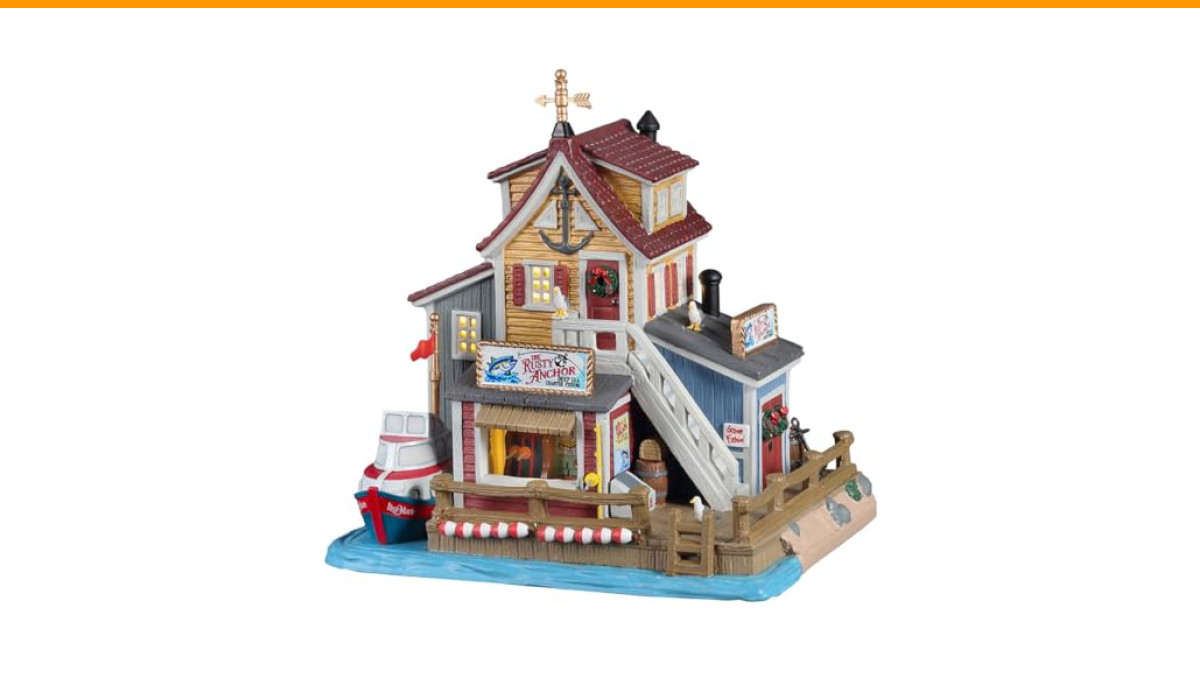
Lemax The Rusty Anchor Deep Sea Charter Fishing #15755
- Made of: Porcelain
- Approx. size (H x W x D) 7.76 x 7.44 x 6.02 inches 19.7 x 18.9 x 15.3 cm
- Lemax # 15755
If you’re planning a trip and want to get the crew excited beforehand, a small desktop piece like the Lemax The Rusty Anchor Deep Sea Charter Fishing #15755 makes a fun visual reminder of what’s coming. It’s a porcelain lighthouse-style building with a working LED light, and it sits nicely on a shelf as a conversation starter.
The Short Answer: It Depends on the Boat and the Target
Most day-trip charter boats run anywhere from 5 to 60 miles offshore. That’s a huge range, and the spread comes down to three things: the species you’re after, the size of the boat, and the weather on that specific day.
A 24-foot center console fishing nearshore for snapper might run 8 miles out. A 50-foot sportfisher chasing blue marlin in the Gulf of Mexico could run 60 miles to reach the shelf edge. Both are called “deep sea fishing,” but they’re completely different missions.
The key distinction is time. A boat that averages 20 knots covers 20 miles in one hour of running. Most charter captains won’t run more than two hours each way on a standard full-day trip. That gives you a rough maximum of 40 miles—unless you’re on an extended expedition where running time doesn’t eat into fishing time.
Defining the Zones: Nearshore, Offshore, and Blue Water
Anglers split the ocean into bands, and each band has its own fish, tackle, and travel demands.
- Nearshore (0-10 miles): Water depths under 100 feet. You’re targeting redfish, trout, flounder, and small sharks. Trips here are short—often 4-hour excursions on smaller boats.
- Offshore (10-30 miles): Depths from 100 to 300 feet. This is snapper, grouper, and amberjack territory. Bottom fishing over wrecks and reefs dominates. Most half-day and full-day trips fall into this band.
- Blue Water (30-100+ miles): Depths exceeding 300 feet, often dropping to 1,000 feet or more. Pelagic species like tuna, mahi-mahi, wahoo, and billfish roam here. These trips require bigger boats, more fuel, and longer running times.
Most recreational anglers never fish past the 30-mile mark on a day trip. The economics don’t work out—burning 300 gallons of fuel to catch one tuna gets expensive fast.
The Magic Number: Why the Continental Shelf Matters
Here’s the geological fact that shapes every offshore fishing trip: fish congregate at edges. The continental shelf is a massive underwater plateau that extends from the coast, then suddenly drops off into the deep ocean. That drop-off is the single most important destination marker in offshore fishing.
Think of the shelf edge as a wall. On the shallow side, sunlight reaches the bottom, and baitfish thrive. On the deep side, the water plunges to thousands of feet, and pelagic predators patrol the drop. Currents push bait against that wall, and predators wait there like ambush hunters.
Captains don’t just drive out to a random spot. They set GPS coordinates for specific ledges, canyons, and humps along the shelf edge. The Gulf of Mexico has a well-defined shelf that runs roughly 30 to 60 miles offshore depending on your launch point. The East Coast’s shelf extends farther—sometimes 70 to 90 miles out off the Carolinas.
How Deep Is the Water at the Shelf Edge?
The shelf edge typically sits at 300 to 600 feet of water depth. Beyond that, the bottom falls away rapidly to 1,000 feet and deeper. That sudden change creates the current breaks and temperature gradients that hold tuna and billfish.
For a captain, reaching that 300-foot contour line is the goal. Once you’re there, you’re in the zone where trophy fish live. Check your fish finder and you’ll see the bottom drop from 200 feet to 400 feet in a matter of minutes. That’s the spot.
Standard Charter Distances by Trip Length
Charter companies advertise trips by duration, not distance. Here’s what those durations typically mean in terms of miles run.
Half-Day Trips (4-6 Hours)
These trips rarely exceed 10 miles from the dock. The running time is usually 20-30 minutes each way, leaving 3-4 hours of actual fishing. You’ll stay in nearshore or shallow offshore waters, targeting snapper, sea bass, or sharks. Perfect for families or first-timers who want to test the waters without committing to a full day.
Full-Day Trips (8-10 Hours)
This is the workhorse of the charter fleet. Running time stretches to 1-2 hours each way, putting you 15-40 miles offshore. You can reach the shelf edge if you’re launching from a port close to it. Expect to fish in depths of 150-400 feet. Bottom fishing for grouper and snapper is common, but captains will also troll for mahi-mahi or wahoo if conditions are right.
Extended/Multi-Day Expeditions
These are a different animal. A 2-3 day trip on a large sportfisher can cover 100-200 miles from port. You’re fishing canyons like the Hudson Canyon off New York or the Baltimore Canyon off Maryland, where the shelf breaks hard and big tuna roam. These trips require serious planning, extra crew, and a boat over 40 feet with substantial fuel capacity.
The Math of the Journey: Speed, Fuel, and Time
Let’s do the arithmetic that every captain runs mentally before leaving the dock.
Most mid-size charter boats (30-40 feet) cruise at 20-25 knots. That’s roughly 23-29 mph. At 22 knots, you cover about 25 miles in just over an hour. A full-day trip with a 2-hour run each way gives you a 50-mile radius—but that leaves zero time for fishing.
The practical limit for a full-day trip is a 1.5-hour run each way. That puts you about 30-35 miles offshore. Add in the return trip and you’ve burned 2-3 hours of travel, leaving 5-6 hours on the fishing grounds.
Fuel capacity is the second constraint. A 40-foot boat burns 30-50 gallons per hour at cruise speed. With a 500-gallon tank, you have 10-16 hours of running time. That sounds like plenty, but captains always keep a 20-30% fuel reserve for weather changes, currents, and safety. So the usable range drops to 7-11 hours of running, which matches that 30-35 mile practical radius.
| Trip Type | Typical Distance Offshore | Water Depth | Running Time (One Way) | Target Species |
|---|---|---|---|---|
| Half-Day (4-6 hrs) | 5-10 miles | 30-100 feet | 20-30 minutes | Snapper, sea bass, sharks |
| Full-Day (8-10 hrs) | 15-40 miles | 100-400 feet | 1-1.5 hours | Grouper, snapper, mahi-mahi |
| Extended (2-3 days) | 50-200 miles | 300-1,500 feet | 2-6 hours | Tuna, wahoo, billfish |
| Blue Water Expedition | 200+ miles | 1,000+ feet | Overnight | Blue marlin, swordfish |
Pro tip: ask the captain for his cruise speed and fuel burn before booking. A boat that cruises at 18 knots instead of 25 knots cuts your effective range by nearly 30%. That matters if you want to reach the shelf edge.
Legal Limits: How Far Can a Charter Legally Take You?
There’s no federal law that says a charter boat can only go 50 miles out. The Coast Guard licenses captains, and that license allows them to operate a vessel of a certain size in ocean waters. But there are practical regulatory limits.
State waters extend 3 nautical miles offshore on the Atlantic and Gulf coasts (9 miles off Florida’s west coast and Texas). Beyond that, you’re in federal waters, which are managed by NOAA Fisheries. The distance doesn’t restrict where you can fish, but it changes the regulations—different size limits, bag limits, and seasons apply in federal waters.
The bigger legal constraint is the captain’s Coast Guard license. A captain with a 50-ton license can operate a boat up to 50 gross tons, which is a vessel around 50-60 feet long. That boat’s range is limited by fuel and design, not by the license. So the law doesn’t cap distance; physics and economics do.
One more thing: charter boats must carry specific safety equipment based on how far they operate from shore. Boats going beyond 20 miles need additional survival gear, including an EPIRB (emergency position indicating radio beacon). That’s why some smaller operators stay inside that 20-mile line—it keeps their safety requirements manageable.
The Real Variable: Weather and Sea Conditions
You can plan a 40-mile run, but the ocean might say no. “Weather windows” are the periods when sea conditions allow safe travel to distant grounds. A captain might cancel a canyon trip because winds are forecast at 20 knots, making the 2-hour run miserable and dangerous.
The rule of thumb: for every 10 knots of wind, expect wave heights to build by 2-4 feet over an extended fetch. A 15-knot wind on a 30-mile run can produce 4-6 foot seas. That’s fishable on a 40-foot boat, but it’s not fun. Most captains call off trips if seas exceed 6-8 feet on a day trip.
Currents also play a role. The Gulf Stream runs north along the East Coast at 2-4 knots. Running against it cuts your effective speed by 20-30%. A boat that cruises at 22 knots might only make 16 knots heading into the stream. That adds 15-20 minutes to every hour of travel.
So the real question isn’t “how far can the boat go?” It’s “how far can the boat go safely and comfortably today?” A smart captain checks the buoy data, the wind forecast, and the tide tables before committing to a long run.
What You’ll Catch at Different Distances
Distance directly determines your species options. Here’s the practical breakdown.
Under 10 miles: You’re in nearshore waters with bottom structure like artificial reefs and wrecks. Expect red snapper, gag grouper, and Spanish mackerel. Light tackle works fine.
10-30 miles: The bottom drops to 150-300 feet. This is prime bottom fishing territory. You’ll find large grouper, amberjack, and triggerfish. Trolling for mahi-mahi along current breaks can also pay off. This is the sweet spot for most recreational charters.
30-60 miles: You’re at or near the shelf edge. This is where pelagic action heats up. Blackfin tuna, wahoo, and bigger mahi-mahi show up. Trolling with spreader bars and skirted lures is the standard technique. Bottom fishing here targets snowy grouper and tilefish in deep water.
60+ miles: Blue water territory. Blue marlin, white marlin, and yellowfin tuna are the targets. This is trophy fishing, requiring heavy tackle and serious endurance. Most anglers only do this on multi-day trips or from ports close to the shelf break.
One honest caveat: just because you run 60 miles doesn’t guarantee a monster. The fish are spread out, and even the best captains have slow days. Distance increases your odds, but it doesn’t eliminate the randomness.
How to Choose the Right Trip for Your Goal
Start with your target species, not the distance. If you want a trophy blue marlin, you need a blue water trip—no way around it. If you want a cooler full of snapper fillets, a half-day nearshore trip will do the job at half the price.
Next, match the boat to the mission. A 30-foot boat can handle a 20-mile run in calm conditions, but pushing it to 50 miles in a chop is a bad idea. Look for boats over 35 feet for any trip beyond 30 miles. Check the vessel’s fuel capacity—a boat with a 300-gallon tank isn’t built for canyon runs.
Ask the captain three questions before booking: What’s the planned running distance? What’s the backup plan if weather turns? And what species are we realistically targeting? A good captain answers all three with specifics. A vague answer means he hasn’t thought it through.
Finally, consider the season. In the Gulf of Mexico, summer brings calm seas and good snapper action near the shelf. Winter pushes fish deeper and farther out. On the East Coast, fall is prime time for tuna at the canyons, but the weather windows get shorter. Matching your trip to the season gives you the best shot at success.
Common Mistakes and How to Avoid Them
Three errors sink most first-time offshore trips.
Mistake 1: Booking the cheapest trip without checking the boat’s range. A bargain half-day trip on a small boat might never leave sight of the harbor. You’ll catch small fish, but you won’t experience real offshore fishing. Pay for a trip that explicitly targets the species you want, not just the lowest rate.
Mistake 2: Ignoring sea sickness until it’s too late. A 2-hour run in 4-foot seas will humble anyone. Take motion sickness medication the night before and again in the morning. Don’t wait until you’re already green. Ginger candies and wristbands help some people, but the meds are the real solution.
Mistake 3: Assuming the captain will turn back if conditions get rough. Most captains are conservative, but some push it. Set your own limit before boarding. If seas are forecast over 6 feet on a small boat, reschedule. A fish isn’t worth a miserable 8-hour day.
Final Thoughts: Think Like a Captain
Every offshore trip is a decision tree. The captain balances distance against fuel, weather, and fish behavior. You can do the same math with the numbers in this guide.
- Half-day trips stay within 10 miles; full-day trips reach 15-40 miles; extended trips go 50-200 miles.
- The continental shelf edge (300-600 foot depths) is the prime destination for big pelagic fish.
- Boat speed (20-25 knots) and fuel capacity set the hard range limits—most day boats cap out around 35 miles.
- Weather windows, not boat capability, determine how far you actually go on any given day.
- Ask your captain for specific distance, target species, and backup plans before booking.
- Match the trip length to your goal: snapper fillets need a short run, trophy billfish need a canyon expedition.
- Always budget for sea sickness meds and a backup plan if the weather turns.
Now you know the real distances behind those charter listings. Next time a boat backs out of the harbor, you’ll understand exactly where you’re headed and why.