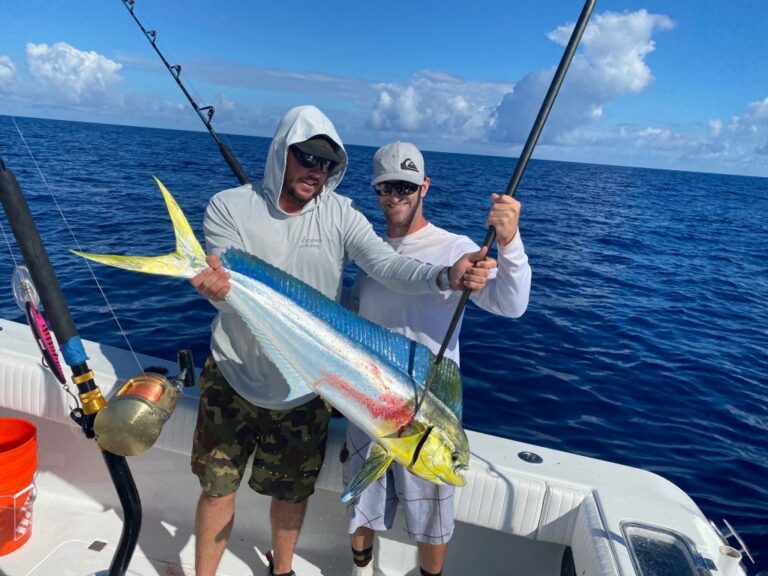
The ocean is a different world once you lose sight of land. Your electronics show a reef 180 feet down, the boat is drifting sideways, and your bait is finally on the bottom. Then the line ticks. Then it taps. Then it screams off the spool so fast your thumb burns through the glove. That moment — the one where everything you read and practiced either clicks or falls apart — is what deep sea fishing is about.
Most first-timers walk onto a charter boat with a rental rod, a vague idea about reeling, and a hope that the captain puts them on fish. That works sometimes. It fails often. The difference between a memorable trip and a frustrating one usually comes down to a handful of decisions made before the boat leaves the dock, plus a few adjustments you make while the bite is happening.
Fiblink
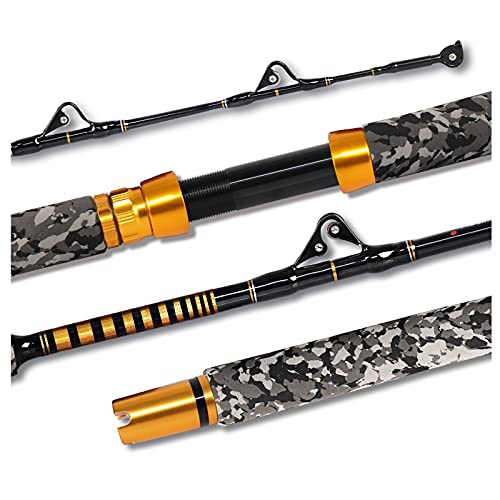
Fiblink 1-Piece Saltwater Offshore Trolling Rod 6-Feet Big Game Rod Conventional Boat Fishing Pole (80-120 lbs)
- Solid Construction: Solid E-glass graphite composite blanks offer incredible pulling power, strong and structurally enhanced solid…
- Stainless Steel Rollers: Smooth polished line protecting stainless steel roller guides, wear free line flow, and providing saltwat…
- Non Slip Camouflage EVA Handle: Heavy duty and easily maintained EVA grip gives greater sensitivity and durability; camouflage han…
This article is a field manual for those decisions. You’ll learn how to match gear to the fish, set a drag that doesn’t break off or get spooled, pick the right technique for the bottom structure, and troubleshoot the common failures that ruin trips. No fluff, no vague advice — just what works on the water.
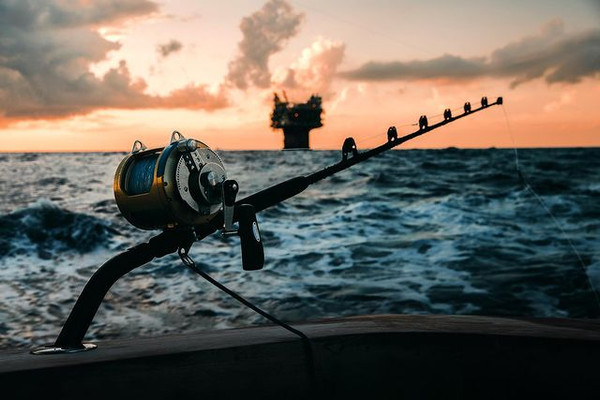
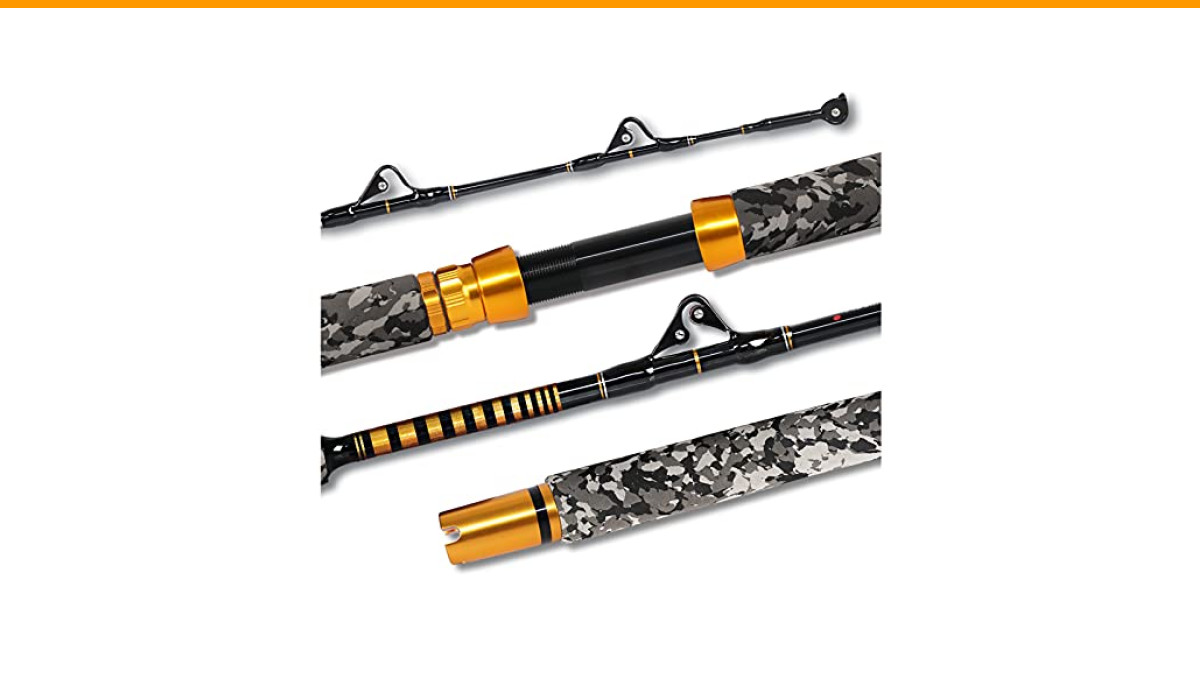
Before we get into technique, let’s talk about the rod in your hands. Most charters provide gear, but serious anglers bring their own. A solid choice for offshore trolling and standup fighting is the Fiblink 1-Piece Saltwater Offshore Trolling Rod. It’s a 6-foot, 80-120 lb class rod with stainless steel roller guides and a solid E-glass composite blank. The roller guides matter more than most people think — they reduce line friction and heat buildup when a tuna is making its second run. The camo EVA handle stays grippy when covered in spray and fish slime. It’s not the fanciest rod on the market, but it’s built for the abuse of big fish over deep water.
The True Definition of Offshore Fishing (Beyond the Horizon)
Deep sea fishing isn’t just “fishing in deep water.” It’s a specific set of techniques used in water from about 100 feet down to several thousand feet, targeting species that live on reefs, wrecks, and open water columns. You’re dealing with different physics than inshore fishing. Line stretch is longer. Currents are stronger. The fish have more room to run and more structure to break you off on.
There are three main disciplines under the deep sea umbrella, and each one requires different gear and tactics:
- Trolling — pulling lures or baits behind a moving boat to cover water and target pelagics like mahi-mahi, wahoo, and tuna.
- Bottom fishing — dropping baits or jigs to the sea floor to target grouper, snapper, and other reef dwellers.
- Vertical jigging — dropping a metal jig to a specific depth and working it up and down to trigger reaction strikes.
Most trips will involve at least two of these. A good captain switches tactics based on what the fish are doing. Your job is to be ready for all three.
Pre-Trip Logistics: Licenses, Charters, and Cost Planning
The planning phase makes or breaks your trip. Here’s what you need to sort out before you even touch a rod.
How to Choose the Right Charter for Your Skill Level
Not all charters are the same. Some cater to families and first-timers, running short trips over inshore reefs. Others target experienced anglers chasing blue marlin or bigeye tuna on multi-day trips. Read the charter’s description carefully. Look for what species they target and how many anglers they take. A 6-pack charter with one mate gives you more personal attention than a 30-passenger head boat where you’re elbow-to-elbow.
Ask specific questions when you book. What’s the fuel surcharge? Is tackle included or rented? What’s the policy if the weather cancels? One thing I’ve learned the hard way: confirm the mate’s tip policy. Most mates expect 15-20% of the trip cost, and that’s on top of the charter fee. Budget for it.
Here’s a realistic cost breakdown for a half-day offshore trip (4-6 hours):
| Expense | Typical Cost | Notes |
|---|---|---|
| Charter fee (shared) | $100-250 per person | Varies by boat size and target species |
| Fuel surcharge | $20-50 per person | Often added when fuel prices spike |
| Mate tip | 15-20% of trip cost | Cash, given at the dock |
| Gear rental | $15-30 per rod | Sometimes included in the fee |
| Fillet/cleaning | $10-20 per fish | Most boats charge per fish cleaned |
| Fishing license | $10-50 for the day | Required in most states, often not included |
Add it up and a half-day trip runs $200-400 per person. That’s before you buy food, drinks, and sunscreen. Plan for the total, not just the charter fee.
Gear Mastery: Matching Rod, Reel, and Line to the Deep
You don’t need a quiver of rods, but you do need the right one for the job. Matching the rod, reel, and line to the target species is the single most important gear decision you’ll make.
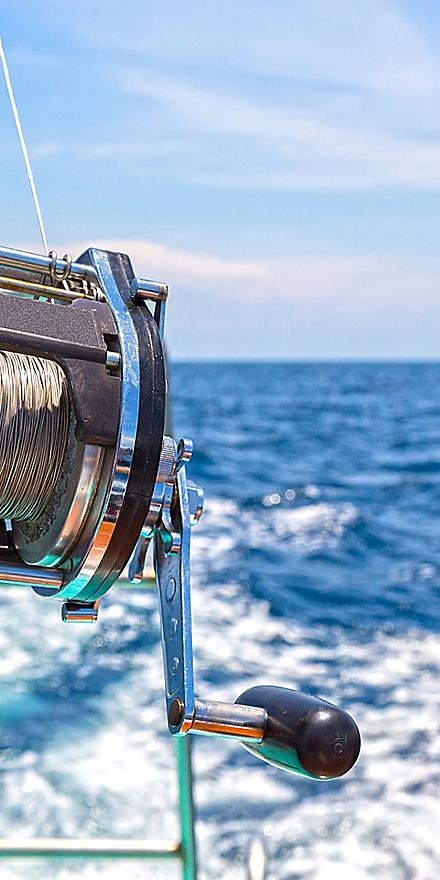
For bottom fishing over reefs, a conventional reel with 50-80 lb braided line is the standard. Braid has almost no stretch, so you feel the bite instantly and can set the hook hard at 200 feet down. For trolling, you want a rod with roller guides and a reel with a high-speed retrieve — you need to pick up line fast when a fish turns toward the boat.
Line capacity matters more than most people think. A big tuna can strip 400 yards of line in one run. If your spool holds 300 yards, you’re done. Check the reel’s line capacity before you go. It should be printed on the spool or in the specs.
The Drag System: Your Most Critical Setting
Most anglers set the drag too tight. They think “tight means I’ll land it faster.” That’s wrong. A tight drag either pulls the hook out of a soft-mouthed fish or breaks the line at the leader knot. The right setting is about 25-30% of the line’s breaking strength. For 50 lb braid, that’s 12-15 lb of drag at the strike position.
Here’s how to check it: tie the line to a scale, hold the rod at a 45-degree angle, and pull until the drag slips. Adjust until it reads the right number. Do this before you drop a bait. Trust me, you don’t want to be guessing when a 40 lb grouper is heading for the wreck.
One more thing: the drag should increase as the fight goes on. Start light, then tighten it gradually as the fish tires. That’s called “pressing the fish.” It’s a skill that comes with experience, but you can start practicing it now.
The Big Three Techniques: Trolling, Bottom Fishing, and Jigging
Each technique has its own rhythm, gear, and mistakes. Here’s how to do all three right.
Trolling for Pelagics: Speed and Spread
Trolling is about covering water and presenting baits at the right speed. The ideal trolling speed varies by species. Mahi-mahi like 5-7 knots. Wahoo hit best at 8-12 knots. Tuna often prefer 4-6 knots with a slow, natural bait presentation.
The “spread” is the arrangement of lines behind the boat. You want a mix of depths and distances. Use outriggers to spread the lines wide, and run one line close to the boat’s wake. The key is to avoid tangles while covering different water columns. A good spread looks like a fan: short lines on the sides, long lines in the middle.
Watch for birds. Frigate birds circling over a patch of water usually mean baitfish near the surface, and baitfish mean predators underneath. Also watch for temperature breaks — the line where warm and cold water meet. Fish hold on those edges.
Bottom Fishing for Reef Dwellers: Weight and Feel
Bottom fishing is a waiting game, but it’s not passive. You need enough weight to hold bottom in the current, but not so much that you can’t feel the bite. A good starting point is 8-12 oz of lead for depths of 100-200 feet in moderate current. In strong current, go heavier — 16 oz or more.
The technique is simple: drop the bait to the bottom, reel up a few turns so the bait is just off the structure, and hold on. Watch the rod tip. A tap, then a pause, then a tap again. Wait for the second tap before you set the hook. Most missed strikes happen because anglers set the hook on the first tap, which is often the fish picking up the bait, not eating it.
When you feel the weight of the fish, set the hook hard — a sweeping motion, not a yank. Then reel fast to get the fish off the bottom. If it gets back to the wreck, you’ve lost it.
Vertical Jigging: The Active Approach
Vertical jigging is the most physically demanding technique, but it’s also the most effective when the fish are finicky. You drop a heavy metal jig (100-300 grams) to the bottom, then work it up with sharp, aggressive rod sweeps. The jig falls on slack line, fluttering and flashing like an injured baitfish.
The key is the fall. Most strikes happen on the drop, when the jig is falling freely. Watch your line. The moment it stops falling or twitches, set the hook. Don’t wait for a pull — the fish might be swimming toward you with the jig in its mouth.
Jigging wears you out. Rotate with your buddies if you can. Ten minutes of hard jigging is equivalent to a heavy workout, and your forearms will feel it the next day.
Reading the Ocean: Finding Fish When the Bite is Slow
When the bite is slow, the angler who reads the water catches fish. The one who stares at the rod tip doesn’t. Here’s what to look for:
- Bird activity — diving terns mean bait at the surface. Gannets diving from height mean larger bait, possibly tuna below.
- Current rips — where two currents meet, a line of foam and debris forms. That line concentrates bait and predators.
- Structure changes — drop-offs, humps, and ledges on your fish finder. Fish hold on edges, not in the middle of flat bottom.
- Temperature breaks — a change of 2-3 degrees in water temp can hold fish for miles. Your boat’s temp gauge will show it.
- Drifting debris — a floating log or pallet is a fish magnet. Always make a pass close to it.
If you’re not marking fish, move. Don’t sit on an empty spot for 30 minutes. The captain’s job is to find fish, but your job is to tell them what you’re seeing on your own electronics. A good angler is a second pair of eyes.
The Fight: Pumping, Reeling, and Teamwork
Landing a big fish is a team sport. The angler does the work, but the mate and captain play critical roles. Here’s the correct technique for fighting a fish from a boat:
- Get the rod tip up — keep the rod at a 45-degree angle or higher. Never let it point at the fish.
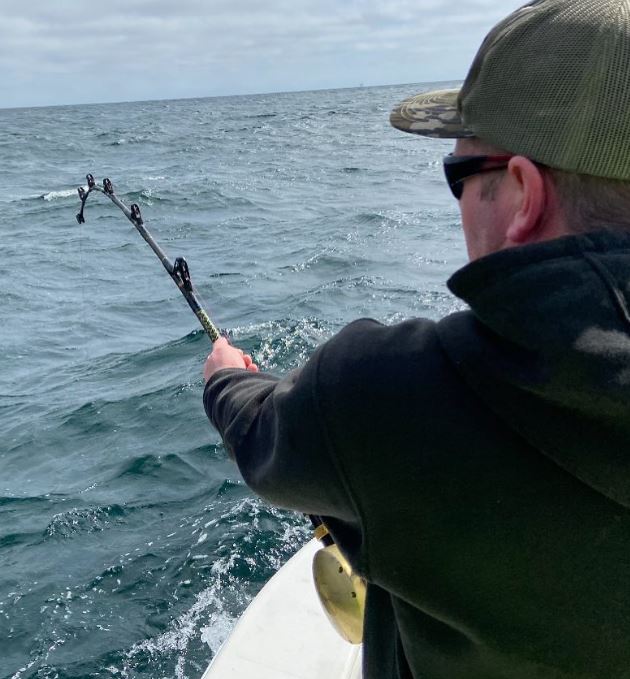
- Pump and reel — lift the rod up smoothly, then drop the tip while reeling fast. The reel only takes line when the rod is dropping. That’s the “pump.”
- Stay out of the rod holder — you need to move with the fish. If it runs to the side, walk with it. Don’t let the line rub against the boat’s hull.
- Listen to the mate — they can see the fish and will tell you when to reel and when to give line. Trust their instructions.
One common mistake: reeling while the fish runs. That’s how you get a backlash or break the line. When the fish runs, let it pull against the drag. Reel only when it stops or turns.
The gaff shot is the mate’s job. Your job is to get the fish close enough and keep its head up. Don’t try to gaff it yourself unless you’re experienced. A missed gaff shot can cost you the fish and a hook in the hand.
Onboard Troubleshooting: Fixing Common Gear Failures
Gear fails at the worst moments. Here’s how to fix the most common problems on the water.
Line Twist
Line twist happens when you reel under tension or when a lure spins. The fix is to let the line out behind the boat with no weight on it for a few minutes. The current will untwist it. If that doesn’t work, cut off the terminal tackle and re-spool. Prevention: use a swivel between your main line and leader.
Bird Nesting (Backlash)
This happens when the spool overruns during a cast or when a fish runs and the reel is in free spool. The fix is patience. Pull out the tangled loops carefully, never yank. If it’s a bad nest, you may need to cut the line. Prevention: set the spool tension knob correctly and keep your thumb on the spool during the cast.
Snapped Leader
If the leader snaps at the hook, the knot is the culprit. Retie with a stronger knot — the Palomar is the best all-around knot for braid to leader. If the leader snaps at the swivel, check for nicks in the swivel’s eye. Replace it.
Drag Sticking
If the drag feels jerky or sticks, it’s likely salt corrosion. Rinse your reel with fresh water after every trip and re-grease the drag washers periodically. On the water, you can’t fix it completely, but you can back the drag off and re-tighten it a few times to smooth it out.
After the Catch: Handling, Filleting, and Conservation
What you do after the fish hits the deck matters as much as the fight. Proper handling ensures good meat quality and compliance with regulations.
First, check the size and bag limits for the species you caught. The mate usually tracks this, but you should know the rules. Keeping an undersized fish can cost you a big fine.
For fish you plan to release, handle them with wet hands or a wet towel. Dry hands remove the protective slime coating, making the fish vulnerable to infection. If the fish is deeply hooked, cut the leader as close to the hook as possible. Circle hooks are better for release — they hook in the corner of the jaw, not the gut.
For fish you keep, bleed them immediately. Cut the gills or the tail and put them in the kill bag with ice. Bleeding improves the meat quality significantly. Then, have the mate fillet them or do it yourself. A sharp knife is essential. Slice behind the gills, follow the backbone, and remove the fillet. Keep the skin on until you’re ready to cook — it protects the meat.
Conservation isn’t just about following the law. It’s about ensuring there are fish for the next generation. Release what you don’t need. Use circle hooks when possible. Avoid fishing over spawning aggregations. A trophy is nice, but a healthy population is better.
Final Checklist and Safety Briefing
Before you leave the dock, run through this list. It takes five minutes and saves you from a miserable day.
- Check the weather forecast. If seas are over 4-6 feet, reschedule. It’s not worth being miserable.
- Pack sunscreen (SPF 50+), polarized sunglasses, and a hat. The reflection off the water is brutal.
- Bring layers. It’s cold on the water even in summer, especially offshore.
- Take motion sickness medication the night before and again in the morning. Don’t wait until you feel sick.
- Confirm your license and the charter’s policies.
- Set your drag before you drop a line.
- Charge your phone and bring a waterproof case.
Deep sea fishing rewards preparation. The anglers who catch fish consistently aren’t lucky — they’ve made the right choices before the boat left the dock and adjusted when things went wrong. Now you have the playbook. Go use it.
Frequently Asked Questions
What’s the best time of year for deep sea fishing?
It depends on where you fish and what you’re targeting. In the Gulf of Mexico, spring through fall is prime for snapper and grouper. Off the East Coast, summer is best for mahi-mahi and tuna. Winter can be excellent for bottom fishing in the South. Check local reports and ask the charter captain — they know the patterns.
How much line do I need for deep sea fishing?
For most offshore applications, 300-400 yards of 50-80 lb braided line is a good minimum. If you’re targeting big tuna or marlin, you need 600+ yards. The reel’s spool should be filled to within 1/8 inch of the rim. Underfilled spools reduce casting distance and line capacity.
What’s the difference between a trolling rod and a bottom fishing rod?
A trolling rod is longer (6-7 feet), heavier, and designed to handle the stress of pulling lures through the water at speed. It often has roller guides to reduce friction. A bottom fishing rod is shorter (5-6 feet) and has a faster action for detecting bites at depth. You can use one for both, but you’ll be better off with the right tool.
Do I need to bring my own gear or is rental okay?
Rental gear is fine for beginners, but it’s often beat up and poorly maintained. If you’re serious about the sport, bring your own. You know its history, the drag is set correctly, and it fits your body. A good rod like the Fiblink trolling rod is a solid investment that pays for itself over a few trips.
How do I avoid seasickness?
Take motion sickness medication the night before and again in the morning. Choose a spot on the boat where you can see the horizon — the stern or the flying bridge. Avoid alcohol the night before. Eat a light breakfast. If you start feeling queasy, focus on the horizon and take deep breaths. Ginger candies help some people.