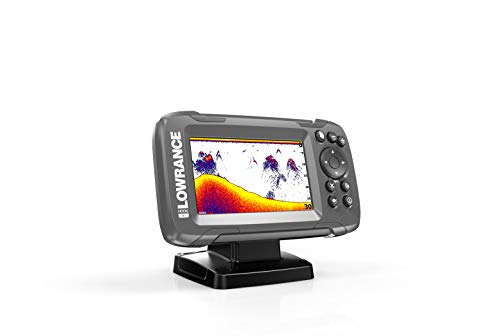
You spend an hour on the water staring at a screen the size of a phone, squinting at fuzzy blobs that might be fish or might be a submerged log. The guy next to you is pulling in keepers, and you are pretty sure his electronics are the difference. You want a bigger screen, clearer images, and GPS that actually works, but every spec sheet reads like a foreign language. CHIRP, ClearVü, SideVü, waypoints, Quickdraw—it is a lot to sort through, and the last thing you want is to drop serious money on a unit that does not fit your boat or your fishing style.

This search is exactly where I found myself a few seasons back. After burning through a cheap combo unit that lost satellite signal every time I passed under a bridge, I started digging into Garmin’s 7-inch lineup. That size hits a sweet spot. It is big enough to see structure clearly from the helm, yet compact enough for a kayak or a small console. The models in this roundup share that screen size but diverge in sonar capability, transducer quality, and mapping tools. The right one depends on whether you need SideVü, prefer ClearVü, or just want the best possible traditional sonar for the money.
I have broken down the four most relevant choices, including two transducer upgrades that most people overlook. The Garmin Striker Vivid 7cv is the smart pick for most anglers, while the 7sv adds side imaging for those who need it. Read on for the full breakdown, honest trade-offs, and a few installation tips that will save you a headache.
Here is a quick look at how the core specs compare across these four options.
| Features | Striker Vivid 7cv | Striker Vivid 7sv | 010-12380-20 Xdcr | Garmin Xdcr |
|---|---|---|---|---|
| Primary Sonar | CHIRP + ClearVü | CHIRP + ClearVü + SideVü | Transducer only | Transducer only |
| Included Transducer | GT20-TM | Requires separate purchase | Dual-frequency | Dual-frequency |
| GPS Mapping | Quickdraw Contours | Quickdraw Contours | No GPS | No GPS |
| App Connectivity | ActiveCaptain Wi-Fi | ActiveCaptain Wi-Fi | None | None |
| Best Use Case | Freshwater casting | Side imaging fans | Replacement part | Replacement part |

Garmin Striker Vivid 7cv

Garmin
Garmin Striker Vivid 7cv, U.S. with GT20-TM Transducer - Easy-to-Use 7-inch Color Fishfinder and Sonar Transducer, Vivid Scanning Sonar Color Palettes (010-02552-00)
- Easy-to-use 7” color fishfinder with new vivid scanning sonar color palettes to easily distinguish fish and structure; tilt/swivel…
- Includes a GT20 transducer for built-in Garmin CHIRP traditional sonar and CHIRP ClearVü scanning sonar
- High-sensitivity GPS to mark waypoints, create routes and view your boat’s speed
The Striker Vivid 7cv is the unit I recommend to friends who fish lakes and rivers for bass, walleye, or panfish. It is a straightforward 7-inch color display with built-in CHIRP traditional sonar and CHIRP ClearVü scanning sonar, powered by the included GT20-TM transducer. That transducer is the key. It comes in the box, so you do not have to spend extra money or hunt for a compatible part. The unit also packs high-sensitivity GPS, which lets you mark waypoints, create routes, and track your boat speed without any subscription fees.
What stands out here is the vivid scanning sonar color palettes. Garmin offers several color schemes, and the difference is not just cosmetic. On a sunny day, a palette with higher contrast makes a fish arch pop against a muddy bottom. I found the default palette works well in clear water, but switching to a high-contrast option helps in stained lakes. The built-in Quickdraw Contours mapping is another quiet winner. As you drive around, the unit records depth data and builds a contour map of the lake bottom in real time. You do not need to buy a mapping chip or pay a subscription. You just fish, and the map grows.
It is not perfect. The 7cv lacks SideVü, so if you need to scan wide areas to find baitfish or structure, this unit will not do it. The screen resolution is decent but not as crisp as higher-end ECHOMAP models. Also, the tilt/swivel bailmount bracket feels a little plastic-y. It holds fine on calm water, but I would consider a RAM mount if you run in rough conditions. The Wi-Fi connectivity works, but the ActiveCaptain app can be finicky during the initial pairing. Give it a few tries, and it will sync.
- 7-inch color display with multiple vivid scanning sonar palettes
- Includes GT20-TM transducer for CHIRP and ClearVü sonar
- High-sensitivity GPS for waypoints, routes, and speed
- Built-in Quickdraw Contours mapping with no subscription
- Wi-Fi for ActiveCaptain app and smart notifications
Best for: The angler who wants a complete, ready-to-install package with ClearVü imaging and GPS mapping without spending extra on a transducer.
Garmin Striker Vivid 7sv

Garmin
Garmin Striker Vivid 7sv, Easy-to-Use 7-inch Color Fishfinder and Sonar Transducer, Vivid Scanning Sonar Color Palettes (010-02553-00)
- easy-to-use 7” color fishfinder with new vivid scanning sonar color palettes to easily distinguish fish and structure
- supports garmin chirp traditional sonar plus chirp clearvü and chirp sidevü scanning sonars (requires compatible transducer)
- high-sensitivity gps to mark waypoints, create routes and view your boat’s speed
If the 7cv feels like it is missing something, the Striker Vivid 7sv is the answer. This unit takes everything great about the 7cv and adds support for CHIRP SideVü scanning sonar. That means you can see a wide swath of the bottom on either side of your boat, which is a game-changer for trolling or covering water efficiently. You can spot a submerged hump, a weed line, or a school of baitfish that is 100 feet to your left, and then turn the boat to cast directly at it.
The catch here is the transducer. The 7sv does not include one in the box. You need to buy a compatible transducer separately, such as the GT52-TM or GT54-TM, to unlock the SideVü capability. That adds cost and a bit of research. If you already own a compatible transducer from a previous unit, this is a fantastic upgrade. If you are starting from scratch, factor the transducer price into your budget. The unit itself supports Garmin CHIRP traditional sonar plus CHIRP ClearVü and CHIRP SideVü, but only with the right transducer connected.
Once you have the right transducer, the performance is impressive. SideVü imagery is clear enough to distinguish between a rock pile and a submerged tree. The GPS and Quickdraw Contours features work exactly as they do on the 7cv, so you are not losing any mapping capability. The trade-off is complexity. You have more settings to tweak, more cables to route, and a higher total cost. For a casual angler who mostly drops anchor and casts, that complexity is unnecessary. For someone who covers miles of water looking for active fish, it is worth every penny.
- Supports CHIRP traditional, ClearVü, and SideVü sonar
- Requires a separate compatible transducer for SideVü
- High-sensitivity GPS with waypoints and route creation
- Built-in Quickdraw Contours mapping
- Wi-Fi connectivity for ActiveCaptain app
Best for: The serious angler who needs side imaging to find fish fast and is willing to invest in the right transducer.
Garmin 010-12380-20 Xdcr
This is not a fish finder unit. The Garmin 010-12380-20 Xdcr is a replacement transducer, and it is one of those parts you do not think about until your old one fails. It is a dual-frequency transducer that works with a range of Garmin units. If your current transducer is sending back fuzzy images, losing depth readings at speed, or has a cracked cable, swapping in this part can bring your old unit back to life.
The main strength here is simplicity. It is a drop-in replacement for many Garmin units that use a standard 8-pin connector. The dual-frequency capability (typically 50/200 kHz) gives you a wide cone for shallow water and a narrow cone for deeper depths. This is traditional sonar only. There is no CHIRP, no ClearVü, and no SideVü. If your unit is an older model that only supports standard sonar, this is the right part. If you have a newer unit that supports CHIRP, you will want a different transducer.
Installation is straightforward but requires care. You need to mount it on the transom, ensuring the face is parallel to the waterline. A poorly aligned transducer will cause erratic readings at speed. The cable routing also takes time, as you need to keep it away from electrical wires to avoid interference. It is not a glamorous purchase, but it is a practical one. Before you buy a whole new fish finder, check if a new transducer solves the problem.
- Dual-frequency transducer for traditional sonar
- Replacement part for compatible Garmin units
- Standard 8-pin connector
- Wide and narrow cone angles for varied depths
- Requires careful transom mounting for best performance
Best for: The budget-conscious angler looking to repair an existing Garmin unit instead of replacing it.
Garmin Xdcr Fish Finders

Garmin
Garmin Xdcr Fish Finders
- Item Package Dimension: 11.3L x 10.9W x 8H inches
- Item Package Weight - 11.7 Pounds
- Item Package Quantity - 1
This listing is another transducer, but it is a bit of a mystery box. The product data is sparse, listing only package dimensions and weight. The package is about 11.3 inches long, 10.9 inches wide, and 8 inches high, and it weighs in at 11.7 pounds. That weight suggests a substantial transducer, likely a through-hull or a large transom-mount model designed for bigger boats.
Given the lack of specific compatibility details, this is a part you should buy only if you are certain it matches your unit. The listing describes it as a sonar fathometer, which is just another way of saying it measures water depth. Without more information, it is hard to recommend this to a general audience. It is a niche product for a specific replacement need. If you have an older Garmin unit and you know this is the correct part number, it can save you from buying a new unit. If you are unsure, contact Garmin support or check your current transducer’s connector type.
The physical size and weight mean installation is more involved than a small transom-mount puck. You may need to haul the boat out of the water to access the hull. This is not a quick afternoon project. It is a job for someone comfortable with drilling into fiberglass or dealing with a wet slip. The upside is that a large transducer often provides better performance at high speeds and in rough water, because it has a larger surface area to send and receive signals.
- Large, heavy transducer likely for bigger vessels
- Package weight of 11.7 pounds
- Dual-frequency sonar operation
- Requires professional or advanced installation
- Check compatibility with your specific Garmin unit first
Best for: The owner of a larger boat who needs a heavy-duty replacement transducer and has verified compatibility.
How We Chose These Products
I started by looking at what anglers actually complain about in forums and reviews. The biggest issues are not about specs. They are about installation headaches, battery drain, and whether the included transducer is any good. I prioritized units where the transducer is included, because that is the single biggest hidden cost. The Striker Vivid 7cv wins on that front. I also looked at the practical difference between ClearVü and SideVü, not just the marketing language. ClearVü gives you a crisp photo-like view directly under the boat. SideVü lets you see to the sides. That distinction matters more than any other feature when choosing between the 7cv and 7sv.
I did not rely on manufacturer claims about durability or performance. I checked user reports on battery life and mounting. For example, the 7-inch units draw a fair amount of power. If you are on a kayak with a small battery, you might get a full day of use, but you should not push it. I also considered the software side. The ActiveCaptain app is useful for transferring waypoints, but the initial pairing process can be clunky. These are the details that do not show up on the box but shape your real experience on the water.
Buying Guide: What Really Matters
Before you buy, think about your boat and how you fish. If you are on a kayak or a small aluminum boat, a 7-inch screen is a big footprint. Make sure you have a flat surface on the console or a track mount that can hold it securely. The included bailmount bracket works, but it can vibrate at high speeds. A dedicated RAM mount solves that for about fifty bucks. Also, check your battery. A 7-inch unit with GPS running and the backlight on high can draw around 1 amp. Most fish finder batteries handle that, but a small 7Ah battery will run down in a few hours.
Transducer placement is another key factor. For a transom-mount transducer, the ideal spot is on the side of the hull where the water flow is clean, away from rivets and strakes. If you mount it wrong, you will lose bottom reading at planing speed. A common trick is to mount it slightly below the hull line so it stays in contact with the water. For kayaks, you can use a scupper mount or a through-hull shoot-through install. The GT20-TM transducer that comes with the 7cv is designed for transom mounting, but you can buy an adapter to fit it in a kayak.
Finally, consider the software and mapping. Quickdraw Contours is a huge value because it builds maps as you fish, and you can share those maps with the Garmin Quickdraw Community. That means you can download contour maps for lakes you have never fished. The Wi-Fi connectivity on the Striker Vivid units lets you get software updates and smart notifications on your phone. It is not a full networking system like the higher-end ECHOMAP units, but it is enough for most anglers.
Our Top Recommendation
The Garmin Striker Vivid 7cv is the clear winner for most people. It includes the GT20-TM transducer, so the total cost is predictable. You get CHIRP traditional sonar for clear fish arches, ClearVü for a photo-like view of structure, and GPS with Quickdraw Contours for mapping. It does everything a weekend angler or a serious tournament fisherman needs, without the complexity of side imaging. It is the unit I would buy for my own boat.
If you specifically need SideVü to cover water quickly, the Striker Vivid 7sv is the right choice, but remember the transducer is sold separately. For a repair on a budget, the 010-12380-20 Xdcr is a solid replacement part if it matches your unit. Avoid the generic Garmin Xdcr listing unless you have confirmed it fits your exact model, because the lack of detail is a red flag. For most anglers, the 7cv is the best balance of features, cost, and ease of installation.
Frequently Asked Questions
Does the Striker Vivid 7cv work in saltwater?
Yes, but you should rinse the unit and transducer with fresh water after every trip. The transducer is designed for both fresh and saltwater, but salt corrosion is the enemy of any electronic connection. The GPS and sonar will function fine in saltwater, but the included GT20-TM transducer has a plastic housing that is more prone to scratching and wear in harsh conditions.
Can I use the Striker Vivid 7sv without a SideVü transducer?
You can, but you will only get traditional CHIRP sonar. The unit will not show SideVü or ClearVü imagery unless you connect a compatible transducer like the GT52-TM. If you plan to use it without the extra transducer, you are paying for a feature you cannot use. In that case, the 7cv is the better value.
How do I update the maps on a Striker Vivid unit?
You do not update the base maps, because the unit does not come with preloaded maps. Instead, it uses Quickdraw Contours to create and store your own maps. You can share and download community maps through the Garmin Quickdraw Community using the ActiveCaptain app. Software updates for the unit itself are also pushed through the app.
Will the 7-inch screen fit on a kayak?
It fits, but it is a large unit for a kayak. You will need a sturdy mounting solution, such as a track ball mount, to keep it stable. The screen is easy to read from a seated position, but it takes up a lot of deck space. If you are primarily a kayak angler, you might consider a smaller 5-inch unit, but the 7-inch screen is a luxury that makes seeing fish arches much easier.